Loading...
Done
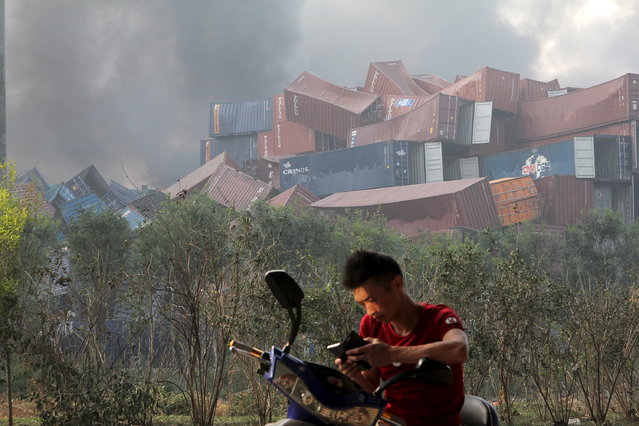
A man checks his mobile phone near overturned shipping containers after explosions hit the Binhai new district, Tianjin, August 13, 2015. (Photo by Reuters/Stringer)

A man checks his mobile phone near overturned shipping containers after explosions hit the Binhai new district, Tianjin, August 13, 2015. A huge explosion hit an industrial area in the northeastern Chinese city of Tianjin late on Wednesday evening, triggering a blast wave felt several kilometres away and injuring at least 50 people, domestic media reported. (Photo by Reuters/Stringer)
Details
13 Aug 2015 11:22:00
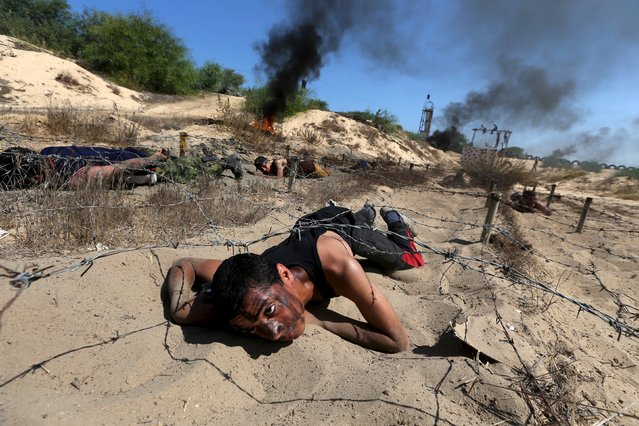
A young Palestinian crawls under a barbed wire during a military-style exercise at a summer camp organized by Islamic Jihad movement, in Khan Younis in the southern Gaza Strip, August 13, 2015. (Photo by Ibraheem Abu Mustafa/Reuters)

A young Palestinian crawls under a barbed wire during a military-style exercise at a summer camp organized by Islamic Jihad movement, in Khan Younis in the southern Gaza Strip, August 13, 2015. (Photo by Ibraheem Abu Mustafa/Reuters)
Details
14 Aug 2015 14:07:00
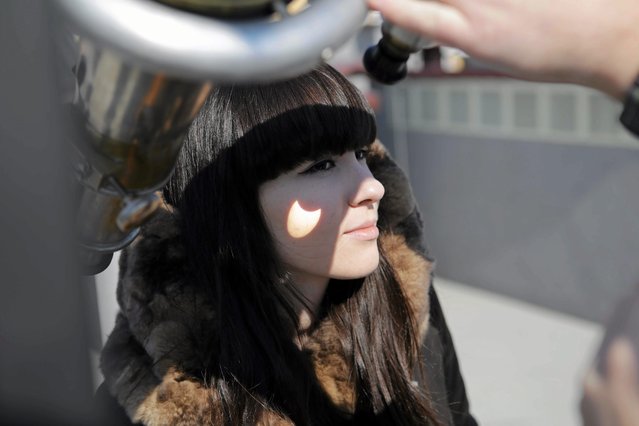
The shadow of a partial eclipse is cast on to the cheek of a student on the roof of the Jana Dlugosza Academy in Czestochowa, Poland March 20, 2015. (Photo by Grzegorz Skowronek/Reuters/Agencja Gazeta)

The shadow of a partial eclipse is cast on to the cheek of a student on the roof of the Jana Dlugosza Academy in Czestochowa, Poland March 20, 2015. (Photo by Grzegorz Skowronek/Reuters/Agencja Gazeta)
Details
21 Mar 2015 12:12:00
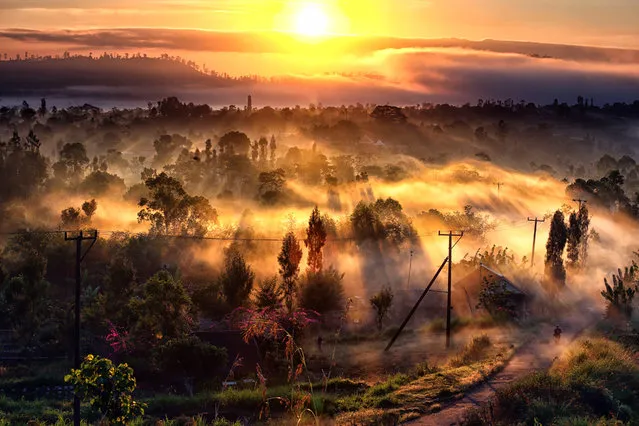
“Misty Morning”. Every morning, people expect sunny weather. Photo location: Bali, Indonesia. (Photo and caption by Henry Adam/National Geographic Photo Contest)

“Misty Morning”. Every morning, people expect sunny weather. Photo location: Bali, Indonesia. (Photo and caption by Henry Adam/National Geographic Photo Contest)
Details
02 Oct 2014 10:43:00
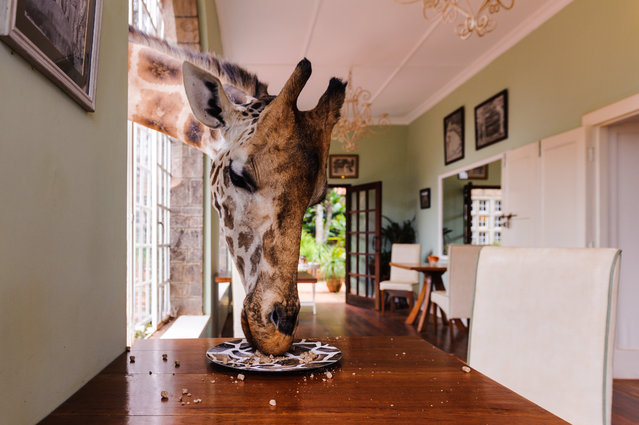
“Don't Leave Any Food On Your Plate”. The giraffes at Nairobi's Giraffe Manor are totally at home with humans. They will eat out of your hand, or even off your plate. Photo location: Giraffe Manor, Nairobi, Kenya. (Photo and caption by Gavin Werbeloff/National Geographic Photo Contest)

“Don't Leave Any Food On Your Plate”. The giraffes at Nairobi's Giraffe Manor are totally at home with humans. They will eat out of your hand, or even off your plate. Photo location: Giraffe Manor, Nairobi, Kenya. (Photo and caption by Gavin Werbeloff/National Geographic Photo Contest)
Details
20 Jun 2014 10:23:00


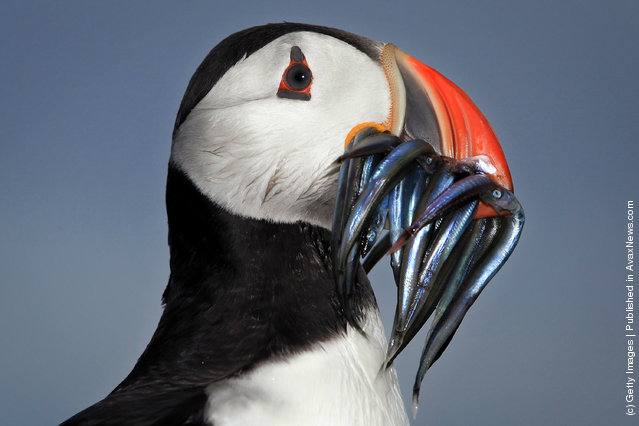
A Puffin returns to it's nest with a beak full of sand eels on June 25, 2011 on Inner Farne, England. The Farne Islands, which are run by the National Trust, are situated two to three miles off the Northumberland coastline. The archipeligo of 16-28 separate islands (depending on the tide) make the summer home to approximately 100,000 pairs of breeding seabirds including around 36,000 Puffins, 32,000 Guillemots and 2,000 pairs of Arctic Terns. The species of birds which nest in internationally important numbers include Shag, Sandwich Tern and Arctic Tern. The coastline around The Farnes are also the breeding ground to one of Europe's largest Grey Seal colonies with around 4,000 adults giving birth to 1500 pups every year. (Photo by Dan Kitwood/Getty Images)
Details
27 Jun 2011 12:58:00
Sing

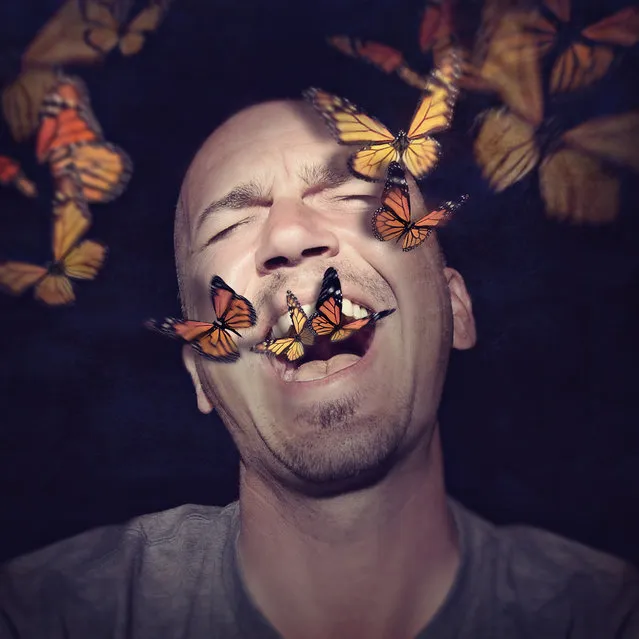
«Sing»

The story of 20 children born or living with illness or health conditions is being told by Toronto photographer and artist Shawn Van Daele, by transforming their drawings into magical photographs.
Details
26 May 2012 06:55:00
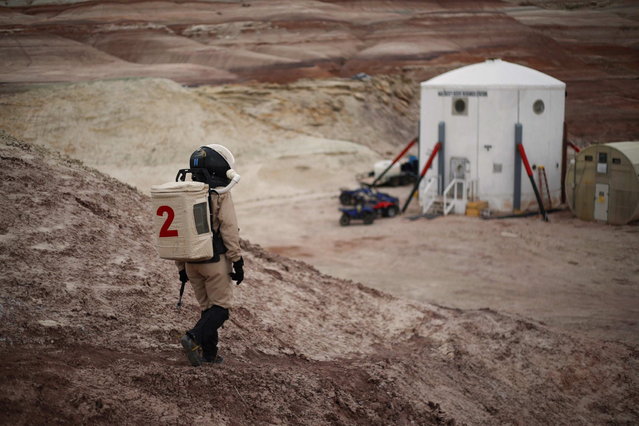
Csilla Orgel, a geologist of Crew 125 EuroMoonMars B mission, makes her way back to the Mars Desert Research Station (MDRS) in the Utah desert March 3, 2013. (Photo by Jim Urquhart/Reuters)

NASA says it could be another 20 years before humans touch down on Mars, but in a sense, the Mars Society has been exploring the red planet for more than a decade – in Utah. Photo: Csilla Orgel, a geologist of Crew 125 EuroMoonMars B mission, makes her way back to the Mars Desert Research Station (MDRS) in the Utah desert March 3, 2013. The MDRS aims to investigate the feasibility of a human exploration of Mars and uses the Utah desert's Mars-like terrain to simulate working conditions on the red planet. Scientists, students and enthusiasts work together developing field tactics and studying the terrain. All outdoor exploration is done wearing simulated spacesuits and carrying air supply packs and crews live together in a small communication base with limited amounts of electricity, food, oxygen and water. Everything needed to survive must be produced, fixed and replaced on site. (Photo by Jim Urquhart/Reuters)
Details
14 Mar 2013 12:11:00