Loading...
Done
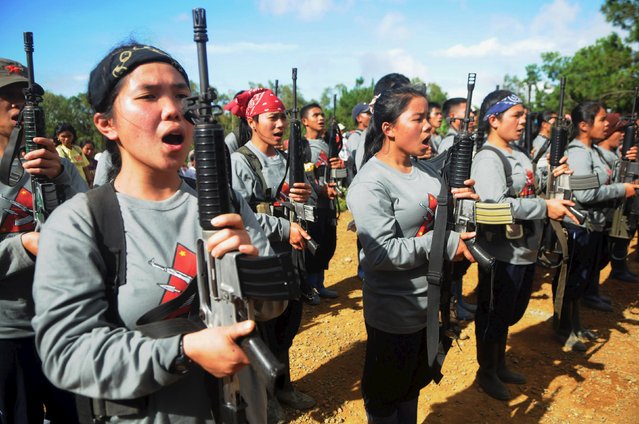
Members of the New People's Army (NPA) female guerrillas perform a cultural show during the release of a Philippines army soldier in Sugbongcogon town, Misamis Oriental, southern Philippines, November 20, 2015. NPA spokesperson Allan Juanito warned that they will seize more soldiers to exchange them with the government as "Prisoners of war". (Photo by Froilan Gallardo/Reuters)

Members of the New People's Army (NPA) female guerrillas perform a cultural show during the release of a Philippines army soldier in Sugbongcogon town, Misamis Oriental, southern Philippines, November 20, 2015. NPA spokesperson Allan Juanito warned that they will seize more soldiers to exchange them with the government as "Prisoners of war". (Photo by Froilan Gallardo/Reuters)
Details
21 Nov 2015 08:07:00
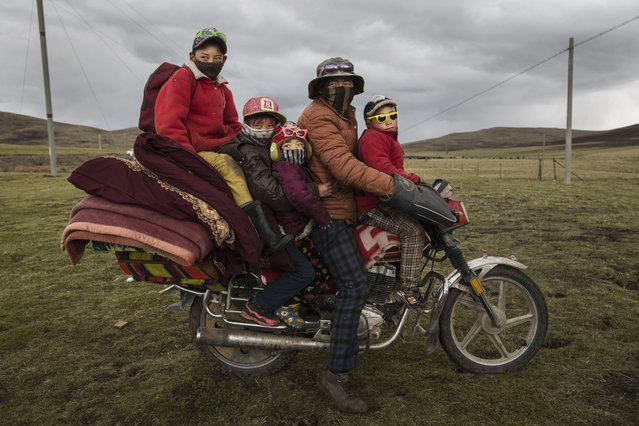
A Tibetan nomad family crowds on a motorcycle at a camp for cordycep pickers on May 21, 2016 near Sershul on the Tibetan Plateau in the Garze Tibetan Autonomous Prefecture of Sichuan province. (Photo by Kevin Frayer/Getty Images)

A Tibetan nomad family crowds on a motorcycle at a camp for cordycep pickers on May 21, 2016 near Sershul on the Tibetan Plateau in the Garze Tibetan Autonomous Prefecture of Sichuan province. (Photo by Kevin Frayer/Getty Images)
Details
05 Jun 2016 13:03:00
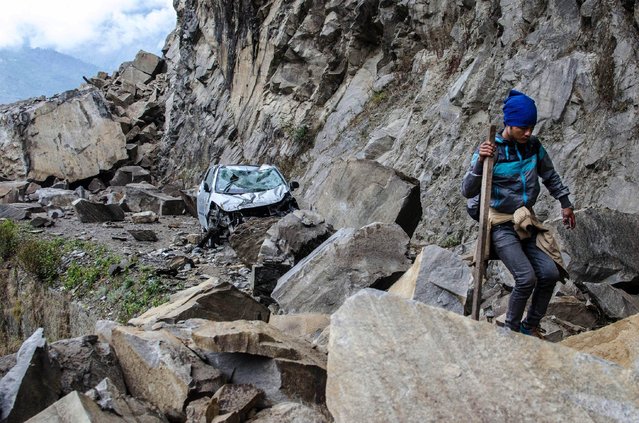
In this Monday, April 27, 2015 photo, a Nepalese man walks over fallen rocks and past a crushed car on the way to Dhunche, Nepal, a village in Langtang National Park, two days after a 7.8-magnatude earthquake hit the region. (Photo by Joe Sieder via AP Photo)

In this Monday, April 27, 2015 photo, a Nepalese man walks over fallen rocks and past a crushed car on the way to Dhunche, Nepal, a village in Langtang National Park, two days after a 7.8-magnatude earthquake hit the region. The photographer, Joe Sieder, said the man was part of a group of Nepalese workers and trekkers who left Syabrubesi earlier that day and hiked about 30 km (19 miles) for 13 hours, mostly over boulder-strewn roads with some small landslides along the way to make their way to a passable road. (Photo by Joe Sieder via AP Photo)
Details
30 Apr 2015 10:54:00
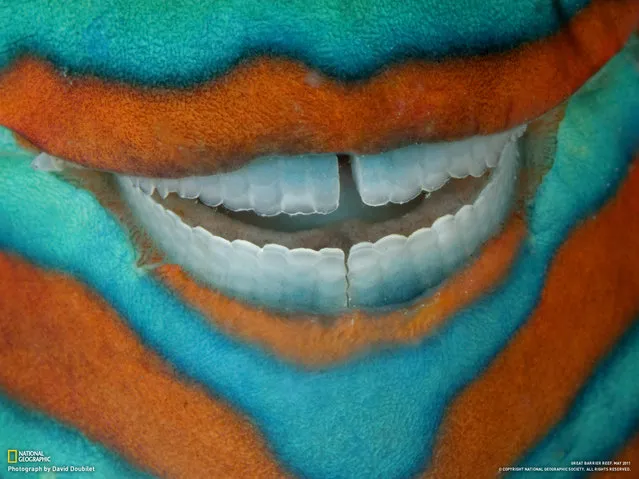
Photographers: David Doubilet

“David Doubilet (born 28 November 1946) is a well known underwater photographer known primarily for his work published in National Geographic Magazine. He was born in New York and started taking photos underwater at the young age of 12. He started with a Brownie Hawkeye in a rubber anesthesiologist's bag to keep the water out of the camera. During his summer holidays, he spent his time along the New Jersey coast. He later worked as a diver and photographer for the Sandy Hook Marine Laboratories in New Jersey. He also spent much time in the Caribbean. While a dive instructor in the Bahamas he found his motivation to capture the beauty of the sea and everything in it”. – Wikipedia. (Photo by David Doubilet/National Geographic)
Details
16 May 2012 12:21:00
“AirFrance Boeing 747 landing in St. Maarten”. (Photo by Aurimas)

“Maho Beach is a beach on the Dutch side of the Caribbean island of Saint Martin, in the country of Sint Maarten. It is famous for the Princess Juliana International Airport adjacent to the beach. Arriving aircraft must touch down as close as possible to the beginning of Runway 10 due to the short runway length of 2,180 metres (7,150 ft), resulting in aircraft on their final approach flying over the beach at minimal altitude”. – Wikipedia

Photo: “AirFrance Boeing 747 landing in St. Maarten”. (Photo by Aurimas)


Details
06 Dec 2012 09:05:00


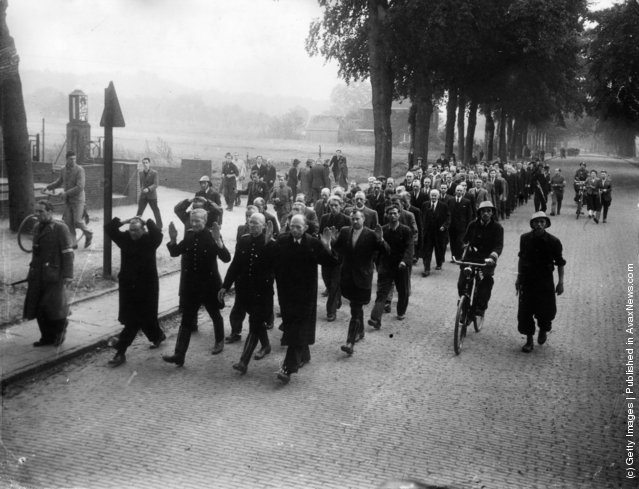
Dutch collaborators under arrest at Nijmegan, Holland. They were rounded up after the capture of Nijmegan Bridge by the Allies. (Photo by H. Warhurst/PNA Rota/Getty Images). 1945
Details
10 Apr 2011 10:52:00


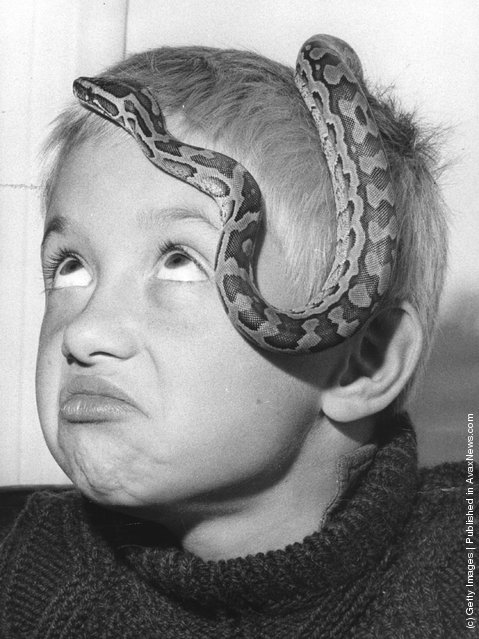
Nine-year-old Barry Miller appears none too impressed with the movements of an African Rock Python which is exploring his scalp. (Photo by Keystone/Getty Images). 27th August 1961
Details
19 May 2011 09:20:00
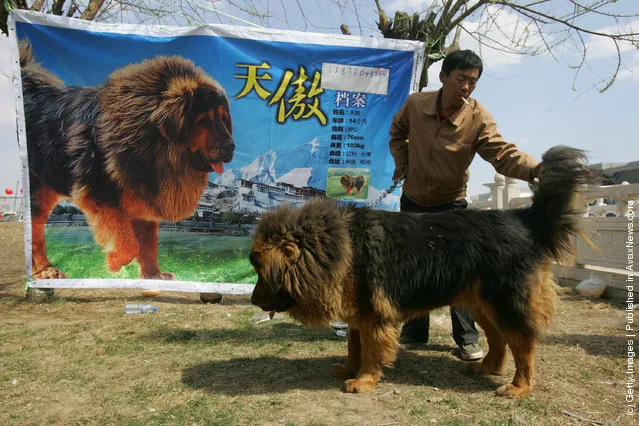
Tibetan Mastiff

“The Tibetan Mastiff also known as Do-khyi (variously translated as “home guard”, “door guard”, “dog which may be tied”, “dog which may be kept”), reflects its use as a guardian of herds, flocks, tents, villages, monasteries, and palaces, much as the old English ban-dog (also meaning tied dog) was a dog tied outside the home as a guardian. However, in nomad camps and in villages, the Do-khyi is traditionally allowed to run loose at night and woe be unto the stranger who walks abroad after dark”. – Wikipedia

Photo: A man displays a Tibetan Mastiff he raised during the Tibetan Mastiff exposition on April 7, 2007 in Langfang of Hebei Province, China. (Photo by China Photos/Getty Images)
Details
05 Oct 2011 14:27:00