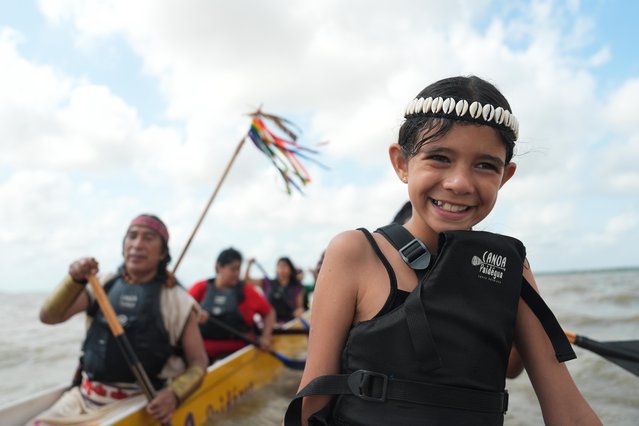
Moana Mason, 8, participates in the People's Summit event on Guajara Bay during the COP30 U.N. Climate Summit, Wednesday, November 12, 2025, in Belem, Brazil. (Photo by Joshua A. Bickel/AP Photo)
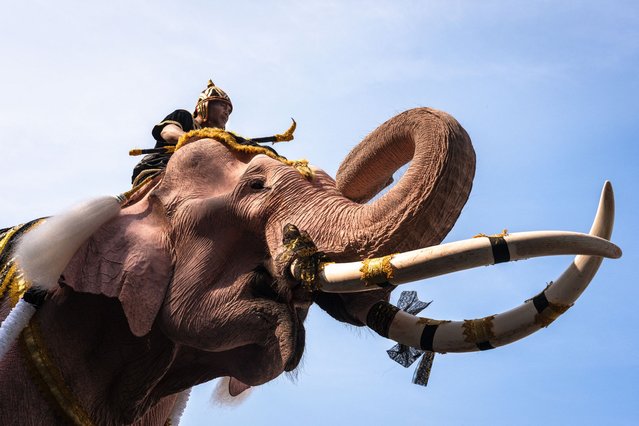
A mahout rides on painted elephant as they march during a procession near the Grand Palace to pay their respects to Thailand's former queen Sirikit in Bangkok on November 27, 2025. (Photo by Chanakarn Laosarakham/AFP Photo)
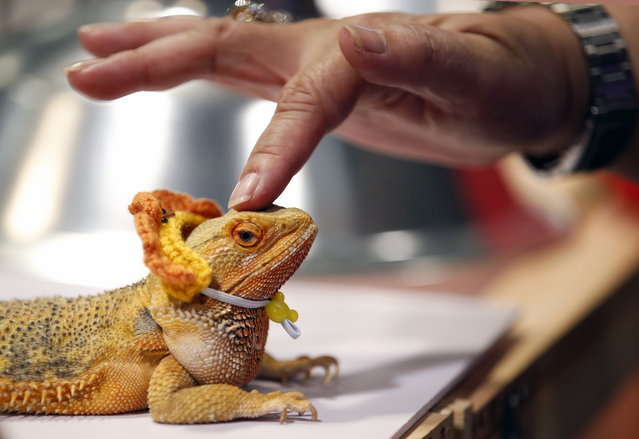
An animal enthusiast touches a Bearded Dragon displayed for sale as exotic pet at Thailand Reptile and Exotic Expo in Bangkok, Thailand, 02 August 2024. The Thailand Reptile and Exotic Expo is a trade showcase exhibiting hundreds of reptiles and exotic animals from breeders to sell as exotic pets for enthusiasts. (Photo by Rungroj Yongrit/EPA)
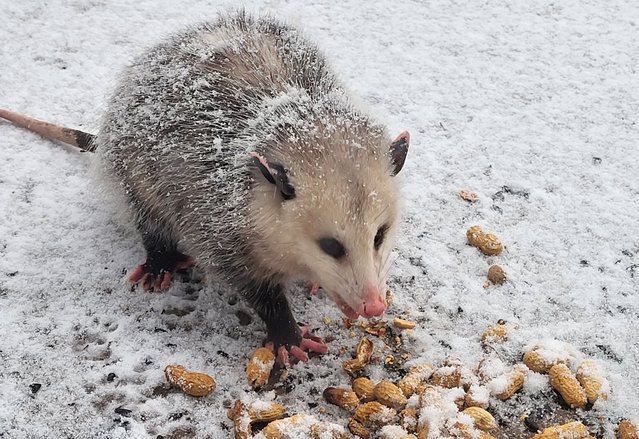
An urban Opossum covered in light snow visits a suburban Chicago deck on December 10, 2025. (Photo by H Rick Bamman/ZUMA Press Wire/Rex Features/Shutterstock)
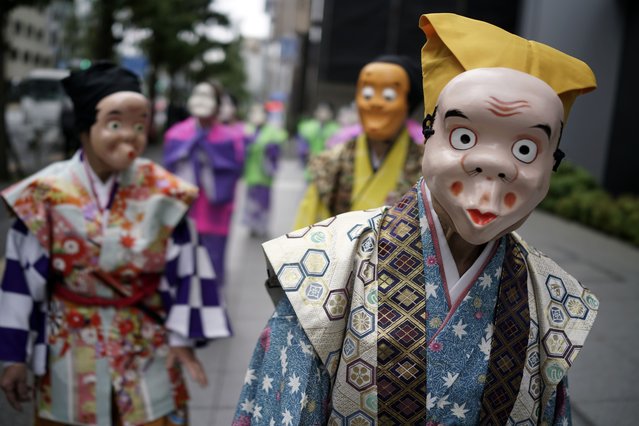
Artists wearing traditional clown masks prepare to march during the annual Shinto festival called the Grand Festival at the Kotohiragu shrine in the Toranomon business district of Tokyo, Thursday, October 10, 2024. (Photo by Eugene Hoshiko/AP Photo)
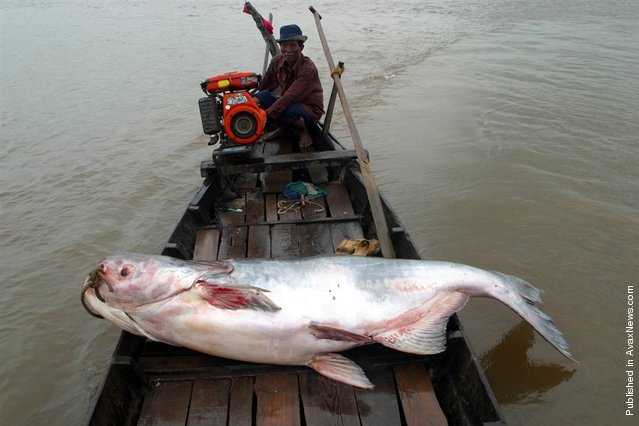
Among the fish populations that could be harmed by the Xayaburi dam in Laos is the critically endangered Mekong giant catfish, considered by the Guinness Book of World Records to be the world’s largest freshwater fish. The fish, which grows to 650 pounds and about 10 feet long, is only found in the Mekong River. It is migratory, moving between downstream habitats in Cambodia upstream to northern Thailand and Laos each year to spawn. Some experts fear the Xayaburi dam could block the migration and drive the giant catfish to extinction. (Photo by Courtesy of Zeb Hogan/University of Nevada, Reno)