Hikaru Cho believes that we should challenge our imaginations to create new work using traditional tools, not fancy computers and software. (Photo by Jim Marks/PA Wire)
“Tardigrades (commonly known as waterbears or moss piglets) are small, water-dwelling, segmented animals with eight legs. Tardigrades were first discovered in 1773 by Johann August Ephraim Goeze, who called them kleiner Wasserbär, meaning “little water bear” in German. The name Tardigrada means “slow walker” and was given by Lazzaro Spallanzani in 1777. The name water bear comes from the way they walk, reminiscent of a bear's gait. The biggest adults may reach a body length of 1.5 millimetres (0.059 in), the smallest below 0.1 mm. Freshly hatched tardigrades may be smaller than 0.05 mm”. – Wikipedia. Photo: Tardigrades. (Photo by SPL/East News)
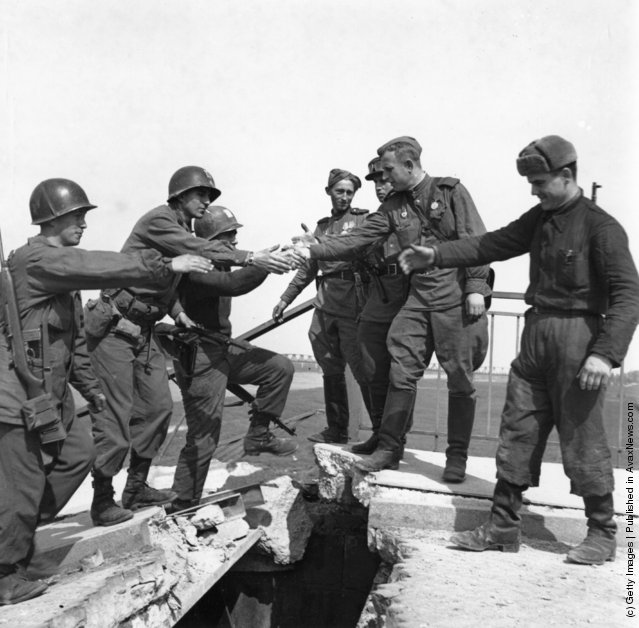
Infantrymen of the US First Army shake hands with Russian soldiers on the broken bridge over the Elbe after the link-up at Torgau, Germany. The US soldiers are (L-R): Pfc. John A Metzger, Delbert E Philpott, and Pvt. Thomas B Summers; all are from A Company, 271st Regiment. (Photo by Allan Jackson/Getty Images). 04-1945
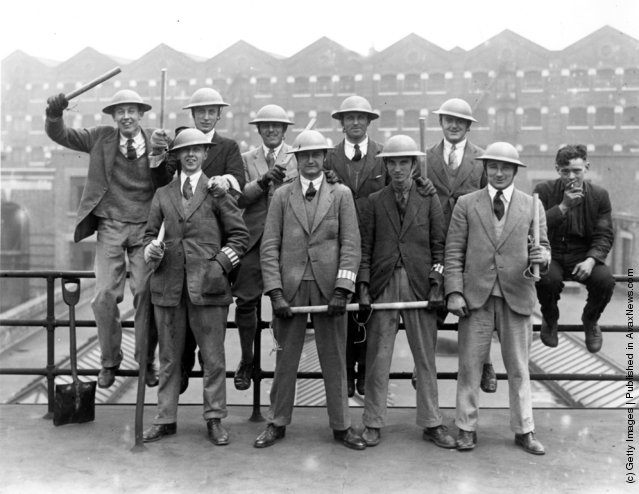
“The 1926 general strike in the United Kingdom was a general strike that lasted nine days, from 4 May 1926 to 13 May 1926. It was called by the general council of the Trades Union Congress (TUC) in an unsuccessful attempt to force the British government to act to prevent wage reduction and worsening conditions for coal miners”. – Wikipedia
Photo: Oxford University Student Volunteers during the General Strike in an aggressive pose. (Photo by Fox Photos/Getty Images)
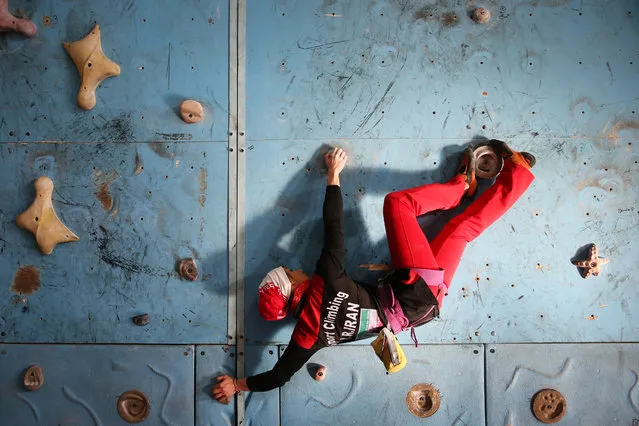
In this Monday, January 18, 2016 photo, Iranian rock climber, Farnaz Esmaeilzadeh, scales a climbing gym in the city of Zanjan, some 330 kilometers (207 miles) west of the capital Tehran, Iran. Esmaeilzadeh, 27, who has been climbing since she was 13, has distinguished herself in international competitions despite the barriers she faces as a female athlete in conservative Iran. (Photo by Ebrahim Noroozi/AP Photo)
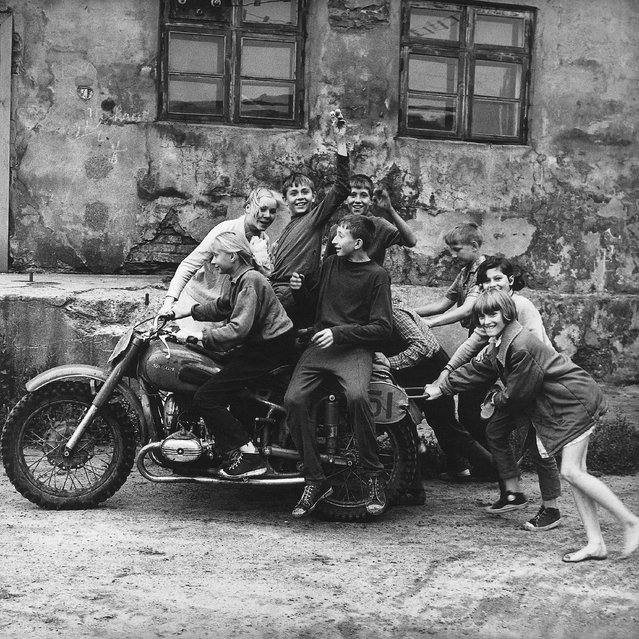
Rebelling against political propaganda, acclaimed photographer Antanas Sutkus embarked on a life-long journey to capture the everyday scenes around him. Antanas Sutkus, born in 1939, studied journalism at Vilnius University in the late 1950s before becoming disillusioned by the confines of the Soviet-controlled press. He began taking photographs instead, and soon co-founded the Lithuanian Association of Art Photographers. Here: The first Lithuanian bikers, 1974. (Photo by Antanas Sutkus)
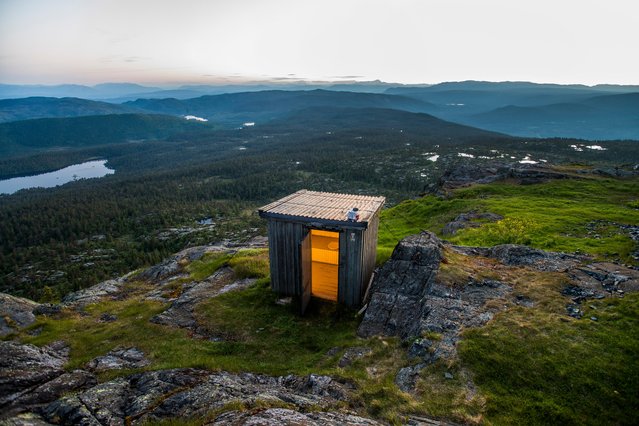
This restroom on the rubbly flanks of Jonsknuten in Norway looks up at the peak of the 904m mountain. Yu have to leave the door open to enjoy the view but the chances of being disturbed are minimal. (Photo by Olaf Menz/Lonely Planet)