Loading...
Done
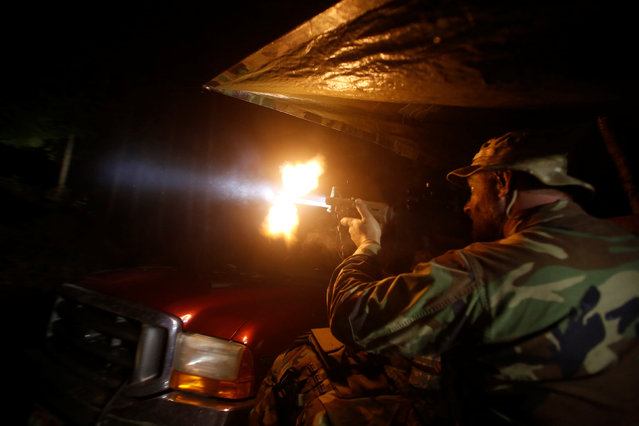
Members of the Oath Keepers and general public return fire during a simulated attack as they take part in a tactical training session in northern Idaho, U.S. October 1, 2016. (Photo by Jim Urquhart/Reuters)

Members of the Oath Keepers and general public return fire during a simulated attack as they take part in a tactical training session in northern Idaho, U.S. October 1, 2016. In April 2015 Reuters photographer Jim Urquhart was assigned to cover the Oath Keepers during a tour of the Sugar Pine gold mine in Oregon after the group of former cops, military, firefighters and other first responders had risen to prominence during a standoff in Nevada over land rights. (Photo by Jim Urquhart/Reuters)
Details
05 Nov 2016 12:05:00
Aleksandra Krunic, of Serbia, drops to the court after defeating Petra Kvitova, of the Czech Republic, during the third round of the 2014 U.S. Open tennis tournament, Saturday, August 30, 2014, in New York. (Photo by Kathy Willens/AP Photo)

Aleksandra Krunic, of Serbia, drops to the court after defeating Petra Kvitova, of the Czech Republic, during the third round of the 2014 U.S. Open tennis tournament, Saturday, August 30, 2014, in New York. (Photo by Kathy Willens/AP Photo)
Details
04 Sep 2014 08:10:00
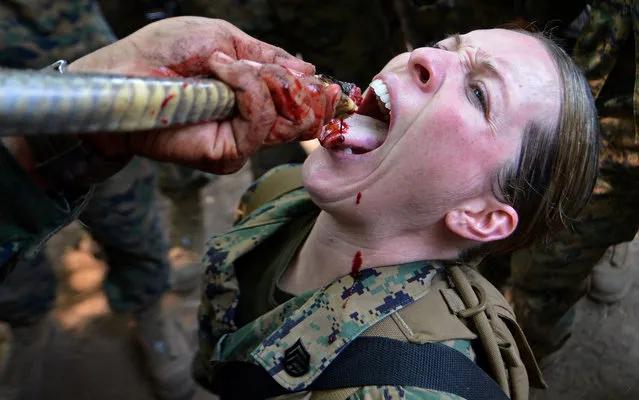
In a military base in the Thai province of Chon Buri February 20 U.S. Marines Navy with Thailand began their studies in jungle survival. The event is held in joint military exercises “Cobra Gold 2013”. During a jungle survival program February 20, 2013 taught by Royal Thai Special Forces in Sannapit, Thailand, U.S. Marines learned to catch cobras and drink their fresh blood, not to mention eat forest insects and pull the heads off of chicken. The training was part of Operation Cobra Gold 13, the 32nd edition of international military exercises hosted by the Thai. According to a U.S. Marines press release, Cobra Gold is the largest exercise of its kind in Asia and incorporates troops from five other nations in addition to the U.S. and Thailand. The Daily Mail reports that the Marines were invited to experience the local custom of drinking cobra blood after being taught to catch and kill cobras in the wild. As CNN notes, Cobra blood is believed to be a panacea and aphrodiasic in parts of Southeast Asia. In Jakarta, vendors can earn over $100 a night selling shots of cobra blood mixed with liquor. (Photo by Pornchai Kittiwongsakul/AFP Photo)

During a jungle survival program February 20, 2013 taught by Royal Thai Special Forces in Sannapit, Thailand, U.S. Marines learned to catch cobras and drink their fresh blood, not to mention eat forest insects and pull the heads off of chicken. The training was part of Operation Cobra Gold 13, the 32nd edition of international military exercises hosted by the Thai. According to a U.S. Marines press release, Cobra Gold is the largest exercise of its kind in Asia and incorporates troops from five other nations in addition to the U.S. and Thailand. The Daily Mail reports that the Marines were invited to experience the local custom of drinking cobra blood after being taught to catch and kill cobras in the wild. As CNN notes, Cobra blood is believed to be a panacea and aphrodiasic in parts of Southeast Asia. In Jakarta, vendors can earn over $100 a night selling shots of cobra blood mixed with liquor. (Photo by Pornchai Kittiwongsakul/AFP Photo)
Details
23 Feb 2013 11:52:00
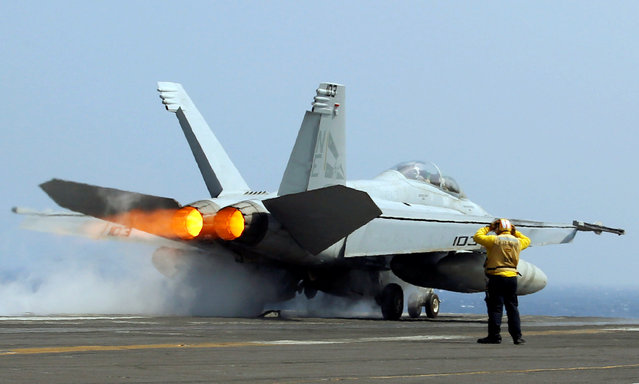
A U.S. Navy F18 fighter jet takes off from aircraft carrier USS Carl Vinson during a FONOPS (Freedom of Navigation Operation Patrol) in South China Sea, March 3, 2017. (Photo by Erik De Castro/Reuters)

A U.S. Navy F18 fighter jet takes off from aircraft carrier USS Carl Vinson during a FONOPS (Freedom of Navigation Operation Patrol) in South China Sea, March 3, 2017. The U.S. military took journalists Friday to the carrier on routine patrol off the disputed South China Sea, sending a signal to China and American allies of its resolve to ensure freedom of navigation and overflight in one of the world's security hotspots. (Photo by Erik De Castro/Reuters)
Details
06 Mar 2017 00:01:00
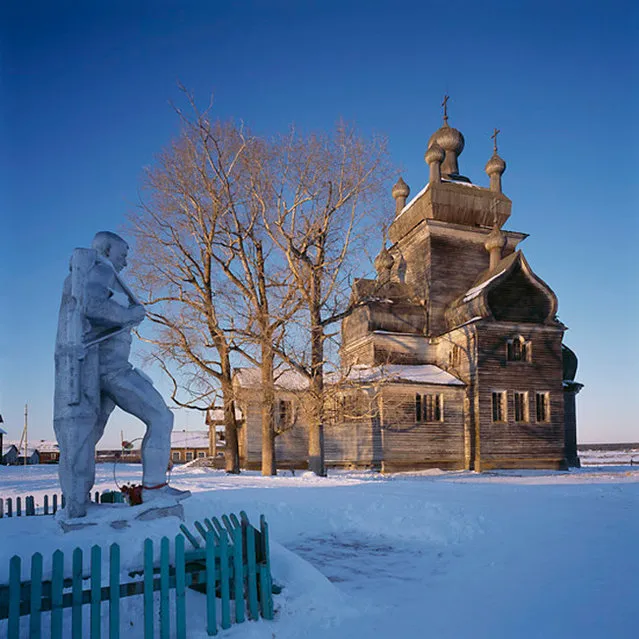
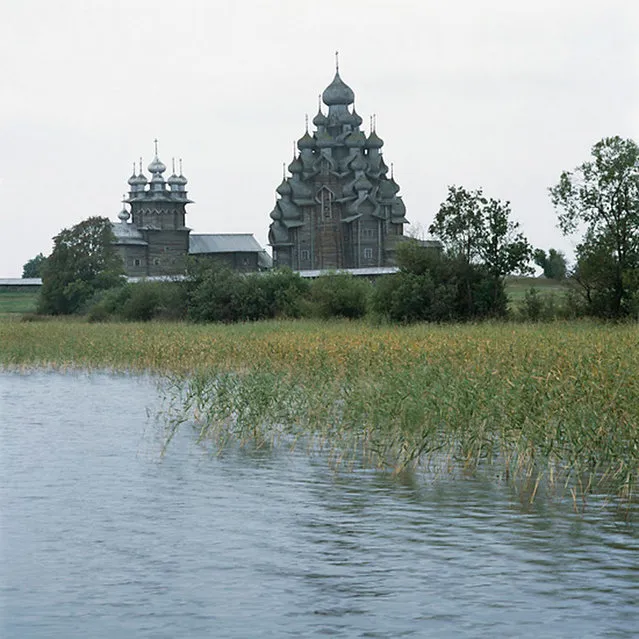
Wooden Churches - Travelling In The Russian North By Richard Davies Part 2

While communism, collectivism, worms, dry rot and casual looting failed to destroy the majestic wooden churches of Russia, it may be ordinary neglect that finally does them in. Dwindled now to several hundred remaining examples, these glories of vernacular architecture lie scattered amid the vastness of the world’s largest country. Just over a decade ago, Richard Davies, a British architectural photographer, struck out on a mission to record the fragile and poetic structures. Austerely beautiful and haunting, “Wooden Churches: Traveling in the Russian North” (White Sea Publishing; $132) is the result. Covering thousands of miles, Mr. Davies described how he and the writer Matilda Moreton tracked down the survivors from among the thousands of onion-domed structures built after Prince Vladimir converted to Christianity in 988.

See also: Wooden Churches Part1
Details
28 Nov 2013 12:13:00
Wooden Churches - Travelling In The Russian North By Richard Davies Part 1

While communism, collectivism, worms, dry rot and casual looting failed to destroy the majestic wooden churches of Russia, it may be ordinary neglect that finally does them in. Dwindled now to several hundred remaining examples, these glories of vernacular architecture lie scattered amid the vastness of the world’s largest country. Just over a decade ago, Richard Davies, a British architectural photographer, struck out on a mission to record the fragile and poetic structures. Austerely beautiful and haunting, “Wooden Churches: Traveling in the Russian North” (White Sea Publishing; $132) is the result. Covering thousands of miles, Mr. Davies described how he and the writer Matilda Moreton tracked down the survivors from among the thousands of onion-domed structures built after Prince Vladimir converted to Christianity in 988.
Details
25 Nov 2013 12:47:00
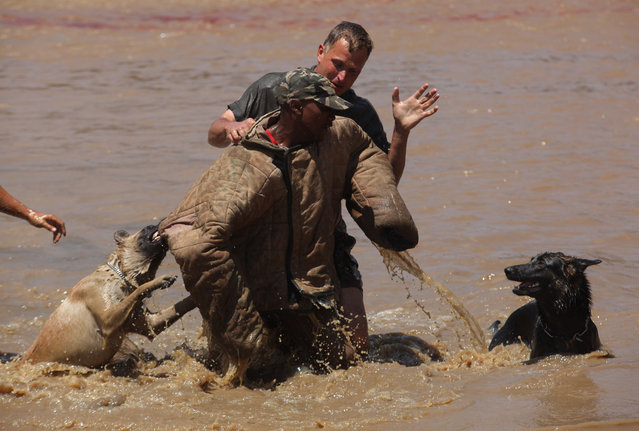
In this photo taken Wednesday, November 26, 2014 attack dogs and their handlers apprehend a “rhino poacher” center, after alighting from a helicopter into water,  in a simulation exercise showing training at an academy run by the Paramount Group, near Rustenburg, South Africa. (Photo by Denis Farrell/AP Photo)

In this photo taken Wednesday, November 26, 2014 attack dogs and their handlers apprehend a “rhino poacher” center, after alighting from a helicopter into water, in a simulation exercise showing training at an academy run by the Paramount Group, near Rustenburg, South Africa. The course prepares canine units to find firearms or contraband, track suspects in the undergrowth and abseil in harnesses from helicopters in pursuit of poachers. Dogs and handlers learn to trust each other and fine tune a relationship balancing control and aggression. (Photo by Denis Farrell/AP Photo)
Details
01 Dec 2014 14:14:00
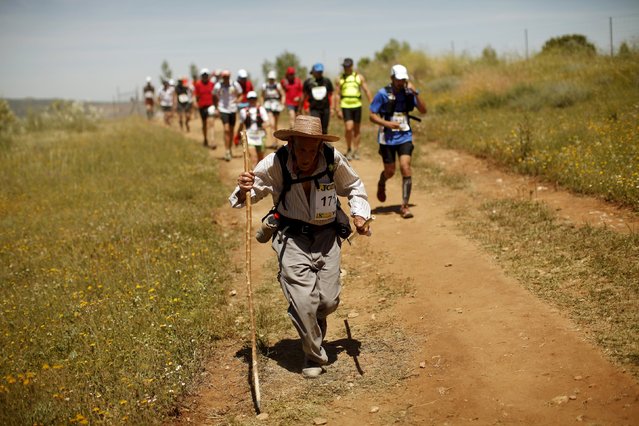
Spanish runner Francisco Contreras, 77, known as “Super Paco”, runs as he participates in the XVIII 101km international competition in the outskirts of Ronda, southern Spain, May 9, 2015. (Photo by Jon Nazca/Reuters)

Spanish runner Francisco Contreras, 77, known as “Super Paco”, runs as he participates in the XVIII 101km international competition in the outskirts of Ronda, southern Spain, May 9, 2015. About 7,000 participants, including runners, mountain bikers and duathletes, run a track of 101 km (63 miles) in less than 24 hours through the “Serrania de Ronda” (Ronda Mountain Range) during this competition organised by the 4th Tercio (Regiment) “Alejandro Farnesio” of the Spanish Legion. The Puente Nuevo is 120 metres (394 feet) high over the gorge of the river that divides the city of Ronda. Picture taken using long exposure. (Photo by Jon Nazca/Reuters)
Details
11 May 2015 12:17:00