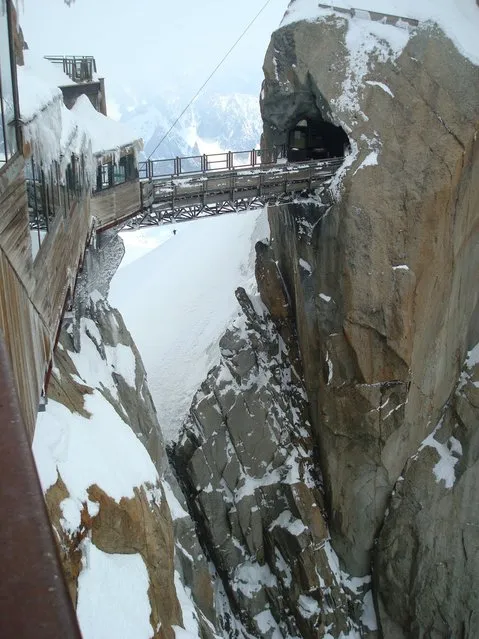
The name “Aiguille du Midi” translates literally as “Needle of the Noon” or “Needle of the South”. It gets its name from its tapered form and from its position when viewed from Chamonix: it approximately indicates noon when the sun passes over its summit.
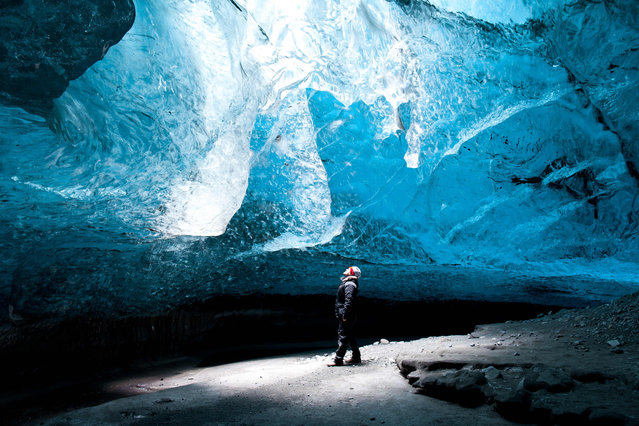
Shimmering clearest blue and stretching as far as the eye can see, this is one of Iceland's famed crystal ice caves. The giant solid waves look frozen in time but they are slowly moving along as part of the Vatnajokull Glacier – which stretches across eight per cent of the island. The images were captured in February 2014 by British photographer Rob Lott, 49. Photo: A wide view of Rob Lott in the crystal ice cave in the Vatnajokull Glacier, Iceland. (Photo by Rob Lott/Barcroft Media)
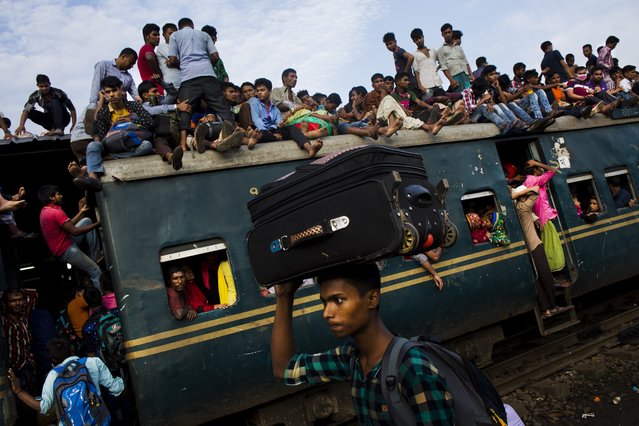
Bangladeshi Muslims travel on the roof of an overcrowded train as they head to their hometowns ahead of Eid al-Adha in Dhaka, Bangladesh, Friday, September 1, 2017. The festival commemorates the story of Abraham and his readiness to sacrifice his son as an act of obedience to God, who provided a lamb to be used instead. (Photo by Bernat Armangue/AP Photo)
Guests pose during a VIP media preview ahead of the opening of The Museum of Selfies in Glendale, California, U.S., March 29, 2018. Tommy Honton, the museum’s co-founder, says: “We don’t want this to be an elite art world, ivory tower thing. Art doesn’t have to be hard to understand – it can be for everyone”. (Photo by Mario Anzuoni/Reuters)
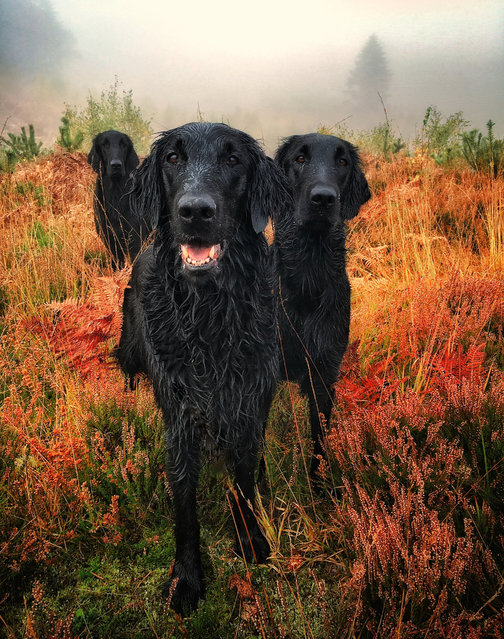
First place, Portrait. Three flat-coated retrievers – Crew, Darcie and Pagan – by Carol Durrant from the UK. (Photo by Carol Durrant/Dog Photographer of the Year 2018)
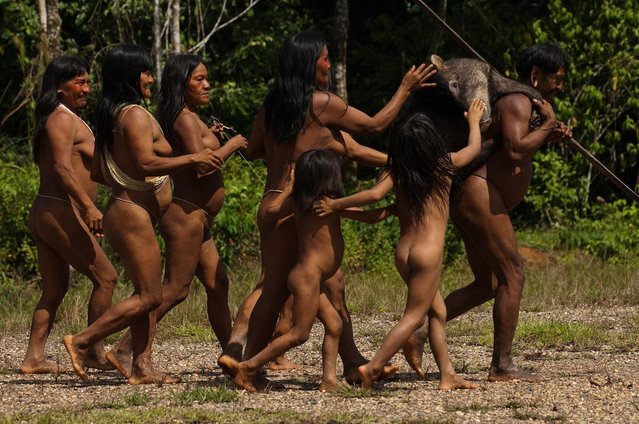
Spectacular images offering insight into the lives of the Huaorani people in the Ecuadorian Amazon have been revealed showing how they use traditional methods to hunt monkeys for food. The stunning pictures were taken by conservation photographer Pete Oxford from Torquay, Devon in the Ecuadorian Amazon. Here: The tribe were seen celebrating after a hunter returned to camp with a wild pig. (Photo by Pete Oxford/Mediadrumworld.com)
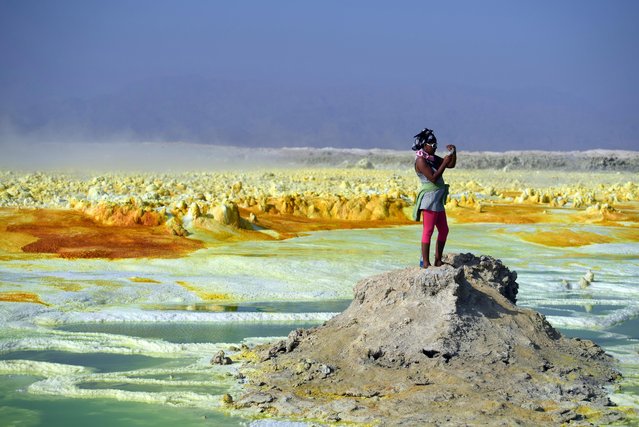
A tourist take a photograph of a sulphur lake in the Danakil Depression on January 23, 2017 near Dallol, Ethiopia. The depression lies 100 metres below sea level and is one of the hottest and most inhospitable places on Earth. Despite the gruelling conditions, Ethiopians continue a centuries old industry of mining salt from the ground by hand in temperatures that average 34.5 degrees centigrade but have risen to over 50 degrees. (Photo by Carl Court/Getty Images)