Loading...
Done
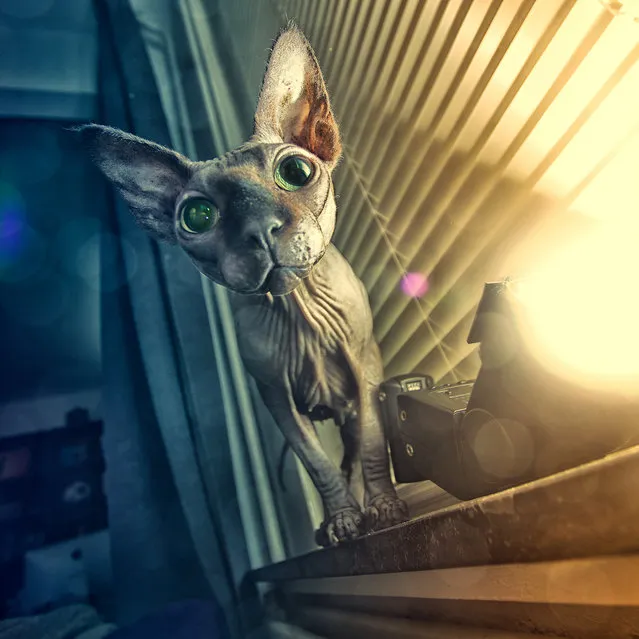
“Flashy Lady”. (Photo and caption by Roderique Arisiaman)

Some artists want to convey some deep message through their art, while some are simply satisfied with shocking the audience. Roderique Arisiaman is the latter kind. Though his works do not play on the strings of our emotion, they can pique the interest with their flashy and sometimes humorous appearance. Many of his works have a zombie theme, and are surprisingly well done, especially the one where a man pushes his fingers through his cheek and into his eye. If given the chance, Roderique Arisiaman would probably do a great job of designing a poster for some zombie apocalypse movie. (Photo and caption by Roderique Arisiaman)
Details
18 Mar 2015 09:27:00
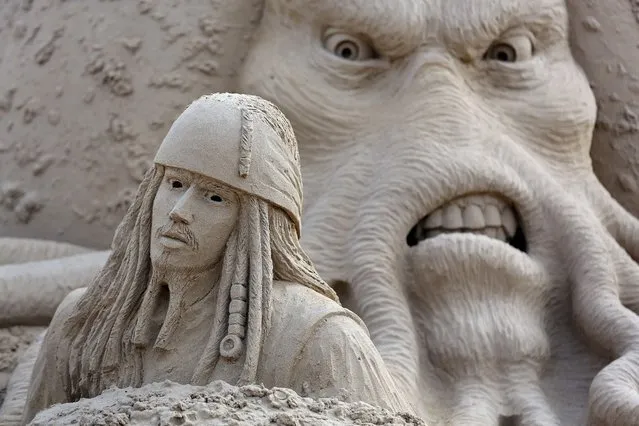
Detail of a sand sculpture of Pirates of the Caribbean  is seen as pieces are prepared as part of this year's Hollywood themed annual Weston-super-Mare Sand Sculpture festival on March 26, 2013 in Weston-Super-Mare, England. Due to open on Good Friday, currently twenty award winning sand sculptors from across the globe are working to create sand sculptures including Harry Potter, Marilyn Monroe and characters from the Star Wars films as part of the town's very own movie themed festival on the beach.  (Photo by Matt Cardy)

Detail of a sand sculpture of Pirates of the Caribbean is seen as pieces are prepared as part of this year's Hollywood themed annual Weston-super-Mare Sand Sculpture festival on March 26, 2013 in Weston-Super-Mare, England. Due to open on Good Friday, currently twenty award winning sand sculptors from across the globe are working to create sand sculptures including Harry Potter, Marilyn Monroe and characters from the Star Wars films as part of the town's very own movie themed festival on the beach. (Photo by Matt Cardy)
Details
27 Mar 2013 08:58:00
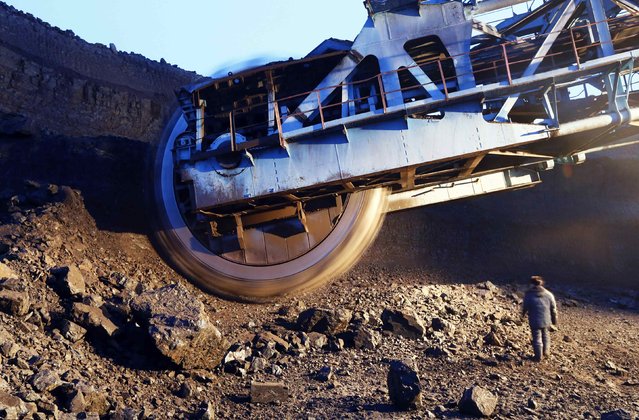
An employee walks near a rotary dredge which works on the coal face of the Borodinsky opencast colliery, near the Siberian town of Borodino, east of Krasnoyarsk, December 9, 2014. The Borodinsky colliery, 9 km (5.6 miles) long and more than 100 meters (328 feet) deep, annually produces more than 20 million tons of coal and is considered to be the biggest opencast coal mine in Russia, according to official representatives. (Photo by Ilya Naymushin/Reuters)

An employee walks near a rotary dredge which works on the coal face of the Borodinsky opencast colliery, near the Siberian town of Borodino, east of Krasnoyarsk, December 9, 2014. The Borodinsky colliery, 9 km (5.6 miles) long and more than 100 meters (328 feet) deep, annually produces more than 20 million tons of coal and is considered to be the biggest opencast coal mine in Russia, according to official representatives. (Photo by Ilya Naymushin/Reuters)
Details
11 Dec 2014 13:29:00
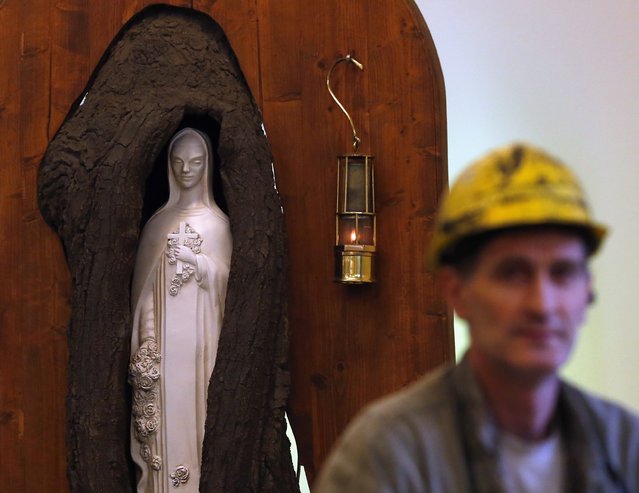
A miner sits front of the statue of St. Barbara, saint of the miners, during last working day at Hungary's last hard coal deep-cast mine at Markushegy December 23, 2014.The underground mine, west of the capital city Budapest, has to stop producing coal at the end of this year in line with a European Union effort to shut down uncompetitive hard coal mines. (Photo by Laszlo Balogh/Reuters)

A miner sits front of the statue of St. Barbara, saint of the miners, during last working day at Hungary's last hard coal deep-cast mine at Markushegy December 23, 2014.The underground mine, west of the capital city Budapest, has to stop producing coal at the end of this year in line with a European Union effort to shut down uncompetitive hard coal mines. (Photo by Laszlo Balogh/Reuters)
Details
24 Dec 2014 13:36:00
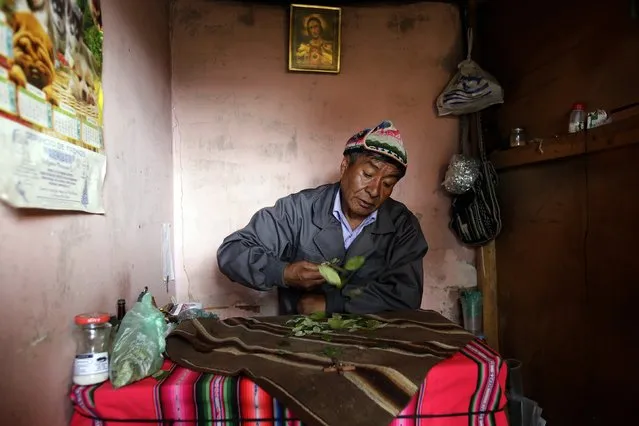
Aymara witchdoctor Ricardo Quispe, also called “Lord of the Lake”, throws coca leaves during a ritual to predict the future, at the witches market of El Alto, on the outskirts of La Paz, December 31, 2014. Dozens of witch doctors tend to a warren of stalls in El Alto, making offerings to give thanks, to promise luck at work or in love, or to call up spirits and banish curses at the end of the year. (Photo by David Mercado/Reuters)

Aymara witchdoctor Ricardo Quispe, also called “Lord of the Lake”, throws coca leaves during a ritual to predict the future, at the witches market of El Alto, on the outskirts of La Paz, December 31, 2014. Dozens of witch doctors tend to a warren of stalls in El Alto, making offerings to give thanks, to promise luck at work or in love, or to call up spirits and banish curses at the end of the year. (Photo by David Mercado/Reuters)
Details
01 Jan 2015 14:05:00
A devotee of the Afro-Brazilian goddess of the sea Lemanja pays tribute on Lemanja's Day at Ramirez beach in Montevideo February 2, 2015. On this day every year, worshippers light candles at a shrine and throw sweets, alcoholic drinks, fruits and cheap jewellery into the sea as offerings to ask for good health and luck in love and work. (Photo by Andres Stapff/Reuters)

A devotee of the Afro-Brazilian goddess of the sea Lemanja pays tribute on Lemanja's Day at Ramirez beach in Montevideo February 2, 2015. On this day every year, worshippers light candles at a shrine and throw sweets, alcoholic drinks, fruits and cheap jewellery into the sea as offerings to ask for good health and luck in love and work. (Photo by Andres Stapff/Reuters)
Details
04 Feb 2015 12:14:00
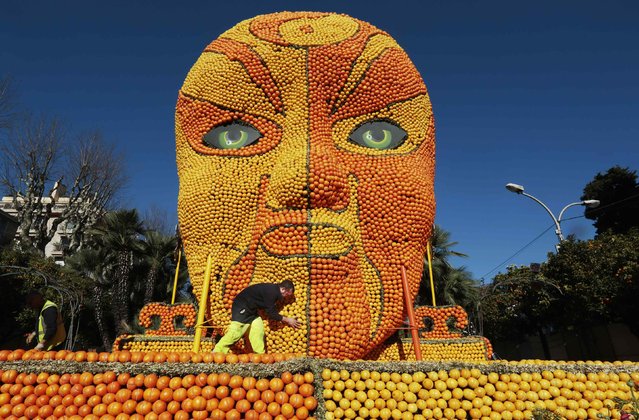
A worker puts the final touches to a replica of a Beijing opera mask made with lemons and oranges during the 82th Lemon festival in Menton February 12, 2015. Over 20,000 hours work for teams to set up the festival and some 145 metric tons of lemons and oranges are used to make displays during the 82th festival, which is themed “Tribulations of a lemon in China”, and runs from February 14 through March 4. (Photo by Eric Gaillard/Reuters)

A worker puts the final touches to a replica of a Beijing opera mask made with lemons and oranges during the 82th Lemon festival in Menton February 12, 2015. Over 20,000 hours work for teams to set up the festival and some 145 metric tons of lemons and oranges are used to make displays during the 82th festival, which is themed “Tribulations of a lemon in China”, and runs from February 14 through March 4. (Photo by Eric Gaillard/Reuters)
Details
13 Feb 2015 13:11:00
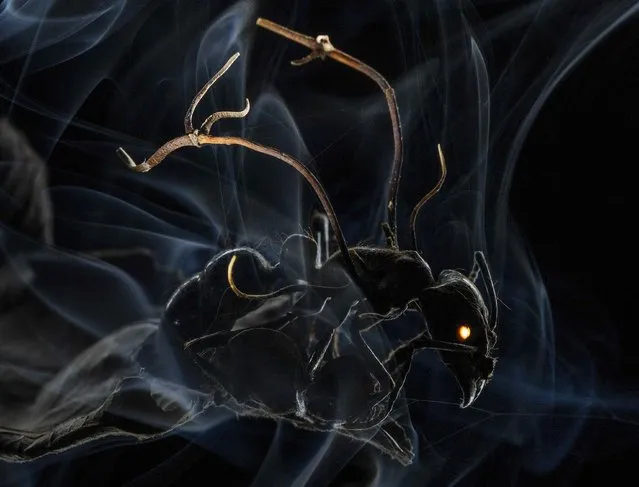
Anand Varma, a U.S. photographer working for the National Geographic, won the First Prize in the Nature Category, Stories, of the 2015 World Press Photo contest with his series of pictures, which includes this one of spores of a fungus landing on an ant, penetrating its exoskeleton and entering its brain, compelling the host to leave its normal habitat on the forest floor and scale a nearby tree, in this picture taken January 22, 2014 and released by the World Press Photo on February 12, 2015. (Photo by Anand Varma/Reuters/National Geographic/World Press Photo)

Anand Varma, a U.S. photographer working for the National Geographic, won the First Prize in the Nature Category, Stories, of the 2015 World Press Photo contest with his series of pictures, which includes this one of spores of a fungus landing on an ant, penetrating its exoskeleton and entering its brain, compelling the host to leave its normal habitat on the forest floor and scale a nearby tree, in this picture taken January 22, 2014 and released by the World Press Photo on February 12, 2015. (Photo by Anand Varma/Reuters/National Geographic/World Press Photo)
Details
15 Feb 2015 15:21:00