A man sits waiting for a train on the London Underground in 1890, when the platform floors were still made from wooden floorboards. (Photo by Hi-Story/Alamy Stock Photo)
Two guards perform an execution in China, one holding the gun, the other holding a mask over the victim's face. (Photo by General Photographic Agency/Getty Images). Circa 1925
“Australian Aborigines are those people regarded as indigenous to the Australian continent. In the High Court of Australia, Australian Aborigines have been specifically identified as a group of people who share, in common, biological ancestry back to the original occupants of the continent”. – Wikipedia
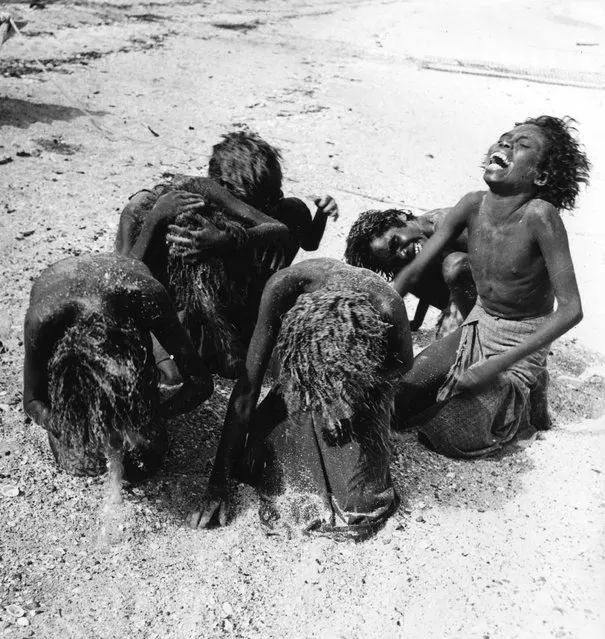
Photo: Aboriginal women washing their hair with sand at Arnhem land in the Northern Territory of Australia. 1st January 1950. (Photo by Three Lions)
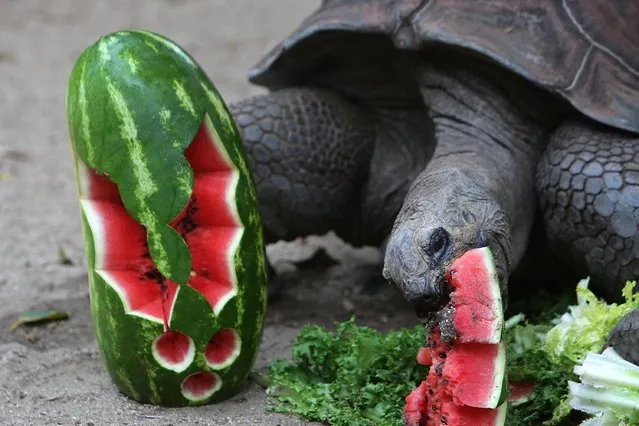
A Aldabra Tortoise receives a Christmas treat at Taronga Zoo on December 14, 2012 in Sydney, Australia. Taronga Zoo celebrated Christmas early giving Christmas-themed environmental activities to the Zoo's Giraffes, Sun Bears, Meerkats, Aldabra Tortoise and Cockatoos providing a wonderful natural display for Zoo visitors. (Photo by Lisa Maree Williams)
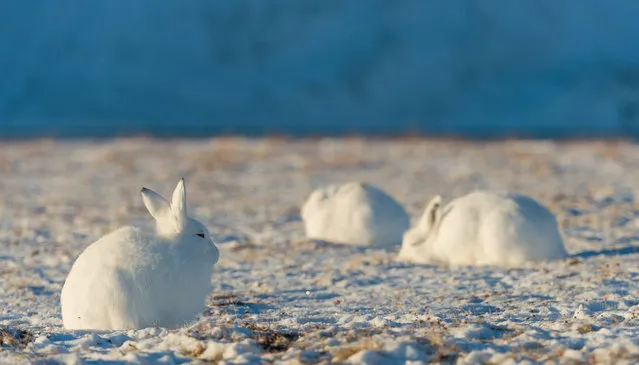
The arctic hare, or polar rabbit, is a species of hare which is adapted largely to polar and mountainous habitats. The arctic hare survives with a thick coat of fur and usually digs holes in the ground or under snow to keep warm and sleep. Arctic hares look like rabbits but have shorter ears, are taller when standing, and, unlike rabbits, can thrive in cold climates. They can travel together with many other hares, sometimes huddling with dozens or more, but are usually found alone, taking, in some cases, more than one partner. The arctic hare can run up to 60 kilometres per hour (40 mph). Its predators include the arctic wolf, arctic fox, and ermine.