Loading...
Done
Lola is seen at left in everyday clothes – and then at right in her work clothes. She works as a clown in Paris. (Photo by Bruno Fert/Picturetank)

“The series of photos called Workwears, by French photographer Bruno Fert, visually juxtaposes people’s private lives with their lives at work. A firefighter, a fisherman, a nurse, a diver, a judge. One by one, Fert’s photos show people in their homes wearing everyday clothing – followed by another photo showing them dressed in the clothing of their chosen professions. Our reaction, Fert said, reminds us how tightly humans hold on to certain stereotypes about some professions. “I like to break those stereotypes”, he said”. – Thom Patterson via CNN. Here: Lola is seen at left in everyday clothes – and then at right in her work clothes. She works as a clown in Paris. (Photo by Bruno Fert/Picturetank)
Details
29 Oct 2014 12:40:00
Rip Cord Tape

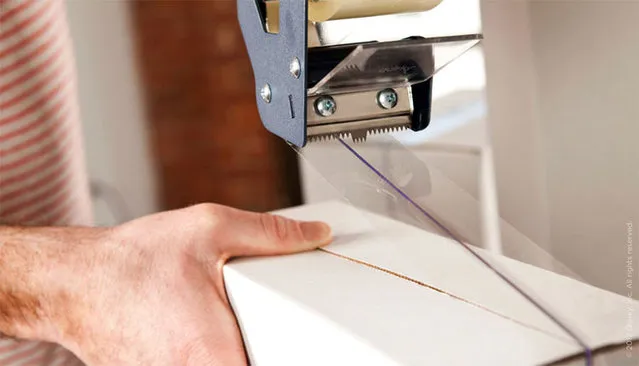
There are so many little, seemingly simple, yet ingenious things that make our life so much simpler. Take scotch tape for example. It’s just a roll of thin plastic film that is sticky on one side, yet how much simpler it made the packaging process of various goods! However, the removal of scotch tape, now there is a problem. Unless you have something sharp, it’s nearly impossible to tear it. To combat this, a brand new product has come out. Rip cord tape – is a regular scotch tape combined with a rip cord. The manufacturer of this product claims that it will make the removal of scotch tape much easier. However, when we look at the pictures, we realize, that yes, the rip cord will remove the middle of the scotch tape; however, the sides will remain in place! This will once again present a problem during the removal process.
Details
09 Nov 2014 09:09:00
Lochnagar Crater Somme In France

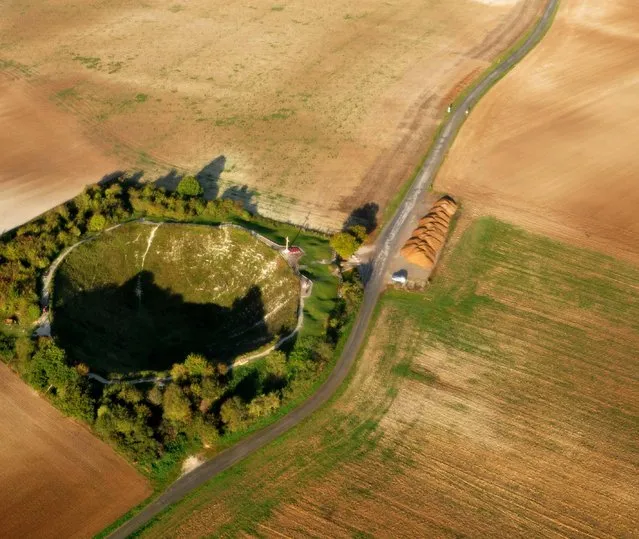
It is amazing how much the humanity can change the face of the earth. Not only can it create huge craters, which look a lot like craters from meteors, they leave a big enough impact that it can be seen from space. Though this crater, caused by a massive explosion on 1 July 1916, looks large, being 90 feet deep and 300 feet across; it is nowhere big enough to be viewed for space. A common misconception is that the Great Wall of China can be seen from space. In reality, however, it is impossible. Not only is it of the same color as the earth near it, it is also not that wide. Deforestation, on the other hand, can be clearly seen from space. Also, at night, all the lights that the large cities produce are also very visible.
Details
17 Nov 2014 12:48:00
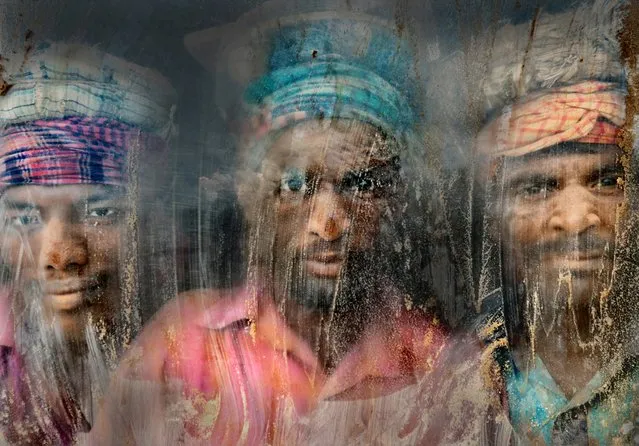
Gravel Workmen of Chittagong, Bangladesh, by Faisal Azim. Gravel workmen look through a glass window at a gravel-crushing yard in Chittagong. Full of dust and sand, it is an extremely unhealthy environment for working, but still hundreds of people work here for their livelihoods. (Photo by Faisal Azim/2016 Atkins CIWEM Environmental Photographer of the Year)

From Tibetan monks playing basket ball with ice thawing high up in the Himalayas, to the pollution that hides behind the Taj Mahal, here’s pick from 60 exceptional environmental photographs, by photographers and filmmakers from 70 countries, that will go on show at the Royal Geographical Society in London from 29 June to 21 August. The winners will be announced on 28 June. Here: Gravel Workmen of Chittagong, Bangladesh, by Faisal Azim. Gravel workmen look through a glass window at a gravel-crushing yard in Chittagong. Full of dust and sand, it is an extremely unhealthy environment for working, but still hundreds of people work here for their livelihoods. (Photo by Faisal Azim/2016 Atkins CIWEM Environmental Photographer of the Year)
Details
01 Jun 2016 12:25:00
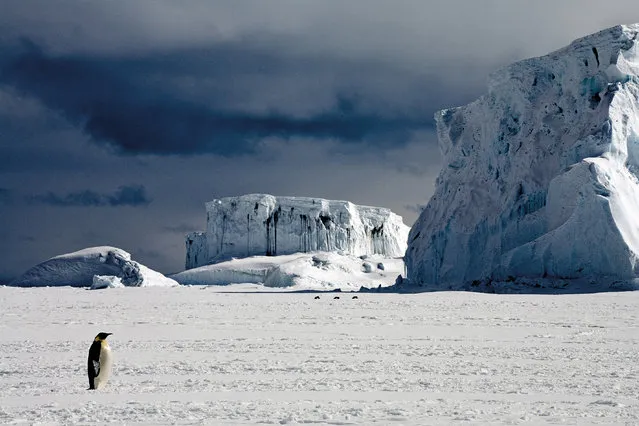
Image from Camille Seamans new book, “Melting Away”. (Photo by Camille Seaman/Barcroft Media)

Documenting the effects of climate change first hand over the past eight years, Camille Seaman fears we may be on the road to the last iceberg. Photographing the enormous frozen floats at both poles for the past eight years, the Californian adventurer has seen the receding ice shelves and experienced the changing warmer weather. Feeling that her intimate and emotional work documents a snapshot of history, Camille presents her series “The Last Iceberg” as a study of what she sees as the personality of each huge iceberg. Drawing parallels with the famous novel, “The Last of the Mohicans”, Camille, 42, wonders whether these unique, almost alien natural features will become a thing of the past or part of nature's renewal process. (Photo by Camille Seaman/Barcroft Media)
Details
02 Dec 2014 12:10:00
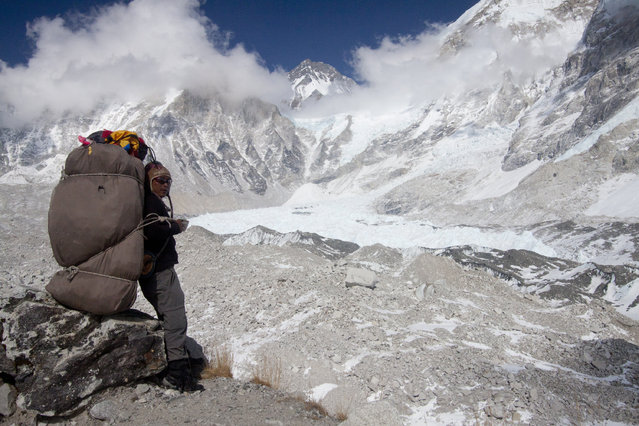
In this  Saturday, March 21, 2015 photo, a porter rests carrying supplies for the upcoming climbing season, near the Everest Base camp, Nepal. (Photo by Tashi Sherpa/AP Photo)

In this Saturday, March 21, 2015 photo, a porter rests carrying supplies for the upcoming climbing season, near the Everest Base camp, Nepal. Nepal has cleared more than 300 mountaineers to climb Mount Everest after they had to abandon last year's efforts when an ice avalanche killed 16 guides in the mountain's deadliest disaster, an official said on March 20. The three-month climbing season for Everest, the world's tallest mountain, begins in March. (Photo by Tashi Sherpa/AP Photo)
Details
29 Mar 2015 12:16:00
Drawings By Jennifer Healy

“I was born in the United States in 1985. As early as I can remember I’ve been a “doodler”. From even the early days I’ve always loved strange, offbeat, beautiful, and slightly melancholy things. Something about the mixed grabbed me. My love for sketching carried on throughout my high school days. Which is when I took a small class on watercolor. Watercolor is what birthed my passion for mixing colors and how a color can tell a story. In year 2009 I discovered digital painting and my new found passion for the medium. It’s been the favored medium for the past years since. I’ve used online tutorials and videos to help me learn along the way and then in late 2011 I took a workshop called Becoming a Better Artist. The beginning of 2013 I won a class from The Art Department which will start this spring.”
Jennifer Healy
Details
05 Dec 2013 12:04:00
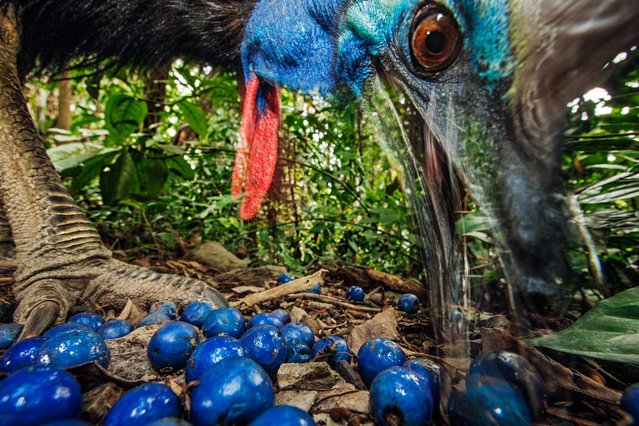
“Cassowaries are large, flightless birds related to emus and (more distantly) to ostriches, rheas, and kiwis”, writes Olivia Judson in the September issue of National Geographic magazine. (Photo by Christian Ziegler/National Geographic)

“Cassowaries are large, flightless birds related to emus and (more distantly) to ostriches, rheas, and kiwis”, writes Olivia Judson in the September issue of National Geographic magazine. How large? People-size: Adult males stand well over five foot five and top 110 pounds. Females are even taller, and can weigh more than 160 pounds. Dangerous when roused, they’re shy and peaceable when left alone. But even birds this big and tough are prey to habitat loss. The dense New Guinea and Australia rain forests where they live have dwindled. Today cassowaries might number 1,500 to 2,000. And because they help shape those same forests – by moving seeds from one place to another – “if they vanish”, Judson writes, “the structure of the forest would gradually change” too. (Photo by Christian Ziegler/National Geographic)
Details
06 Jan 2014 12:21:00