Loading...
Done
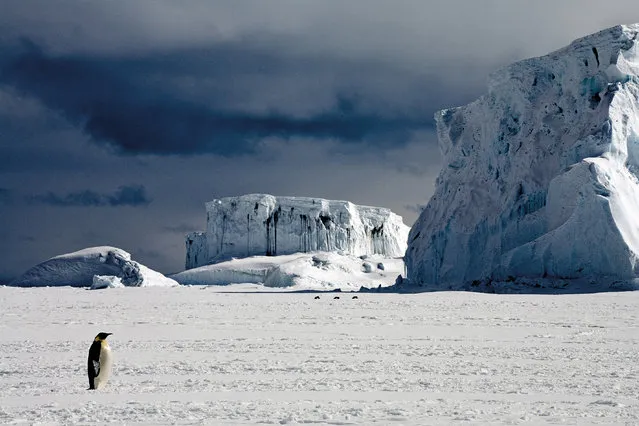
Image from Camille Seamans new book, “Melting Away”. (Photo by Camille Seaman/Barcroft Media)

Documenting the effects of climate change first hand over the past eight years, Camille Seaman fears we may be on the road to the last iceberg. Photographing the enormous frozen floats at both poles for the past eight years, the Californian adventurer has seen the receding ice shelves and experienced the changing warmer weather. Feeling that her intimate and emotional work documents a snapshot of history, Camille presents her series “The Last Iceberg” as a study of what she sees as the personality of each huge iceberg. Drawing parallels with the famous novel, “The Last of the Mohicans”, Camille, 42, wonders whether these unique, almost alien natural features will become a thing of the past or part of nature's renewal process. (Photo by Camille Seaman/Barcroft Media)
Details
02 Dec 2014 12:10:00


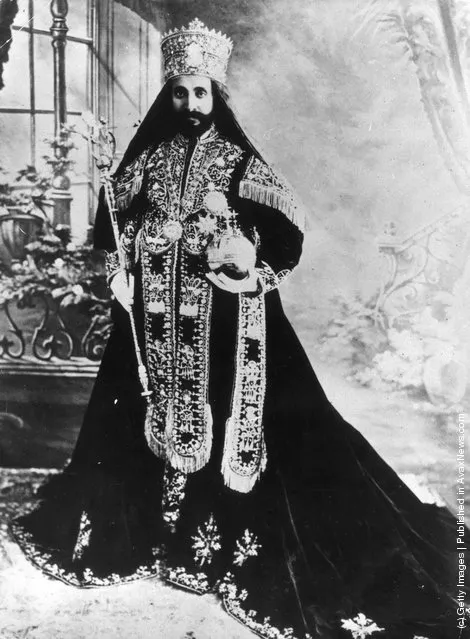
“Haile Selassie I (23 July 1892 – 27 August 1975), born Tafari Makonnen, was Ethiopia's regent from 1916 to 1930 and Emperor of Ethiopia from 1930 to 1974. The heir to a dynasty that traced its origins to the 13th century, and from there by tradition back to King Solomon and Queen Makeda, Empress of Axum, known in the Abrahamic tradition as the Queen of Sheba. Haile Selassie is a defining figure in both Ethiopian and African history.

Haile Selassie is revered as the returned Messiah of the Bible, God incarnate, among the Rastafari movement, the number of followers of which is estimated between 200,000 and 800,000. Begun in Jamaica in the 1930s, the Rastafari movement perceives Haile Selassie as a messianic figure who will lead a future golden age of eternal peace, righteousness, and prosperity. He himself remained an Ethiopian Orthodox Christian throughout his life”. – Wikipedia

Photo: Negusa Negasti, Emperor of Ethiopia Haile Selassie I, known as “Lord of Lords”, “The Conquering Lion of the tribe of Judah”, “Light of the world”, “Elect of God”, in full ceremonial regalia following his coronation. (Photo by Hulton Archive/Getty Images)
Details
21 Jun 2011 11:04:00
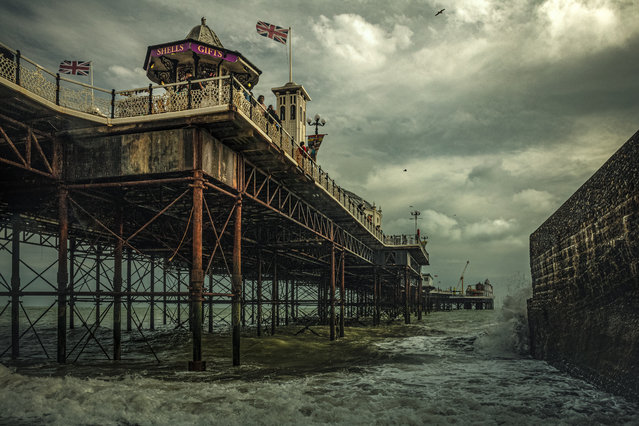
Overall Winner: The Brighton Palace Pier. “Standing in the full force of weather and time: the Brighton Palace Pier. My wife and I have been visiting Brighton for a few years now and I always strive to capture this lovely historic seaside town with a sense of the atmosphere and cinematic interpretation that it instills in me”. (Photo by Michael Marsh/Historic Photographer of the Year 2020)

The winners of the Historic Photographer of the Year Awards 2020 from triphistoric.com celebrate the places and cultural sites around the world that offer a window to the history that exists all around us. This year, restricted by Covid, photographers were called on to scour their photographic archive to share their imagery of those places that dominate our past. Here: The Brighton Palace Pier. (Photo by Michael Marsh/Historic Photographer of the Year 2020)
Details
27 Nov 2020 00:03:00
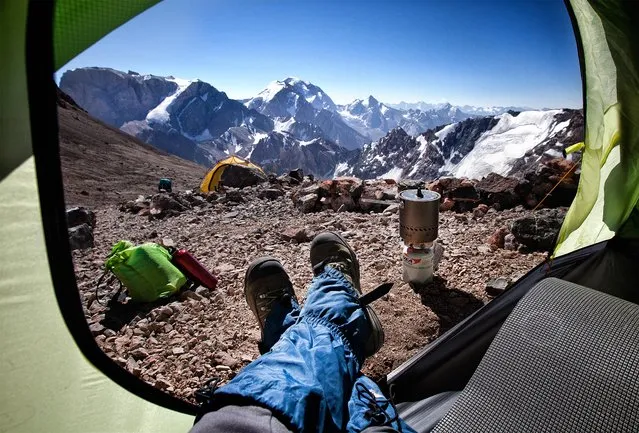
Chimtarga. (Photo by Caters News/Oleg Grigoriev)

“A happy camper has shown he has the world at his feet by capturing a series of breath-taking mountain views from his tent. Russian Photographer Oleg Grigoriev, 35, travels with little more than a tent and his camera taking snaps of the mountainous terrain of central Asia and Eastern parts of Europe. The adventurous lawyer, who lives in Ukraine, started camping in remote mountainous areas in 2007 but only came up with the concept of photographing views from his tent after a memorable trip to the Fann Mountains of Tajikistan”. – Caters News
Details
14 Sep 2014 11:00:00
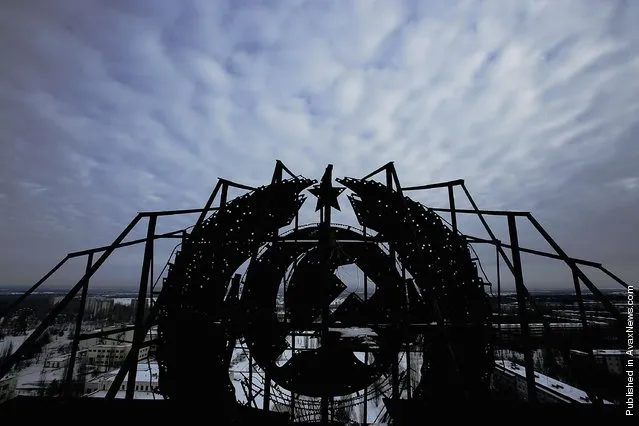
Chernobyl

Scaffolding holding a remnant of the Soviet Union, the hammer and sickle, is seen on a rooftop of an abandoned building in the town of Pripyat on January 25, 2006 near Chernobyl, Ukraine. The town of Pripyat, deserted since the 1986 catastrophe, once housed 30,000 people, the majority of being workers from the Chernobyl Nuclear Power Plant. Days after the catastrophe the inhabitants were relocated to other locations in the Soviet Union. The town of Pripyat has remained uninhabited since. Prypyat and the surrounding area will not be safe for human habitation for several centuries. Scientists estimate that the most dangerous radioactive elements will take up to 900 years to decay sufficiently to render the area safe.
Details
14 Mar 2011 10:20:00
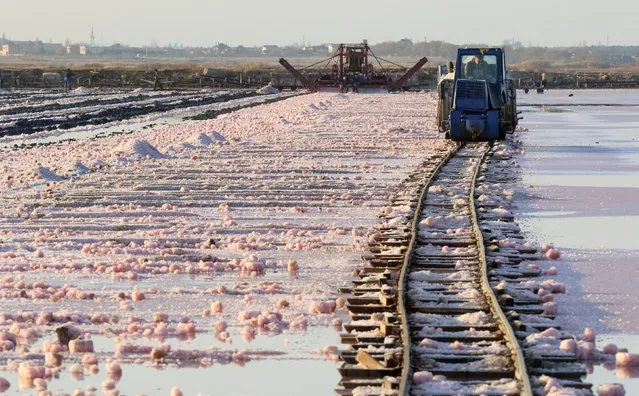
A train drives along a field at a salt production site at the Sasyk-Sivash lake near the city of Yevpatoria, Crimea, November 14, 2017. (Photo by Pavel Rebrov/Reuters)

A train drives along a field at a salt production site at the Sasyk-Sivash lake near the city of Yevpatoria, Crimea, November 14, 2017. A saltwater lagoon known as Lake Sasyk-Sivash on Ukraine's Crimea peninsula is the source of a rare resource: pink salt. The mineral is tinted by tiny algae that produce the pigment beta-carotene. Each autumn, seasonal workers collect thousands of tons of pink salt for processing and export. (Photo by Pavel Rebrov/Reuters)
Details
16 Nov 2017 08:18:00
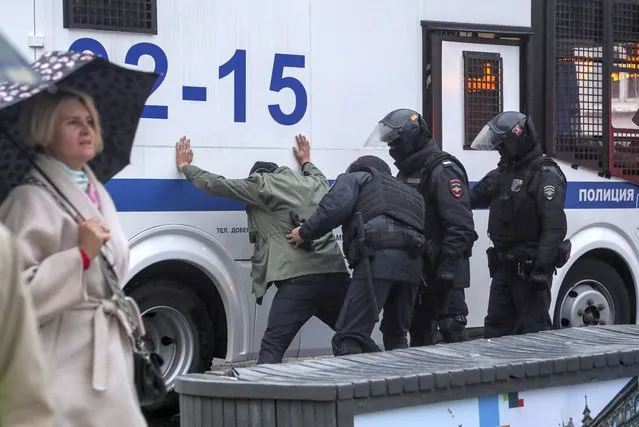
Russian policemen detain a participant taking part in an unauthorized protest against Russia's partial military mobilization due to the conflict in Ukraine, in downtown of Moscow, Russia, 24 September 2022. Russian President Putin announced in a televised address to the nation on 21 September, that he signed a decree on partial mobilization in the Russian Federation. Russian citizens who are in the reserve will be called up for military service. On 24 February 2022 Russian troops entered the Ukrainian territory in what the Russian president declared a “Special Military Operation”, starting an armed conflict that has provoked destruction and a humanitarian crisis. (Photo by Maxim Shipenkov/EPA/EFE)

Russian policemen detain a participant taking part in an unauthorized protest against Russia's partial military mobilization due to the conflict in Ukraine, in downtown of Moscow, Russia, 24 September 2022. Russian President Putin announced in a televised address to the nation on 21 September, that he signed a decree on partial mobilization in the Russian Federation. Russian citizens who are in the reserve will be called up for military service. On 24 February 2022 Russian troops entered the Ukrainian territory in what the Russian president declared a “Special Military Operation”, starting an armed conflict that has provoked destruction and a humanitarian crisis. (Photo by Maxim Shipenkov/EPA/EFE)
Details
28 Sep 2022 04:46:00
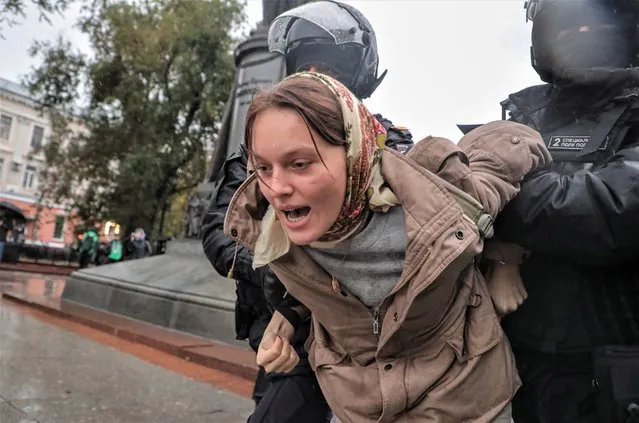
Russian policemen detain a person taking part in an unauthorized protest against Russia's partial military mobilization due to the conflict in Ukraine, in downtown Moscow, Russia on 24 September 2022. Russian President Putin announced in a televised address to the nation on 21 September, that he signed a decree on partial mobilization in the Russian Federation. Russian citizens who are in the reserve will be called up for military service. On 24 February 2022 Russian troops entered the Ukrainian territory in what the Russian president declared a “Special Military Operation”, starting an armed conflict that has provoked destruction and a humanitarian crisis. (Photo by Maxim Shipenkov/EPA/EFE)

Russian policemen detain a person taking part in an unauthorized protest against Russia's partial military mobilization due to the conflict in Ukraine, in downtown Moscow, Russia on 24 September 2022. Russian President Putin announced in a televised address to the nation on 21 September, that he signed a decree on partial mobilization in the Russian Federation. Russian citizens who are in the reserve will be called up for military service. On 24 February 2022 Russian troops entered the Ukrainian territory in what the Russian president declared a “Special Military Operation”, starting an armed conflict that has provoked destruction and a humanitarian crisis. (Photo by Maxim Shipenkov/EPA/EFE)
Details
29 Sep 2022 03:47:00