Loading...
Done
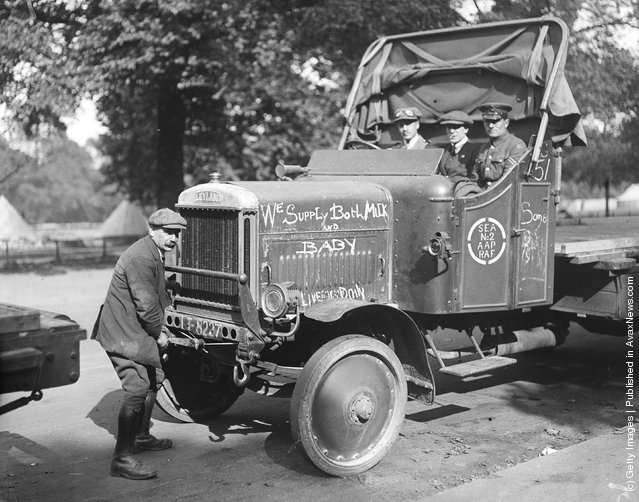
1919:  A Leyland lorry during the railway strike, 'we supply both milk and baby' is chalked on the bonnet

A Leyland lorry during the railway strike, “we supply both milk and baby” is chalked on the bonnet. (Photo by A. R. Coster/Topical Press Agency/Getty Images). 3rd October 1919
Details
08 Dec 2011 14:20:00
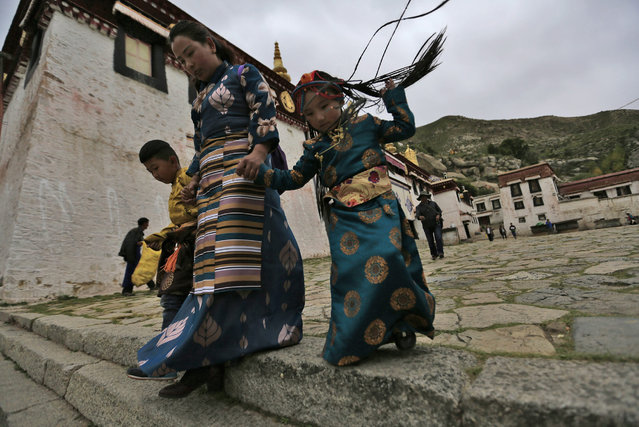
Tibetan pilgrims walk outside the Sera Monastery in Lhasa, Tibet Autonomous Region, China, 11 September 2016. Sera Monastery is known as one of the “great three” Gelug university monasteries of Tibet founded in 1419. (Photo by How Hwee Young/EPA)

Tibetan pilgrims walk outside the Sera Monastery in Lhasa, Tibet Autonomous Region, China, 11 September 2016. Sera Monastery is known as one of the “great three” Gelug university monasteries of Tibet founded in 1419. (Photo by How Hwee Young/EPA)
Details
22 Sep 2016 09:59:00
David Jackson (C), who voted for Donald Trump, has a discussion with Ryan Graves (L) and Anna Kaminski (R) visiting from Oamaha, Nebraska during a rally against the election of Republican Donald Trump as President of the United States in downtown Indianapolis, Indiana, U.S., November 12, 2016. (Photo by Clay Lomneth/Reuters)

David Jackson (C), who voted for Donald Trump, has a discussion with Ryan Graves (L) and Anna Kaminski (R) visiting from Oamaha, Nebraska during a rally against the election of Republican Donald Trump as President of the United States in downtown Indianapolis, Indiana, U.S., November 12, 2016. (Photo by Clay Lomneth/Reuters)
Details
14 Nov 2016 09:57:00
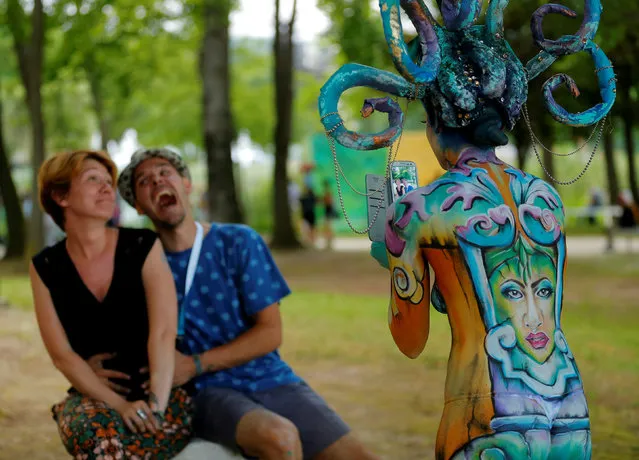
A model takes photographs during the World Bodypainting Festival in Poertschach, Austria, July 1, 2016. (Photo by Heinz-Peter Bader/Reuters)

A model takes photographs during the World Bodypainting Festival in Poertschach, Austria, July 1, 2016. (Photo by Heinz-Peter Bader/Reuters)
Details
02 Jul 2016 13:07:00
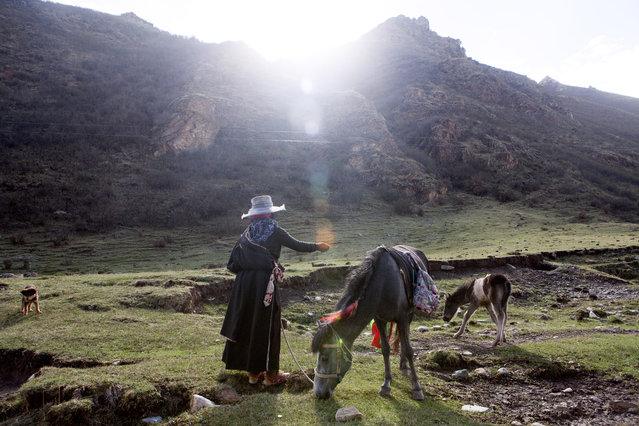
A Tibetan woman with horses in a remote area of the Yushu Autonomous Prefecture of the Tibetan Plateau on May 31, 2016. (Photo by Giulia Marchi/The Washington Post)

A Tibetan woman with horses in a remote area of the Yushu Autonomous Prefecture of the Tibetan Plateau on May 31, 2016. (Photo by Giulia Marchi/The Washington Post)
Details
03 Jul 2016 11:10:00
Lilly Caron, 8, of Bridgeton, Maine, Jason Homchick, of San Diego, and Lilly's father Jason Caron, (obscured), ride the Sky Swing at Seacoast Adventure, Thursday, July 14, 2016, in Wyndham, Maine. The 100-foot-tall swing gives riders the combined thrills of sky diving and hang gliding. (Photo by Robert F. Bukaty/AP Photo)

Lilly Caron, 8, of Bridgeton, Maine, Jason Homchick, of San Diego, and Lilly's father Jason Caron, (obscured), ride the Sky Swing at Seacoast Adventure, Thursday, July 14, 2016, in Wyndham, Maine. The 100-foot-tall swing gives riders the combined thrills of sky diving and hang gliding. (Photo by Robert F. Bukaty/AP Photo)
Details
16 Jul 2016 09:05:00
A sales assistant poses for photographs with a mealworm cookie in Seoul, South Korea, August 8, 2016. (Photo by Kim Hong-Ji/Reuters)

A sales assistant poses for photographs with a mealworm cookie in Seoul, South Korea, August 8, 2016. Insect-eating, or entomophagy, has long been common in much of the world, including South Korea, where boiled silky worm pupae, or beondegi, are a popular snack. Now, South Korea is looking to expand its insect industry as a source of agricultural income. (Photo by Kim Hong-Ji/Reuters)
Details
13 Aug 2016 11:06:00
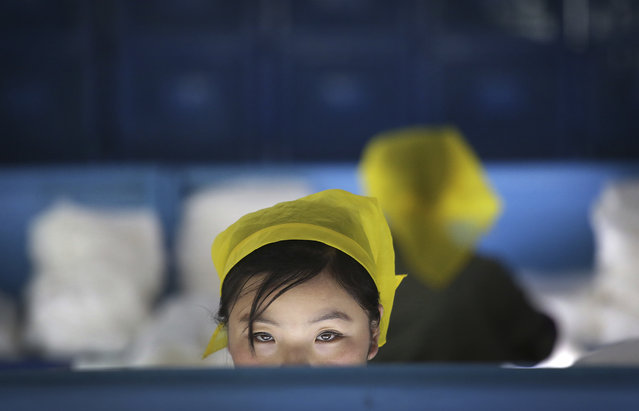
In this Friday, January 6, 2017, photo, a North Korean woman working at the Kim Jong Suk Silk Mill looks up from her workstation in Pyongyang, North Korea. The silk mill, named after North Korean leader Kim Jong Un's grandmother, is where 1,600 workers – mostly women – sort and process silkworms to produce silk thread that officials at the Pyongyang factory say is made into roughly 200 tons of silk a year. (Photo by Wong Maye-E/AP Photo)

In this Friday, January 6, 2017, photo, a North Korean woman working at the Kim Jong Suk Silk Mill looks up from her workstation in Pyongyang, North Korea. The silk mill, named after North Korean leader Kim Jong Un's grandmother, is where 1,600 workers – mostly women – sort and process silkworms to produce silk thread that officials at the Pyongyang factory say is made into roughly 200 tons of silk a year. (Photo by Wong Maye-E/AP Photo)
Details
17 Jan 2017 12:01:00