Loading...
Done
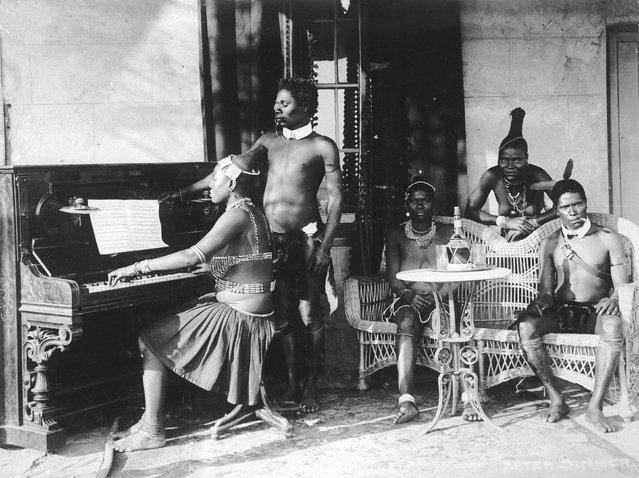
circa 1925:  A Zulu woman playing the piano while a group of others sit and listen.  (Photo by General Photographic Agency/Getty Images)

“The Zulu are the largest South African ethnic group, with an estimated 10–11 million people living mainly in the province of KwaZulu-Natal. Small numbers also live in Zimbabwe, Zambia, and Mozambique. Their language, Zulu, is a Bantu language; more specifically, part of the Nguni subgroup. The Zulu Kingdom played a major role in South African history during the 19th and 20th centuries. Under apartheid, Zulu people were classed as third-class citizens and suffered from state-sanctioned discrimination. They remain today the most numerous ethnic group in South Africa, and now have equal rights along with all other citizens”. – Wikipedia.

Photo: A Zulu woman playing the piano while a group of others sit and listen (to put it briefly, Englishmen scoff over Zulu). South Africa, circa 1925. (Photo by General Photographic Agency)

Details
03 Feb 2014 09:40:00
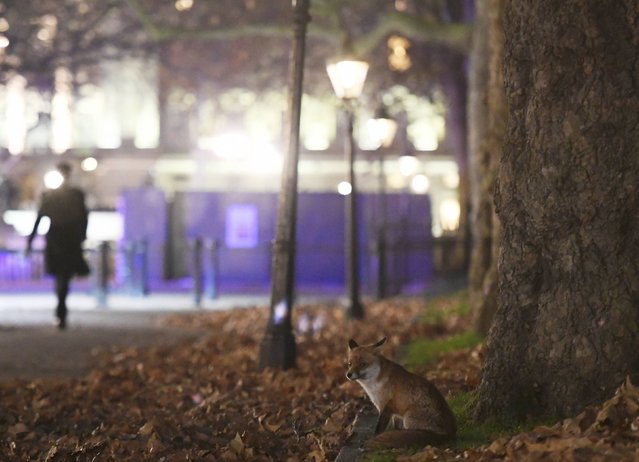
An urban fox walks alongside the Mall in central London, Britain, November 29, 2016. (Photo by Toby Melville/Reuters)

An urban fox walks alongside the Mall in central London, Britain, November 29, 2016. (Photo by Toby Melville/Reuters)
Details
30 Nov 2016 14:04:00
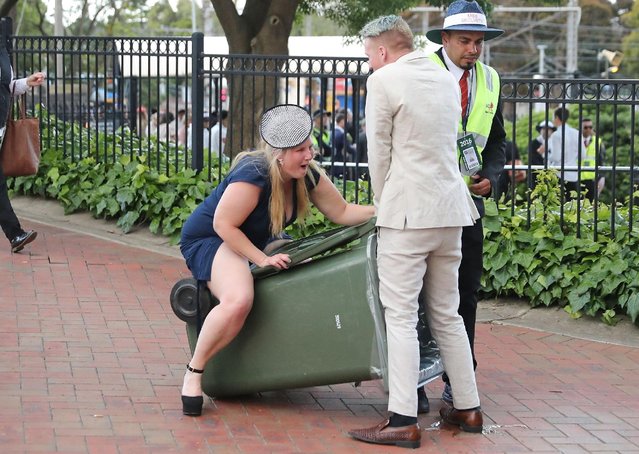
A racegoers walks into a rubbish bin following 2016 Melbourne Cup Day at Flemington Racecourse on November 1, 2016 in Melbourne, Australia. (Photo by Scott Barbour/Getty Images)

A racegoers walks into a rubbish bin following 2016 Melbourne Cup Day at Flemington Racecourse on November 1, 2016 in Melbourne, Australia. (Photo by Scott Barbour/Getty Images)
Details
02 Nov 2016 12:42:00
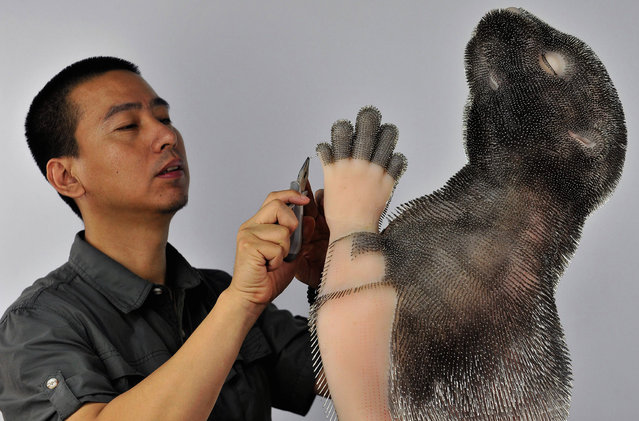
Professor Xie Yong works on an art installation of a beaver, which is made out of plastic and around 300,000 needles, in Shenyang, Liaoning province, July 23, 2013. The needles, according to Xie, represent the pain felt by animals when their fur is taken off to produce clothing. (Photo by Reuters/Stringer)

Professor Xie Yong works on an art installation of a beaver, which is made out of plastic and around 300,000 needles, in Shenyang, Liaoning province, July 23, 2013. The needles, according to Xie, represent the pain felt by animals when their fur is taken off to produce clothing. (Photo by Reuters/Stringer)
Details
27 Jul 2013 09:15:00
Revellers pose during the 24th Street Parade dance music event in Zurich, August 29, 2015. (Photo by Arnd Wiegmann/Reuters)

Revellers pose during the 24th Street Parade dance music event in Zurich, August 29, 2015. (Photo by Arnd Wiegmann/Reuters)
Details
30 Aug 2015 12:16:00
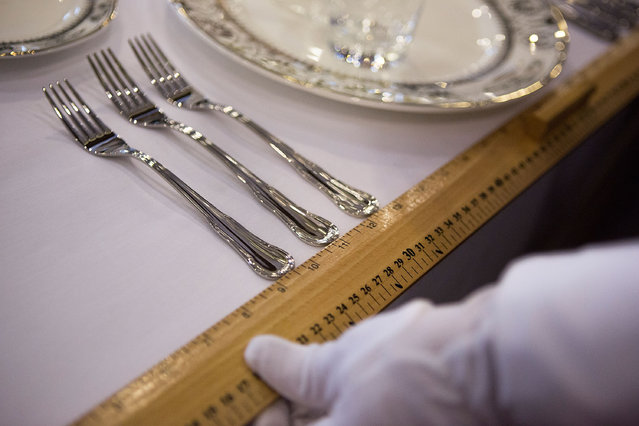
A student uses a ruler to measure the distance between forks before a formal dinner at The International Butler Academy China on September 16, 2014 in Chengdu, China. (Photo by Taylor Weidman/Getty Images)

A student uses a ruler to measure the distance between forks before a formal dinner at The International Butler Academy China on September 16, 2014 in Chengdu, China. Over the last several years, there has been a surge in demand among China's wealthy for Western-trained butlers, with many academies seeing large portions of their graduating classes hired by Chinese families or companies. (Photo by Taylor Weidman/Getty Images)
Details
18 Sep 2014 11:13:00
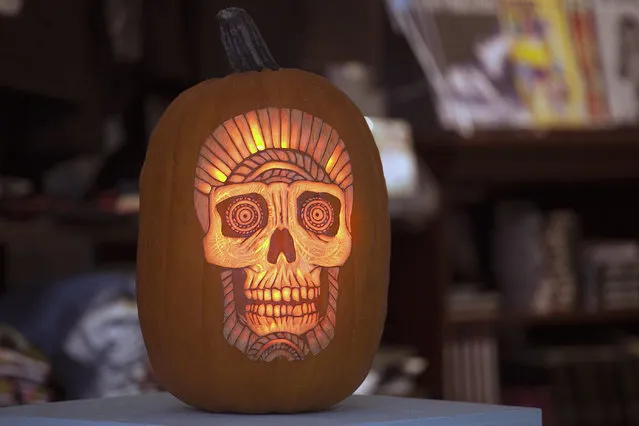
A Tara BONETHROWER pumpkin created by the Maniac Pumpkin Carvers at Cotton Candy Machine in Brooklyn, N.Y. on October 18, 2014. (Photo by Siemond Chan/Yahoo Finance)


In time for Halloween the Maniac Pumpkin Carvers, creative art studio, held the Cotton Candy Machine workshop in Brooklyn, N.Y., demonstrating techniques and tools to create intricate pumpkin art. Maniac Pumpkin Carvers, which focuses on elevating the art of pumpkin carving, were a past winner of the Food Network's Halloween Wars. Their work has been displayed at MOMA, the Whitney Museum and Yankee Stadium. Here: A Tara Bonethrower pumpkin created by the Maniac Pumpkin Carvers at Cotton Candy Machine in Brooklyn, N.Y. on October 18, 2014. (Photo by Siemond Chan/Yahoo Finance)
Details
22 Oct 2014 14:08:00
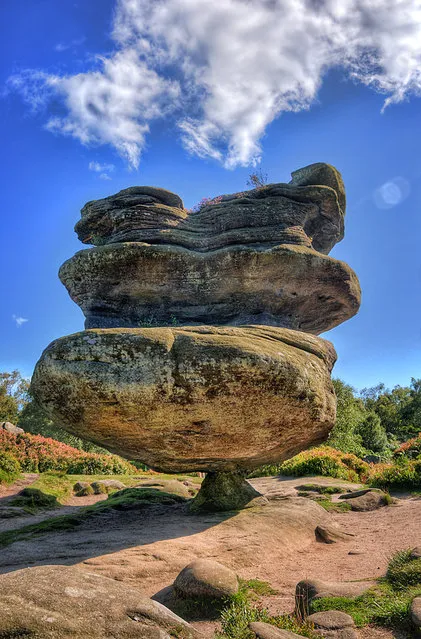
Brimham rocks, Nidderdale North Yorkshire, England

“A balancing rock, also called balanced rock or precarious boulder, is a naturally occurring geological formation featuring a large rock or boulder, sometimes of substantial size, resting on other rocks, bedrock or on glacial till. Some formations known by this name only appear to be balancing but are in fact firmly connected to a base rock by a pedestal or stem”. – Wikipedia

Photo: “The Brimham Rocks are balancing rock formations located on Brimham Moor in North Yorkshire, England. The rocks stand at a height of nearly 30 metres in an area owned by the National Trust which is part of the Nidderdale Area of Outstanding Natural Beauty”. – Wikipedia. (Photo by Tee Time Tony)
Details
06 May 2012 11:45:00