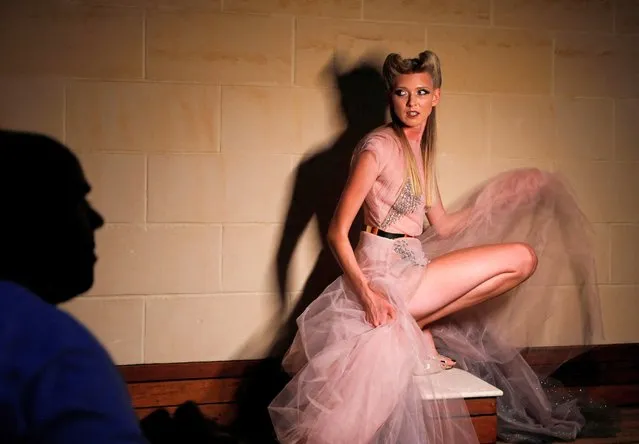
A model poses for a photographer backstage ahead of the Ferreira Couture catwalk show at Malta Fashion Week in Valletta, Malta on July 20, 2022. (Photo by Darrin Zammit Lupi/Reuters)
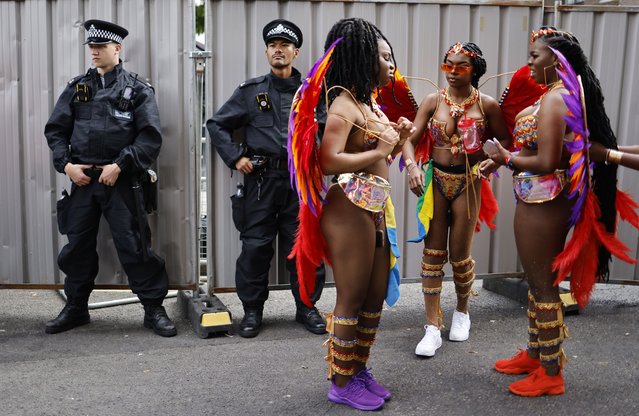
Participants in costumes arrive at the Notting Hill Carnival in London, Britain, 29 August 2022. The Notting Hill Carnival is the largest street carnival in Europe and returned to London after two year break due to the coronavirus pandemic with more than a million people expected to attend the two-day celebration of Caribbean heritage on 28 and 29 August. (Photo by Tolga Akmen/EPA/EFE)
Girls lead a gaggle of geese, backdropped by a banner against the war in Ukraine, during a Saint Martin's Day procession next to Charles Bridge in Prague, Czech Republic, Friday, November 11, 2022. Saint Martin's day marks the end of the harvest season as well as the start of winter. (Photo by Vadim Ghirda/AP Photo)
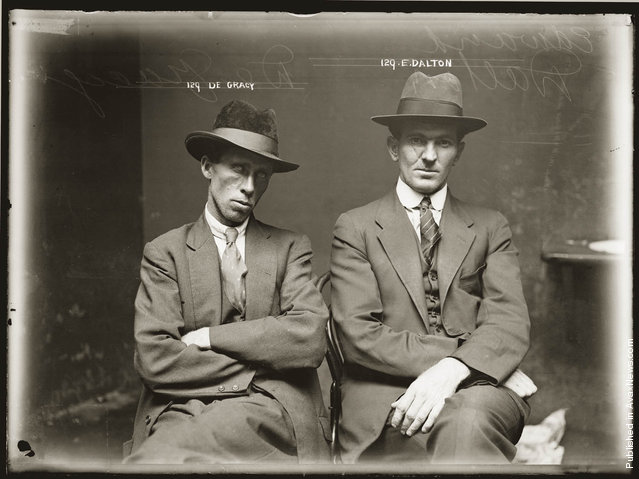
Mug shot of De Gracy (sic) and Edward Dalton. Details unknown. Central Police Station, Sydney, around 1920. (Photo by NSW Police Forensic Photography Archive, Justice & Police Museum, Histiric Houses Trust of NSW)
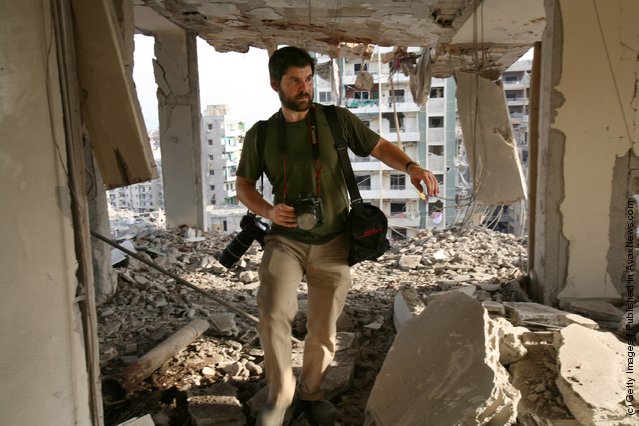
In this publication you can see some best pictures of photographer Chris Hondros, who was killed on April 20, 2011 by a rocket-propelled grenade (RPG) in Misrata, Libya.
Photo: “Getty Images” photographer Chris Hondros (1970–2011) walks the ruins of a building August 21, 2006 in southern Beirut, Lebanon. (Photo by Getty Images)
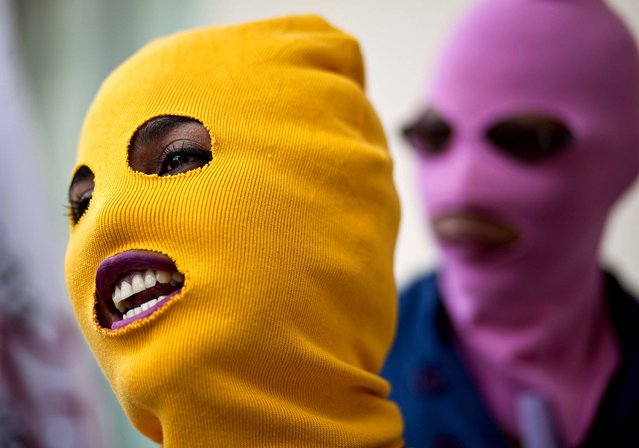
Masked women shout slogans during a demonstration marking the Latin American Day for Decriminalization of Therapeutic Abortion in Managua, Nicaragua, where abortions are illegal, on September 28, 2012. (Photo by Esteban Felix/Associated Press)
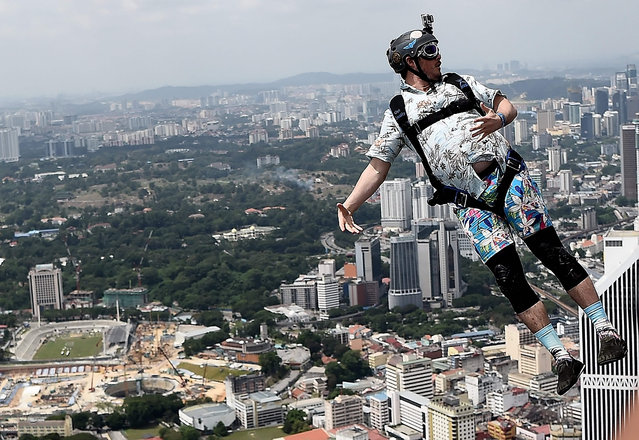
Base jumpers leap from the 300-metre high skydeck of Malaysia's landmark Kuala Lumpur Tower against the backdrop of the city's skyline on October 3, 2016 during the annual International KL Tower Base-Jump event. (Photo by Manan Vatsyayana/AFP Photo)
On August 31, 2012, a long filament of solar material that had been hovering in the sun's atmosphere, the corona, erupted out into space at 4:36 p.m. EDT. The coronal mass ejection, or CME, traveled at over 900 miles per second. The CME did not travel directly toward Earth, but did connect with Earth's magnetic environment, or magnetosphere, causing aurora to appear on the night of Monday, September 3. (Photo by NASA/GSFC/SDO via The Atlantic)