Loading...
Done
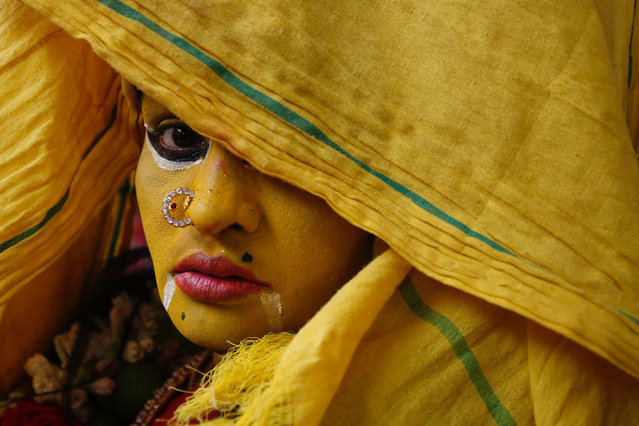
A woman dressed in the style of a Hindu goddess keeps her face partially covered for a ritual during Maha Shivaratri celebrations on March 12, 2021 in Kaveripattinam, India. Maha Shivaratri is a major Hindu festival celebrated annually in honour of the god, Shiva. The festival is observed with chanting prayers, fasting, and meditating to overcome “darkness and ignorance” in life. (Photo by Abhishek Chinnappa/Getty Images)

A woman dressed in the style of a Hindu goddess keeps her face partially covered for a ritual during Maha Shivaratri celebrations on March 12, 2021 in Kaveripattinam, India. Maha Shivaratri is a major Hindu festival celebrated annually in honour of the god, Shiva. The festival is observed with chanting prayers, fasting, and meditating to overcome “darkness and ignorance” in life. (Photo by Abhishek Chinnappa/Getty Images)
Details
28 Mar 2021 09:51:00
Kang Na-ra, a North Korean defector who is now a beauty YouTuber, points at her lips after putting on a lipstick made by North Korea, in Seoul, South Korea, June 11, 2019. (Photo by Kim Hong-Ji/Reuters)

Kang Na-ra, a North Korean defector who is now a beauty YouTuber, points at her lips after putting on a lipstick made by North Korea, in Seoul, South Korea, June 11, 2019. (Photo by Kim Hong-Ji/Reuters)
Details
06 Dec 2019 00:05:00
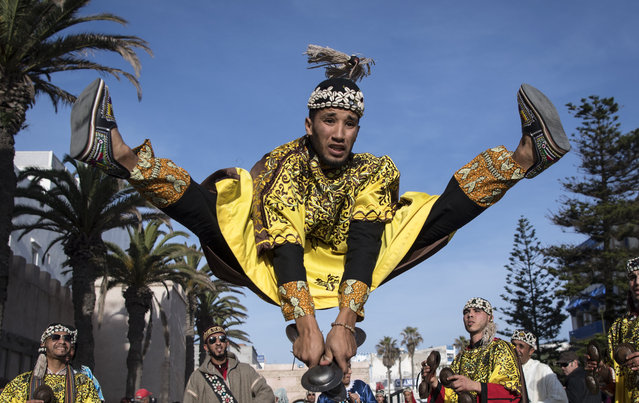
A Gnawa traditional group performs in the city of Essaouira on December 14, 2019, to celebrate the decision of adding the Gnawa culture to UNESCO's list of Intangible Cultural Heritage of Humanity. Gnawa culture, a centuries-old Moroccan practice rooted in music, African rituals and Sufi traditions, was added to UNESCO's list of Intangible Cultural Heritage of Humanity earlier in the week. Gnawa refers to a “set of musical productions, fraternal practices and therapeutic rituals where the secular mixes with the sacred”, according to the nomination submitted by Morocco. Often dressed in colourful outfits, Gnawa musicians play the guenbri, a type of lute with three strings, accompanied by steel castanets called krakebs. (Photo by Fadel Senna/AFP Photo)

A Gnawa traditional group performs in the city of Essaouira on December 14, 2019, to celebrate the decision of adding the Gnawa culture to UNESCO's list of Intangible Cultural Heritage of Humanity. Gnawa culture, a centuries-old Moroccan practice rooted in music, African rituals and Sufi traditions, was added to UNESCO's list of Intangible Cultural Heritage of Humanity earlier in the week. Gnawa refers to a “set of musical productions, fraternal practices and therapeutic rituals where the secular mixes with the sacred”, according to the nomination submitted by Morocco. Often dressed in colourful outfits, Gnawa musicians play the guenbri, a type of lute with three strings, accompanied by steel castanets called krakebs. (Photo by Fadel Senna/AFP Photo)
Details
18 Dec 2019 00:05:00
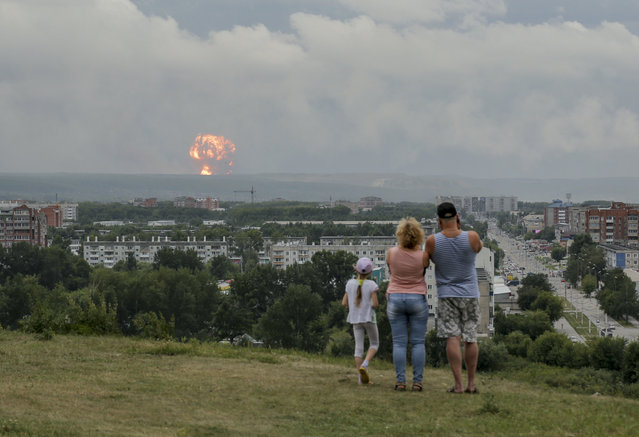
In this photo taken on Monday, August 5, 2019, a family watches explosions at a military ammunition depot near the city of Achinsk in eastern Siberia's Krasnoyarsk region, in Achinsk, Russia. Russian officials say powerful explosions at a military depot in Siberia left 12 people injured and one missing and forced over 16,500 people to leave their homes. (Photo by Dmitry Dub/AP Photo)

In this photo taken on Monday, August 5, 2019, a family watches explosions at a military ammunition depot near the city of Achinsk in eastern Siberia's Krasnoyarsk region, in Achinsk, Russia. Russian officials say powerful explosions at a military depot in Siberia left 12 people injured and one missing and forced over 16,500 people to leave their homes. (Photo by Dmitry Dub/AP Photo)
Details
14 Jan 2020 00:05:00
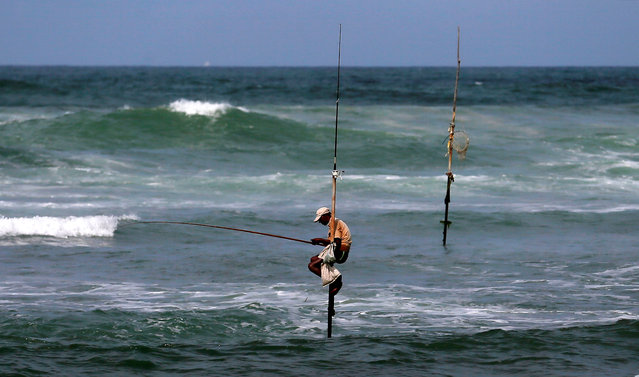
A fisherman waits to catch fish as he sits atop a stilt in the sea in Koggala, Sri Lanka on July 4, 2019. (Photo by Dinuka Liyanawatte/Reuters)

A fisherman waits to catch fish as he sits atop a stilt in the sea in Koggala, Sri Lanka on July 4, 2019. (Photo by Dinuka Liyanawatte/Reuters)
Details
11 Feb 2020 00:03:00
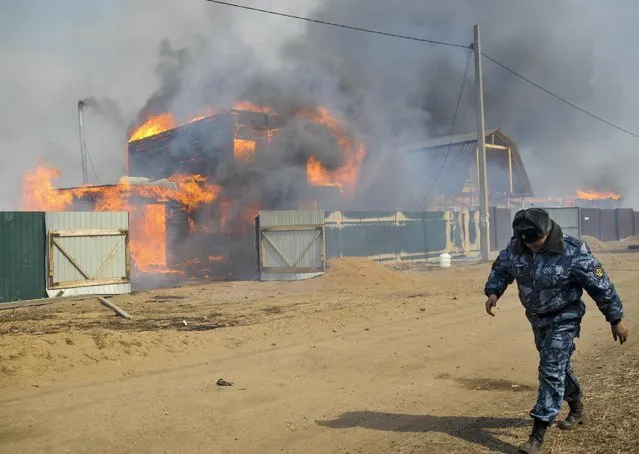
A police officer walks along a street of the burning village of Smolenka near Chita on Monday, April 13, 2015. Russian authorities say out-of-control agricultural fires have killed at least 15 people, injured hundreds more and destroyed or damaged more than 1,000 homes in Siberia. The fires were started by farmers burning the grass in their fields, but spread quickly because of strong winds. (Photo by Evgeny Yepanchintsev/AP Photo)

A police officer walks along a street of the burning village of Smolenka near Chita on Monday, April 13, 2015. Russian authorities say out-of-control agricultural fires have killed at least 15 people, injured hundreds more and destroyed or damaged more than 1,000 homes in Siberia. The fires were started by farmers burning the grass in their fields, but spread quickly because of strong winds. (Photo by Evgeny Yepanchintsev/AP Photo)
Details
14 Apr 2015 11:04:00
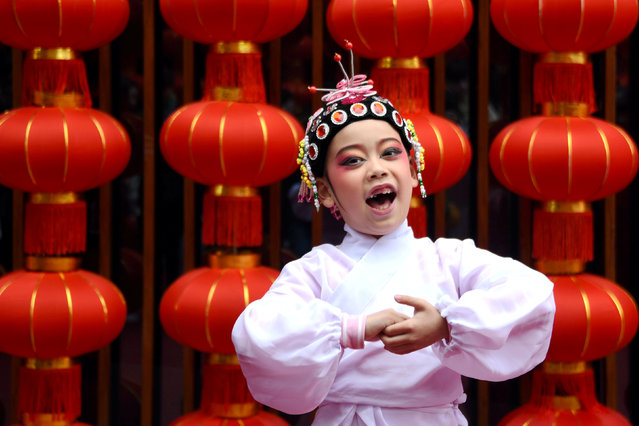
A child performs opera during celebrations on the eight day of Chinese Lunar New Year of the Pig, in Taizhou, Zhejiang province, China February 12, 2019. (Photo by Reuters/China Stringer Network)

A child performs opera during celebrations on the eight day of Chinese Lunar New Year of the Pig, in Taizhou, Zhejiang province, China on February 12, 2019. (Photo by Reuters/China Stringer Network)
Details
23 Feb 2019 00:01:00
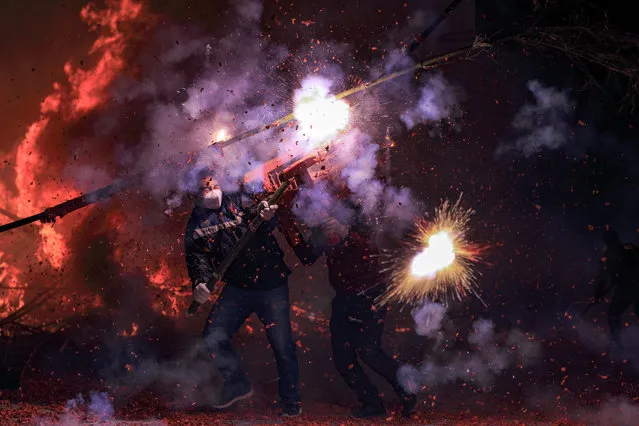
Villagers from Jiexi Jiantan village perform a ritual of “Zha Laoye”, or “Cracking local spirits”, in Chaoshan, Guangdong Province, China, 10 February 2019. Jiexi Jiantan Village celebrates the annual custom of “Zha Laoye” where Laoye are local spirits. Every third day of the lunar New Year, statues of local spirits known as the “Thousand-mile Eye” Laoye and “Ear Following the Wind” Laoye are brought out to the village committee to receive incensed tea offered by believers. By the sixth day of the year, the “Zha Laoye” activities begin with each man holding one of the statues on a chair above his head while run around a bonfire. Two other men light firecrackers strung up on a long bamboo poles and chase the spirit around the bonfire, signifying a bountiful new year. (Photo by EPA/EFE/ZNSEN)

Villagers from Jiexi Jiantan village perform a ritual of “Zha Laoye”, or “Cracking local spirits”, in Chaoshan, Guangdong Province, China, 10 February 2019. Jiexi Jiantan Village celebrates the annual custom of “Zha Laoye” where Laoye are local spirits. Every third day of the lunar New Year, statues of local spirits known as the “Thousand-mile Eye” Laoye and “Ear Following the Wind” Laoye are brought out to the village committee to receive incensed tea offered by believers. (Photo by EPA/EFE/ZNSEN)
Details
23 Feb 2019 00:07:00