Loading...
Done
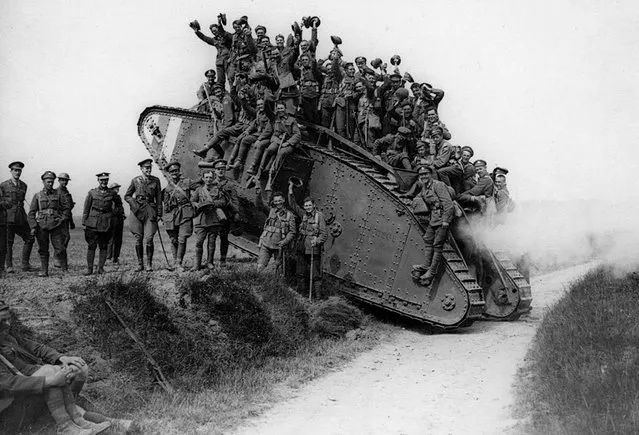
These black-and-white photos are taken from the new book “Armoured Warfare in the First World War 1916 – 1918” by Anthony Tucker-Jones and published by Pen & Sword Military. “Interestingly the British, French and Germans took completely different approaches with varying results”. The British military produced “Little Willie” in Autumn 1915 weighing 18 tonnes, which had a crew of two plus four gunners. “Inspired by a tracked artillery tractor “Little Willie” was referred to as a water tank – hence the name tank – to ensure secrecy”, said Anthony. “This led to the strange looking Mark I with its peculiar rhomboid shape, designed to cross trenches with guns in sponsons on either side. The Germans saw the tank as unchivalrous and were slow to grasp its utility. They favoured the Stormtrooper (specialist soldiers used to infiltrate enemy trenches) and artillery, not the tank”, said Anthony. “However, they didn’t hesitate to make use of captured British tanks. Although the tank helped secure victory and German soldiers dubbed it “Germany’s Downfall” the country was ultimately brought to its knees by the Allies blockade”. Here: British troops hitch a ride on a Mark IV after the massed tank fleet spearheading attack at Cambrai on November 20, 1917. (Photo by Anthony Tucker-Jones/Mediadrumworld.com)

These black-and-white photos are taken from the new book “Armoured Warfare in the First World War 1916 – 1918” by Anthony Tucker-Jones and published by Pen & Sword Military. Here: British troops hitch a ride on a Mark IV after the massed tank fleet spearheading attack at Cambrai on November 20, 1917. (Photo by Anthony Tucker-Jones/Mediadrumworld.com)
Details
23 Feb 2017 00:02:00
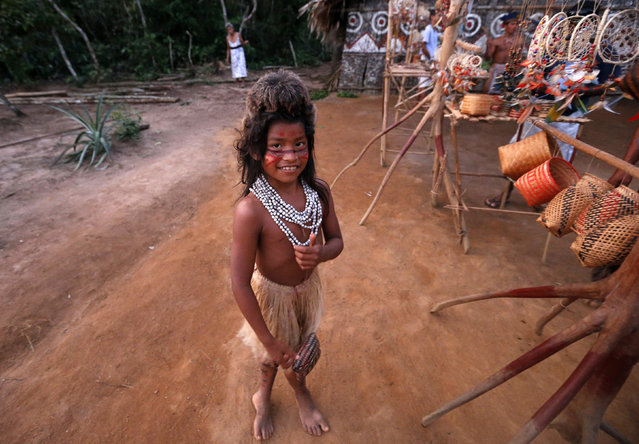
A girl of the Amazonian Tatuyo tribe poses while waiting to sell crafts to tourists in her village in the Rio Negro (Black River) near Manaus city, a World Cup host city, June 23, 2014. Because of their proximity to host city Manaus and their warm welcome, the Tatuyo have enjoyed three weeks of brisk business thanks to the World Cup. Usually, they host between 10 and 30 tourists a day. During the World Cup, this number has rocketed to 250 a day, They have become richer and other communities now come to them to sell them juices and fishes. (Photo by Andres Stapff/Reuters)

A girl of the Amazonian Tatuyo tribe poses while waiting to sell crafts to tourists in her village in the Rio Negro (Black River) near Manaus city, a World Cup host city, June 23, 2014. Because of their proximity to host city Manaus and their warm welcome, the Tatuyo have enjoyed three weeks of brisk business thanks to the World Cup. Usually, they host between 10 and 30 tourists a day. During the World Cup, this number has rocketed to 250 a day, They have become richer and other communities now come to them to sell them juices and fishes. (Photo by Andres Stapff/Reuters)
Details
27 Jun 2014 10:30:00
English singer Dua Lupa, 25, poses in Puma Mayu trainers in her latest advertising campaign for the brand in Herzogenaurach, Germany on August 16, 2021. (Photo by Mario Sorrenti)

English singer Dua Lupa, 25, poses in Puma Mayu trainers in her latest advertising campaign for the brand in Herzogenaurach, Germany on August 16, 2021. The singer posed in the new suede trainers and a black skirt and top with chainmail underneath. Dua Lipa is featured in Puma's latest women's brand campaign “She Moves Us”, which, celebrates women who move together to achieve and connect through fashion, community and sport. (Photo by Mario Sorrenti)
Details
29 Aug 2021 06:49:00
Chernobyl Disaster – Disaster Fighters

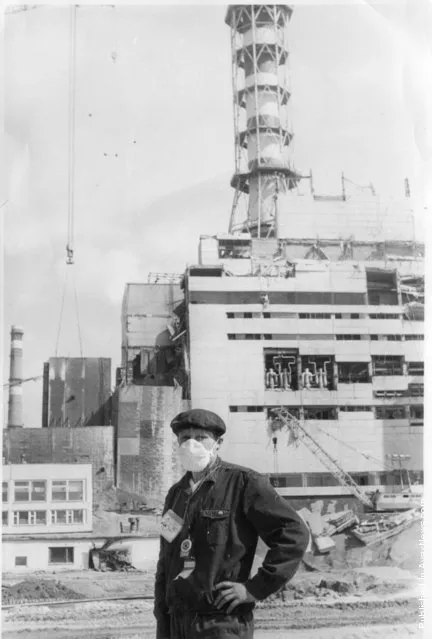
“The Chernobyl disaster was a catastrophic nuclear accident that occurred on 26 April 1986 at the Chernobyl Nuclear Power Plant in Ukrainian SSR, which was under the direct jurisdiction of the central authorities in Moscow. An explosion and fire released large quantities of radioactive contamination into the atmosphere, which spread over much of Western USSR and Europe. It is widely considered to have been the worst nuclear power plant accident in history, and is one of only two classified as a level 7 event on the International Nuclear Event Scale (the other being the Fukushima Daiichi nuclear disaster)”. – Wikipedia (Photos by Alexandr Strannik, August 1986; Source: LiveJournal)
Details
26 Apr 2012 13:20:00
Royal Hindu Cremation Held In Bali

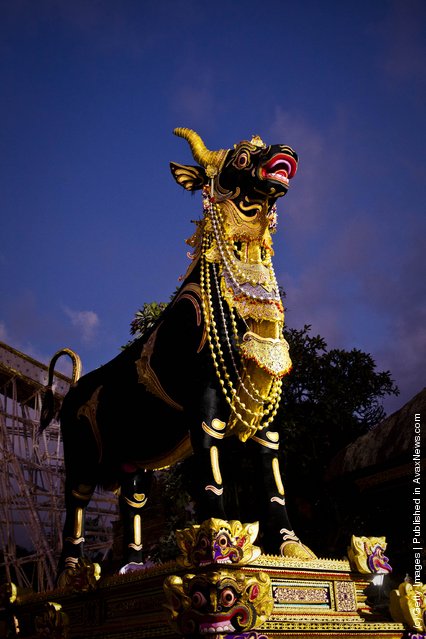
A black bull sarcophagus stands at Puri Ubud during the Hindu Royal cremation – also know as the Pengabenan – for the late Anak Agung Niang Rai, mother of Gianyar Regent, Tjokorda Oka Artha Ardana Sukawati, at Puri Ubud in Gianyar Bali on August 17, 2011 in Ubud, Bali, Indonesia. Niang Rai died in a Denpasar hospital in May; her actual cremation will take place on August 18 and will involve a nine level, 24m high 'bade' or body carring tower, made by upto 100 volunteers from 14 local villages. It will be carried to the cremation by 4500 Ubud residents. (Photo by Ulet Ifansasti/Getty Images)
Details
19 Aug 2011 09:30:00
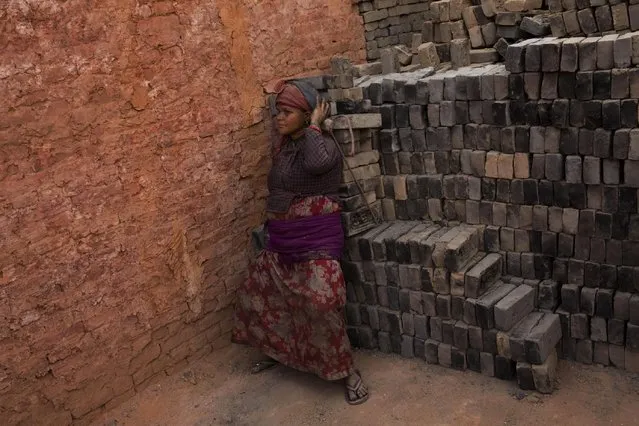
In this Wednesday, May 13, 2015 photo, a Nepalese laborer carries a load of bricks at a brick factory in Bhaktapur, Nepal. (Photo by Bernat Amangue/AP Photo)

In this Wednesday, May 13, 2015 photo, a Nepalese laborer carries a load of bricks at a brick factory in Bhaktapur, Nepal. Almost 745,600 buildings and homes have been damaged or destroyed, including at least 87,700 in the capital, according to Nepal's emergency authority. Engineers say only 40 percent of Kathmandu's damaged buildings as habitable. (Photo by Bernat Amangue/AP Photo)
Details
17 May 2015 11:13:00
“Bamboo Mist”. (Photo by John Poppleton/Caters News)

A bodypainter uses UV paint to create electrifying masterpieces of stunning landscapes on models. John Poppletons vibrant Bodyscapes feature bright savannahs, lightning storms and vivid galaxies leaping from the bodies of his subjects. The artist, who lives in Wellsville in Utah, USA, uses a black light on his paintings to make them look as close to real life as possible. He predominantly uses female models and often paints across their backs to give him the largest surface area to work with. Here: “Bamboo Mist”. (Photo by John Poppleton/Caters News)
Details
17 Jul 2015 13:56:00
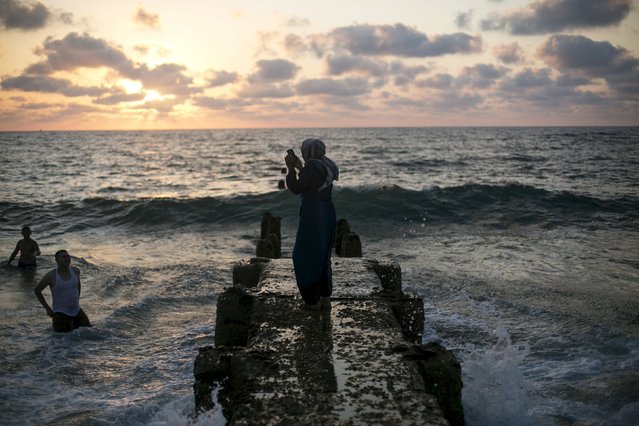
A Muslim woman takes a picture of a man in the water of the Mediterranean sea in Tel Aviv during Eid al-Fitr, which marks the end of the holy month of Ramadan July 19, 2015. (Photo by Baz Ratner/Reuters)

A Muslim woman takes a picture of a man in the water of the Mediterranean sea in Tel Aviv during Eid al-Fitr, which marks the end of the holy month of Ramadan July 19, 2015. Thousands of Palestinians used permits given by the Israeli authorities allowing many to enjoy the beaches along Israel's Mediterranean shoreline during the Eid al-Fitr holiday. (Photo by Baz Ratner/Reuters)
Details
20 Jul 2015 10:10:00