Loading...
Done
Portuguese runner Adriele Silva gestures during the Great Wall Marathon at the Huangyaguan section of the Great Wall of China, in Jixian of Tianjin, China May 19, 2018. (Photo by Jason Lee/Reuters)

Portuguese runner Adriele Silva gestures during the Great Wall Marathon at the Huangyaguan section of the Great Wall of China, in Jixian of Tianjin, China May 19, 2018. (Photo by Jason Lee/Reuters)
Details
26 May 2018 00:01:00
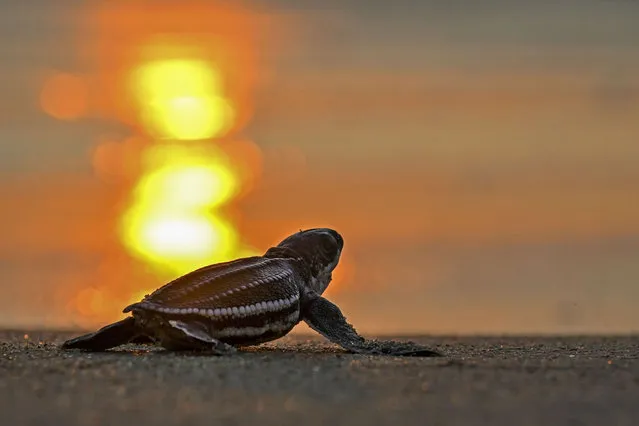
An Olive Ridley sea turtle hatchling releases into the sea at Lhoknga beach, Indonesia's Aceh province on January 16, 2024. (Photo by Chaideer Mahyuddin/AFP Photo)

An Olive Ridley sea turtle hatchling releases into the sea at Lhoknga beach, Indonesia's Aceh province on January 16, 2024. (Photo by Chaideer Mahyuddin/AFP Photo)
Details
09 Mar 2024 07:01:00
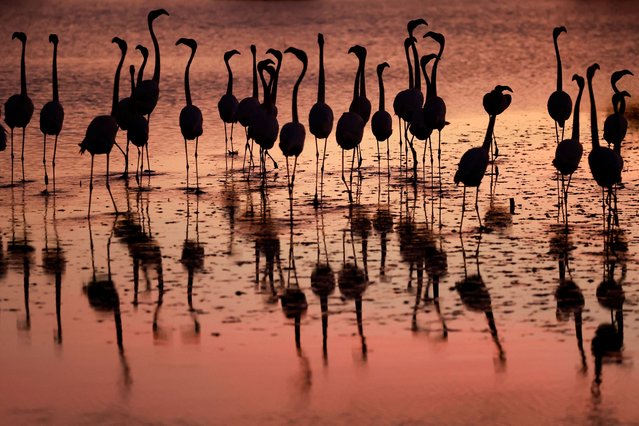
Pink flamingos are silhouetted and reflected in water at sunset in the Camargue regional natural park in Saintes-Maries-de-la-Mer, Southern France, on January 9, 2025. (Photo by Manon Cruz/Reuters)

Pink flamingos are silhouetted and reflected in water at sunset in the Camargue regional natural park in Saintes-Maries-de-la-Mer, Southern France, on January 9, 2025. (Photo by Manon Cruz/Reuters)
Details
04 Feb 2025 04:02:00
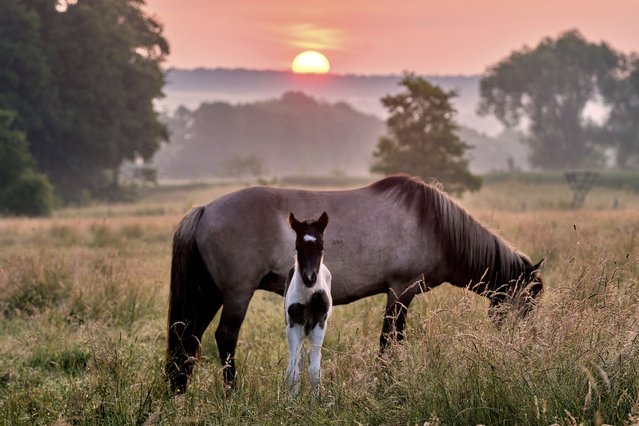
An Icelandic mare and her foal stand on a meadow at a stud farm in Wehrheim near Frankfurt, Germany, Tuesday, June 17, 2025. (Photo by Michael Probst/AP Photo)

An Icelandic mare and her foal stand on a meadow at a stud farm in Wehrheim near Frankfurt, Germany, Tuesday, June 17, 2025. (Photo by Michael Probst/AP Photo)
Details
11 Aug 2025 02:11:00
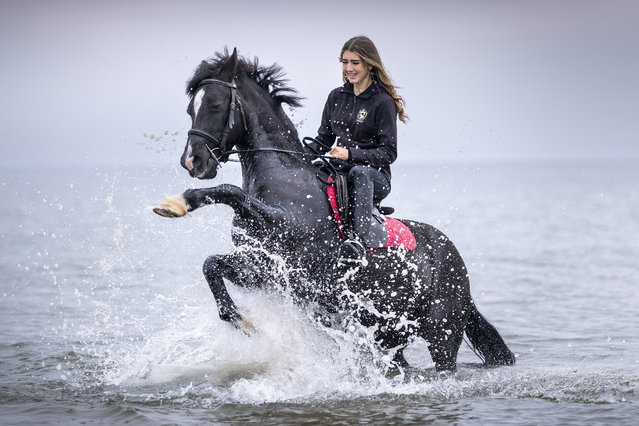
Jess Fulton, 15, from Ayrshire rides her pony Harley through the waves at Irvine Beach, UK on October 20, 2025. (Photo by Jamie Williamson/The Times)

Jess Fulton, 15, from Ayrshire rides her pony Harley through the waves at Irvine Beach, UK on October 20, 2025. (Photo by Jamie Williamson/The Times)
Details
17 Nov 2025 02:24:00
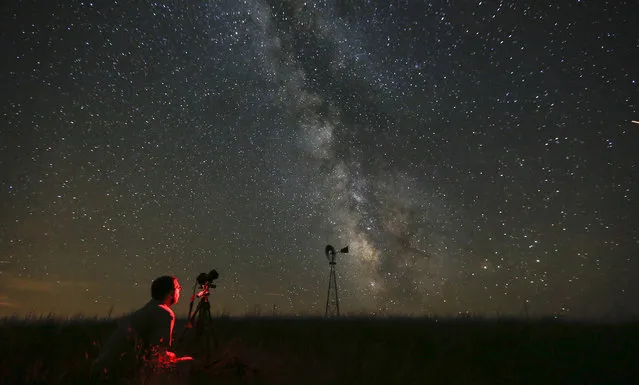
In this Wednesday, July 23, 2014 file photo, Omaha photographer Lane Hickenbottom photographs the night sky in a pasture near Callaway, Neb. With no moon in the sky, the Milky Way was visible to the naked eye. More than one-third of the world’s population can no longer see the Milky Way because of man-made lights, according to a scientific paper by Light Pollution Science and Technology Institute's Fabio Falchi and his team members, published on Friday, June 10, 2016. (Photo by Travis Heying/The Wichita Eagle via AP Photo)

In this Wednesday, July 23, 2014 file photo, Omaha photographer Lane Hickenbottom photographs the night sky in a pasture near Callaway, Neb. With no moon in the sky, the Milky Way was visible to the naked eye. More than one-third of the world’s population can no longer see the Milky Way because of man-made lights, according to a scientific paper by Light Pollution Science and Technology Institute's Fabio Falchi and his team members, published on Friday, June 10, 2016. (Photo by Travis Heying/The Wichita Eagle via AP Photo)
Details
11 Jun 2016 12:37:00
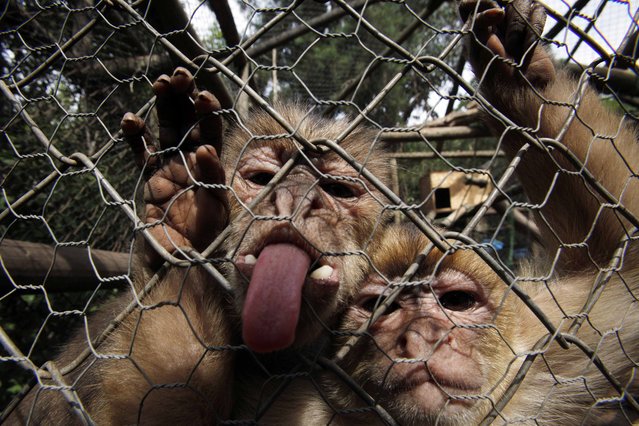
A couple of monkeys look from inside their cage at a rescue and rehabilitation center in Santiago, Chile, Saturday, November 22, 2014. (Photo by Luis Hidalgo/AP Photo)

A couple of monkeys look from inside their cage at a rescue and rehabilitation center in Santiago, Chile, Saturday, November 22, 2014. Elba Munoz who runs the center, says that one of the goals of the Center for the Rescue and Rehabilitation of Primates is to stop the trafficking of the animals. (Photo by Luis Hidalgo/AP Photo)
Details
29 Nov 2014 13:16:00
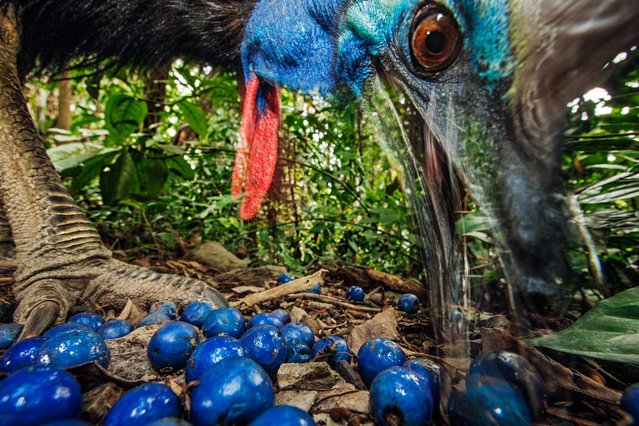
“Cassowaries are large, flightless birds related to emus and (more distantly) to ostriches, rheas, and kiwis”, writes Olivia Judson in the September issue of National Geographic magazine. (Photo by Christian Ziegler/National Geographic)

“Cassowaries are large, flightless birds related to emus and (more distantly) to ostriches, rheas, and kiwis”, writes Olivia Judson in the September issue of National Geographic magazine. How large? People-size: Adult males stand well over five foot five and top 110 pounds. Females are even taller, and can weigh more than 160 pounds. Dangerous when roused, they’re shy and peaceable when left alone. But even birds this big and tough are prey to habitat loss. The dense New Guinea and Australia rain forests where they live have dwindled. Today cassowaries might number 1,500 to 2,000. And because they help shape those same forests – by moving seeds from one place to another – “if they vanish”, Judson writes, “the structure of the forest would gradually change” too. (Photo by Christian Ziegler/National Geographic)

Details
06 Jan 2014 12:21:00