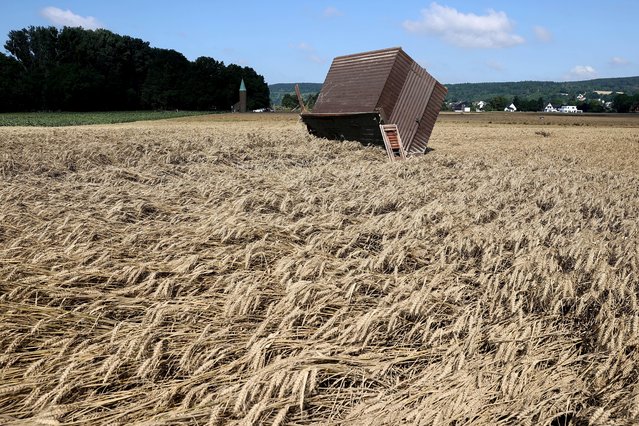
A damaged wooden garden house is seen amid a field of wheat following floods caused by heavy rainfalls, in Bad Bodendorf, Germany, July 18, 2021. (Photo by Wolfgang Rattay/Reuters)
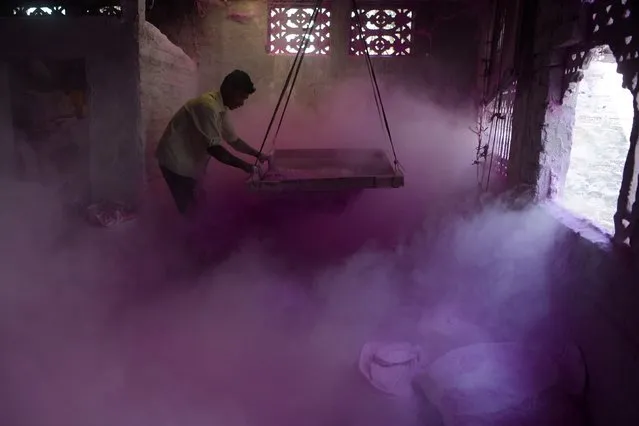
An Indian labourer sifts coloured powder, known as “gulal”, to be used during the forthcoming spring festival of Holi, inside a factory at Fulbari village on the outskirts of Siliguri on March 6, 2017. Holi, the popular Hindu spring festival of colours is observed in India at the end of the winter season on the last full moon of the lunar month, and will be celebrated on March 13 this year. (Photo by Diptendu Dutta/AFP Photo)
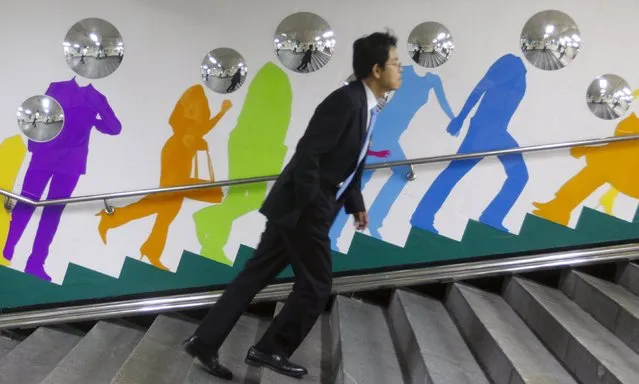
A man walks past an advertisement sign promoting a bank in Seoul in this September 3, 2009 file photo. South Korea is expected to release GDP dara this week. (Photo by Lee Jae-Won/Reuters)
General Maurice Gamelin, General Officer commanding the French Armies, is on a four day visit to England. He went to the staff college at Minley and is seen inspecting an anti-tank gun at Aldershot, on June 7, 1939. (Photo by AP Photo)
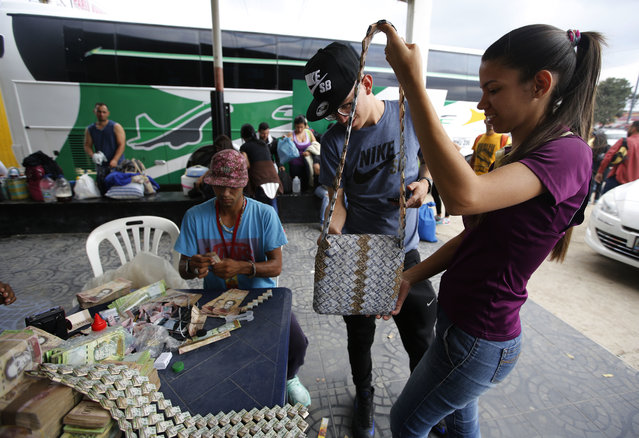
In this February 22, 2018 photo, a couple looks at a bag made out of Venezuelan Bolivars in La Parada, Colombia, on the border with Venezuela. Each collector item produced by Richard Segovia, sitting at the table, fetches between $10 and $15 – a huge markup from the pennies that bolivars retrieve on Venezuela's black market. (Photo by Fernando Vergara/AP Photo)
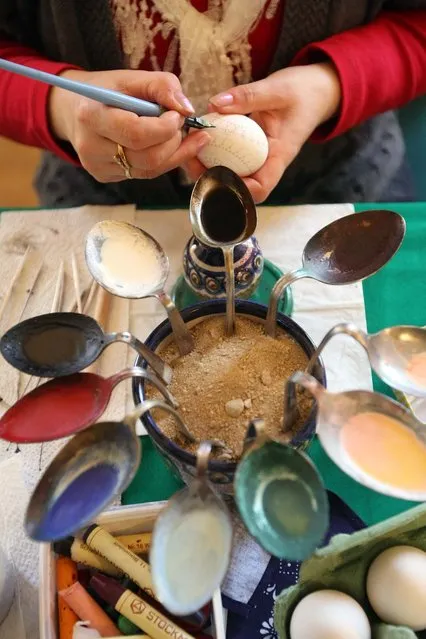
A Sorb egg painter decorates an Easter egg while using bent spoons full of melted wax as coloring at the annual Easter egg market on March 16, 2013 in Schleife, Germany. Easter is a particularly important time of year for Sorbs, a Slavic minority in eastern Germany, and the period includes the tradition of painting Easter eggs that include visual elements intended to ward off evil. Many Sorbs still speak Sorbian, a language closely related to Polish and Czech. (Photo by Adam Berry)
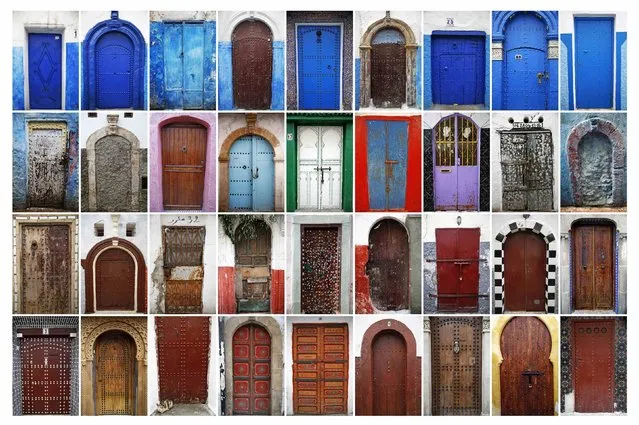
A combination photo shows some of the colourful doors seen in Rabat's Medina and Kasbah of the Udayas, September 2014. UNESCO made Rabat a World Heritage Site two years ago and media and tour operators call it a “must-see destination”. But it seems the tourist hordes have yet to find out. While visitors are getting squeezed through the better-known sites of Marrakesh and Fez, the old part of Rabat - with its beautiful Medina and Kasbah of the Udayas - remains an almost unspoiled oasis of calm. Smaller and more compact, its labyrinths of streets, passages and dead ends are a treasure trove of shapes and colours, of moments begging to be caught by the photographer's lens. (Photo by Damir Sagolj/Reuters)