Cars float up from a car garage in a mixture of storm water and gasoline in lower Manhattan as workers begin the process of pumping out the mess. (Photo by Carolyn Cole/Los Angeles Times/MCT)
Spectators cheer as the United Launch Alliance Delta 4-Heavy rocket, with NASA's Orion spacecraft mounted atop, lifts off from the Air Force Station, December 5, 2014, in Cape Canaveral, Fla. (Photo by Smiley N. Pool/AP Photo/Houston Chronicle)
In this September 16, 2017 photo, a music fan poses for the photo against an angel wings' mural at the Rock in Rio music festival in Rio de Janeiro, Brazil. (Photo by Leo Correa/AP Photo)
Armed forces veteran Frank Simpson at the Portico library being camouflaged by body artist Carolyn Roper in Manchester, UK on May 16, 2016 as part of the #CountThemIn campaign launched on Monday by the Royal British Legion. (Photo by Jon Super/Royal British Legion/PA Wire)
Hundreds of people pack the Canaveral national seashore's Playalinda Beach as a United Launch Alliance Atlas V rocket, carrying a U.S. Navy communications satellite, lifts off from Complex 41 at the Cape Canaveral Air Force Station, Friday, June 24, 2016, in Cape Canaveral, Fla. The satellite is designed to significantly improve ground communications for U.S. forces on the move. (Photo by Craig Rubadoux/Florida Today via AP Photo)
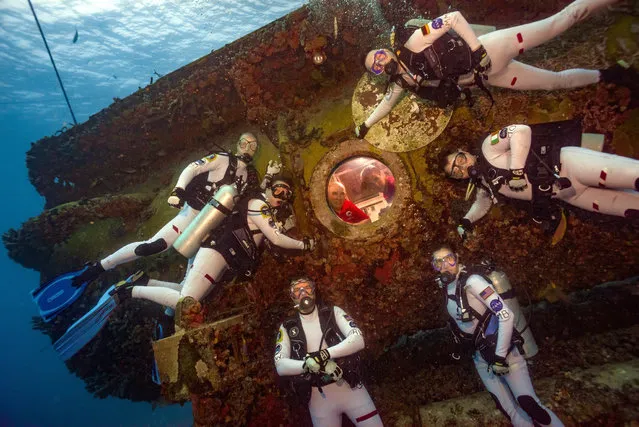
The NASA Extreme Environment Mission Operations (NEEMO) 21 mission began on July 21 as an international crew of aquanauts splashed down to the undersea Aquarius Reef Base, located 62 feet below the surface of the Atlantic Ocean in the Florida Keys National Marine Sanctuary. The NEEMO 21 crew will perform research both inside and outside the habitat during a 16-day simulated space mission. During simulated spacewalks carried out underwater, they will evaluate tools and mission operation techniques that could be used in future space missions, including journeys to Mars. (Photo by Karl Shreeves/NASA)
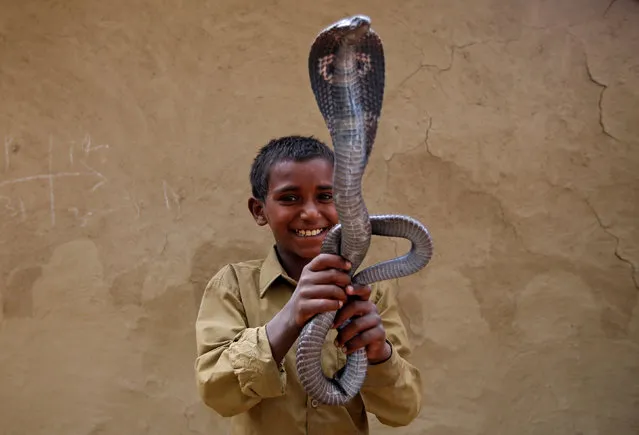
Ravi Nath poses for a photograph with a cobra snake in Jogi Dera (Snake charmers settlement), in the village of Baghpur, in the central state of Uttar Pradesh, India November 10, 2016. An ancient tribe of snake charmers, known as Saperas, have thrived over the generations by catching venomous snakes and making them dance to their music. Snakes are revered by Hindus in India and snake charmers are considered the followers of Lord Shiva, the blue-skinned Hindu god who is usually portrayed wearing a king cobra around his neck. (Photo by Adnan Abidi/Reuters)