Loading...
Done
Pencil Artist Marco Mazzoni

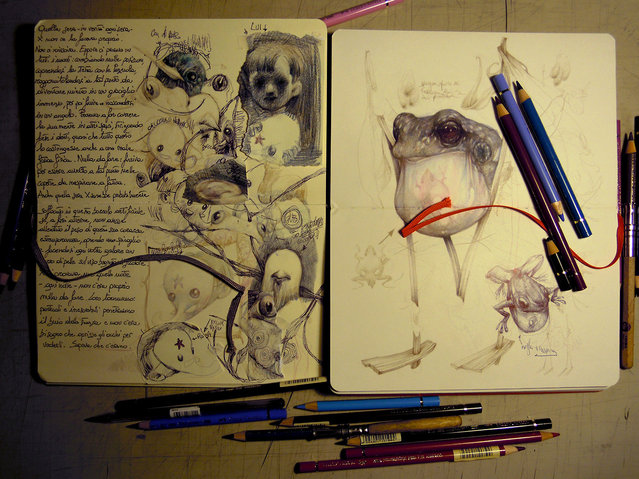
Italian pencil artist Marco Mazzoni‘s work goes far beyond technical perfection. His representation of historical healing women is enigmatic and sublime. Often leaving the eyes blank or covered with an abundance of birds, butterflies and flowers, he gives the impression of a deeper inward focused sight, as well as obscuring the identity of the individual. Many female healers in the past – both medicine woman and midwives – were brutally persecuted by religion, some even burnt as witches… Mazzoni’s work captures their deep connection with nature and their innate power and femininity with delicacy and beautiful detail.
Details
24 Mar 2015 09:33:00
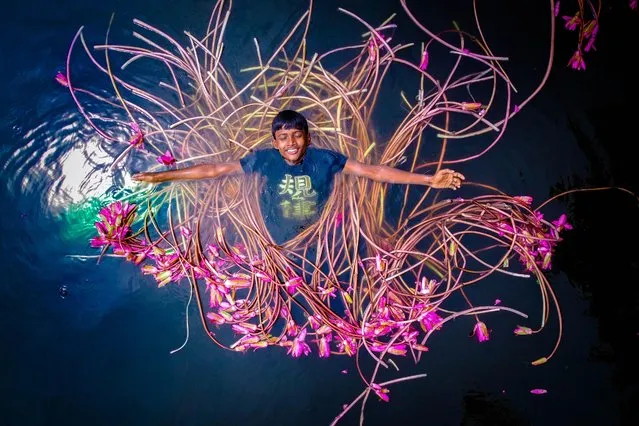
A village boy from Satla Village, Barishal swimmimg with water lilies in a canal near Barishal, Bangladesh on August 17, 2021. (Photo by Mustasinur Rahman Alvi/Eyepix Group/Pacific Press/Rex Features/Shutterstock)

A village boy from Satla Village, Barishal swimmimg with water lilies in a canal near Barishal, Bangladesh on August 17, 2021. Every bright pink blooms is hand-picked and collected carefully by farmers to distribute in the local markets during a annual period. The flowers bloom during of the seasonal flood starting from August to November. (Photo by Mustasinur Rahman Alvi/Eyepix Group/Pacific Press/Rex Features/Shutterstock)
Details
17 Sep 2021 08:57:00
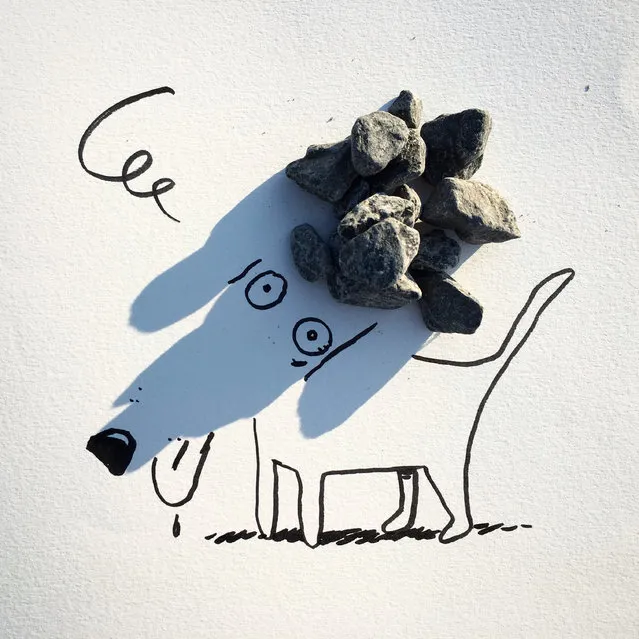
“Stonedog”. (Photo by Vincent Bal/The Guardian)

Earlier this year, Belgian film-maker and artist Vincent Bal stumbled upon an uncanny resemblance to an elephant in the shadow of his tea cup. This gave him the idea for Shadowology, a series of doodles that interact with the shadows of simple, everyday objects: a banknote, some ice cubes and a flower, for example, can turn into a church, a woman and a hippy. “I draw a few lines and I get my image. It’s really the shadows that inspire me”, Bal says. Here: “Stonedog”. (Photo by Vincent Bal/The Guardian)
Details
02 Oct 2016 08:28:00
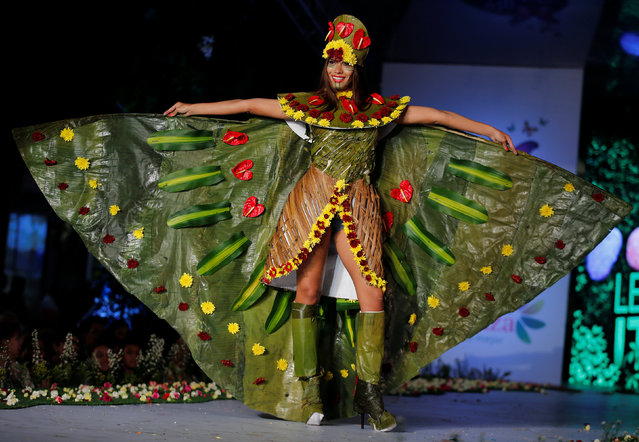
A model presents a creation during the Biofashion show, which features designs made from plants, recycled and natural materials, in Cali, Colombia, November 19, 2016. (Photo by Jaime Saldarriaga/Reuters)

A model presents a creation during the Biofashion show, which features designs made from plants, recycled and natural materials, in Cali, Colombia, November 19, 2016. BioFashion is an environmental initiative that seeks to create awareness about the preservation and management of natural resources where new designers develop dresses made with living plants, flowers and organic elements. (Photo by Jaime Saldarriaga/Reuters)
Details
21 Nov 2016 10:37:00
A follower of the Afro-Brazilian religion Umbanda pays tribute for Iemanja, goddess of the sea, in Copacabana Beach in Rio de Janeiro, Brazil December 29, 2017. (Photo by Ricardo Moraes/Reuters)

A follower of the Afro-Brazilian religion Umbanda pays tribute for Iemanja, goddess of the sea, in Copacabana Beach in Rio de Janeiro, Brazil December 29, 2017. Hundreds of practitioners of Brazil's Afro-Brazilian Candomble and Umbanda faiths have gathered at Rio de Janeiro's Copacabana beach to honor Yemanja. Worshippers were mostly dressed in white as they launched their offerings to Iemanja: small boats with flowers and bowls with candles and fruits. (Photo by Ricardo Moraes/Reuters)
Details
30 Dec 2017 06:22:00


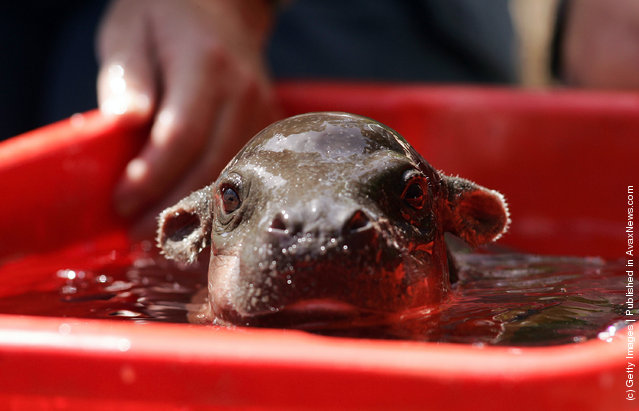
“The pygmy hippopotamus (Choeropsis liberiensis or Hexaprotodon liberiensis) is a large mammal native to the forests and swamps of western Africa (the specific name liberiensis means “of Liberia”, as this is where the vast majority live). The pygmy hippo is reclusive and nocturnal. It is one of only two extant species in the Hippopotamidae family, the other being its much larger cousin the common hippopotamus”. – Wikipedia

Photo: Monifa, a one month old baby Pygmy Hippopotamus takes a morning bath at Taronga Zoo on November 7, 2008 in Sydney, Australia. Monifa is the first Pygmy Hippopotamus to be born at Taronga Zoo in the past twenty three years. (Photo by Sergio Dionisio/Getty Images)
Details
11 Apr 2011 08:11:00
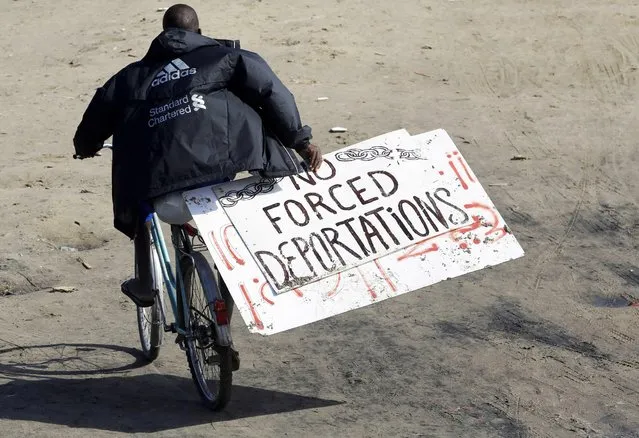
A migrant holds a placard which reads “No Forced Deportations” as he rides his bicycle at the makeshift camp called “The New Jungle” in Calais, France, September 18, 2015. (Photo by Regis Duvignau/Reuters)

A migrant holds a placard which reads “No Forced Deportations” as he rides his bicycle at the makeshift camp called “The New Jungle” in Calais, France, September 18, 2015. Around 3,500 migrants and refugees are camped in Calais, fleeing war and poverty in the Middle East, Africa and Asia and now living in the jungle. Most of them are hoping to make the crossing to England. (Photo by Regis Duvignau/Reuters)
Details
25 Sep 2015 08:00:00
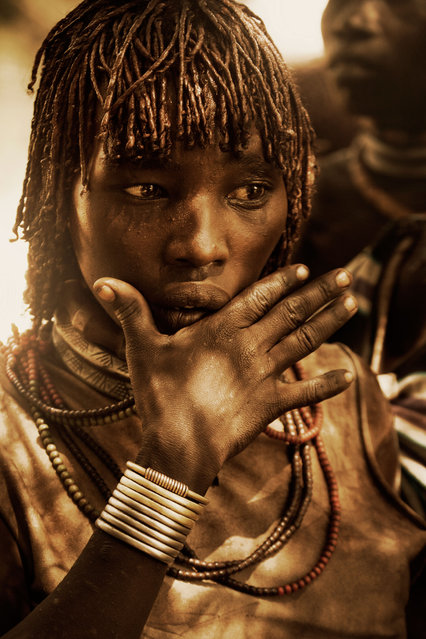
The Hamar people traditionally use red ocher clay to braid the hair of their women. (Photo by Diego Arroyo)

During his time in Ethiopia, New York-based art director and photographer Diego Arroyo spent time with the Hamar, Mursi, Dassanech, and Arbore Tribes. They, along with several others tribes, make up the 200,000 people situated in Africa’s Great Rift Valley. The people of the Omo Valley are still primarily herders and farmers, living an isolated and simple life. While they have yet to be truly touched by globalization, they could soon disappear. Their way of life is being threatened by a massive hydroelectric dam. (Photo by Diego Arroyo)
Details
13 Aug 2014 10:00:00