Loading...
Done
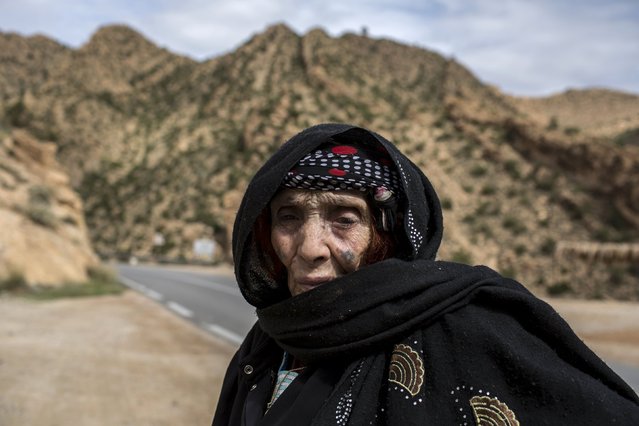
Mazouza Bouglada, 86, a berber woman from the Chaouia region, who has facial tattoos, poses for a photograph in Taghit in the Aures Mountain, Algeria October 8, 2015. Bouglada was tattooed aged 7 by a nomadic man from the Sahara region. She was advised by her mother to get tattooed. The more she got tattooed the more she showed off. Even if she still remembers the pain, she felt beautiful once it was done, Bouglada said. (Photo by Zohra Bensemra/Reuters)

Mazouza Bouglada, 86, a berber woman from the Chaouia region, who has facial tattoos, poses for a photograph in Taghit in the Aures Mountain, Algeria October 8, 2015. Bouglada was tattooed aged 7 by a nomadic man from the Sahara region. She was advised by her mother to get tattooed. The more she got tattooed the more she showed off. Even if she still remembers the pain, she felt beautiful once it was done, Bouglada said. She was very proud of her stars on her cheeks. Her eldest sister had been tattooed before her and she wanted to imitate her. Bouglada said she has now given away all her silver jewellery to atone for the sin that believers told her she had committed by being tattooed. (Photo by Zohra Bensemra/Reuters)
Details
01 Nov 2015 08:02:00
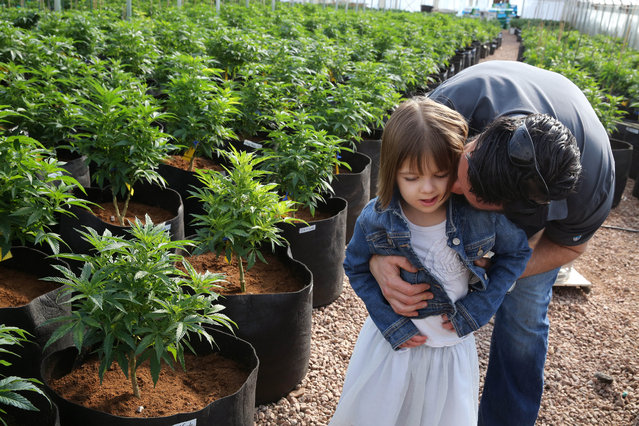
In this February 7, 2014 file photo, Matt Figi hugs and tickles his once severely-ill seven year old daughter Charlotte, as they walk together inside a greenhouse for a special strain of medical marijuana known as Charlotte's Web, which was named after the girl early in her treatment for crippling severe epilepsy, in the mountains west of Colorado Springs, Colo. (Photo by Brennan Linsley/AP Photo)

In this February 7, 2014 file photo, Matt Figi hugs and tickles his once severely-ill seven year old daughter Charlotte, as they walk together inside a greenhouse for a special strain of medical marijuana known as Charlotte's Web, which was named after the girl early in her treatment for crippling severe epilepsy, in the mountains west of Colorado Springs, Colo. Colorado is poised to award more than $8 million for medical marijuana research, a step toward addressing complaints that little is known about pot's medical potential. Among the research projects poised for approval on Wednesday, December 17, 2014, are one for pediatric epilepsy patients, and another for children with brain tumors. (Photo by Brennan Linsley/AP Photo)
Details
29 Dec 2014 13:12:00
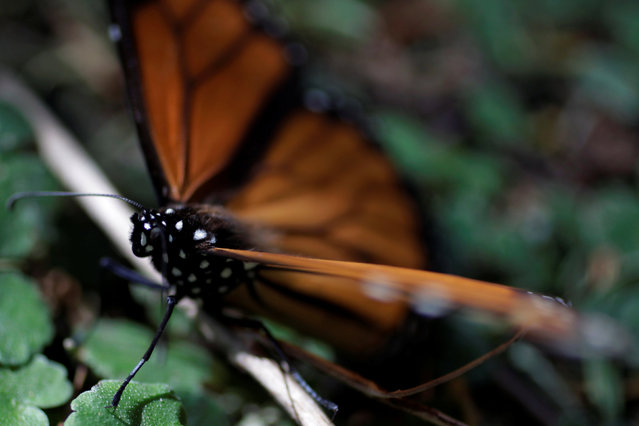
A monarch butterfly rests on the ground at the Sierra Chincua butterfly sanctuary on a mountain in Angangeo, Michoacan November 24, 2016. Angangueo is a town and municipality located in far eastern Michoacán state in central Mexico noted for its history of mining and its location in the Monarch Butterfly Biosphere Reserve. The Monarch Butterfly Biosphere Reserve is a World Heritage Site containing most of the over-wintering sites of the eastern population of the monarch butterfly. The reserve is located in the Trans-Mexican Volcanic Belt pine-oak forests ecoregion on the border of Michoacán and State of Mexico, 100 km (62 miles), northwest of Mexico City. Millions of butterflies arrive in the reserve annually. Butterflies only inhabit a fraction of the 56,000 hectares of the reserve from October–March. (Photo by Carlos Jasso/Reuters)

A monarch butterfly rests on the ground at the Sierra Chincua butterfly sanctuary on a mountain in Angangeo, Michoacan November 24, 2016. Angangueo is a town and municipality located in far eastern Michoacán state in central Mexico noted for its history of mining and its location in the Monarch Butterfly Biosphere Reserve. The Monarch Butterfly Biosphere Reserve is a World Heritage Site containing most of the over-wintering sites of the eastern population of the monarch butterfly. (Photo by Carlos Jasso/Reuters)
Details
26 Nov 2016 10:20:00
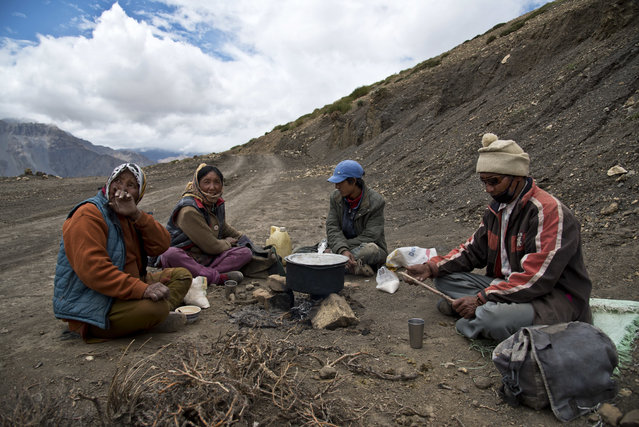
In this August 17, 2016, photo, from left to right, Chhering Chodom, 60, Tashi Yangzom, 50, Lobsang Chhering, 27, and Dorje Tandup, 58, drink milk tea on the side of the road. For centuries, the sleepy valley nestled in the Indian Himalayas remained a hidden Buddhist enclave forbidden to outsiders. Enduring the harsh year-round conditions of the high mountain desert, the people of Spiti Valley lived by a simple communal code – share the Earth's bounty, be hospitable to neighbors, and eschew greed and temptation at all turns. That's all starting to change, for better or worse. Since India began allowing its own citizens as well as outsiders to visit the valley in the early 1990s, tourism and trade have boomed. And the marks of modernization, such as solar panels, asphalt roads and concrete buildings, have begun to appear around some of the villages that dot the remote landscape at altitudes above 4,000 meters (13,000 feet). (Photo by Thomas Cytrynowicz/AP Photo)

In this August 17, 2016, photo, from left to right, Chhering Chodom, 60, Tashi Yangzom, 50, Lobsang Chhering, 27, and Dorje Tandup, 58, drink milk tea on the side of the road. For centuries, the sleepy valley nestled in the Indian Himalayas remained a hidden Buddhist enclave forbidden to outsiders. Enduring the harsh year-round conditions of the high mountain desert, the people of Spiti Valley lived by a simple communal code – share the Earth's bounty, be hospitable to neighbors, and eschew greed and temptation at all turns. That's all starting to change, for better or worse. (Photo by Thomas Cytrynowicz/AP Photo)
Details
15 Sep 2016 09:22:00
A captive elephant is made to swim for visitors at Khao Kheow Open Zoo in Chonburi province, Thailand on September 15, 2024. (Photo by Lillian Suwanrumpha/AFP Photo)

A captive elephant is made to swim for visitors at Khao Kheow Open Zoo in Chonburi province, Thailand on September 15, 2024. (Photo by Lillian Suwanrumpha/AFP Photo)
Details
22 Sep 2024 03:35:00
Ilyas Wadood (right) of the Islamic Community Center talks with a demonstrator during the "Freedom of Speech Rally Round II" in Phoenix, Arizona May 29, 2015. More than 200 protesters, some armed, berated Islam and its Prophet Mohammed outside an Arizona mosque on Friday in a provocative protest that was denounced by counterprotesters shouting "Go home, Nazis," weeks after an anti-Muslim event in Texas came under attack by two gunmen. REUTERS/Nancy Wiechec

Ilyas Wadood (right) of the Islamic Community Center talks with a demonstrator during the "Freedom of Speech Rally Round II" in Phoenix, Arizona May 29, 2015. More than 200 protesters, some armed, berated Islam and its Prophet Mohammed outside an Arizona mosque on Friday in a provocative protest that was denounced by counterprotesters shouting "Go home, Nazis," weeks after an anti-Muslim event in Texas came under attack by two gunmen. REUTERS/Nancy Wiechec
Details
04 Jun 2015 10:53:00
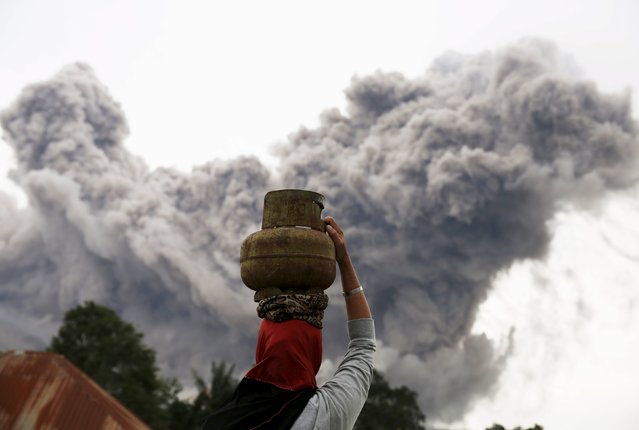
A resident carries a gas canister as an ash cloud hovers above during an eruption of Mount Sinabung volcano at Tiga Serangkai village in Karo Regency, North Sumatra province, Indonesia June 24, 2015. More than 10,000 people from 12 villages, who are living around the slopes of Mount Sinabung, left their homes and moved to refugee camps, local media reported. (Photo by Reuters/Beawiharta)

A resident carries a gas canister as an ash cloud hovers above during an eruption of Mount Sinabung volcano at Tiga Serangkai village in Karo Regency, North Sumatra province, Indonesia June 24, 2015. More than 10,000 people from 12 villages, who are living around the slopes of Mount Sinabung, left their homes and moved to refugee camps, local media reported. (Photo by Reuters/Beawiharta)
Details
27 Jun 2015 13:30:00
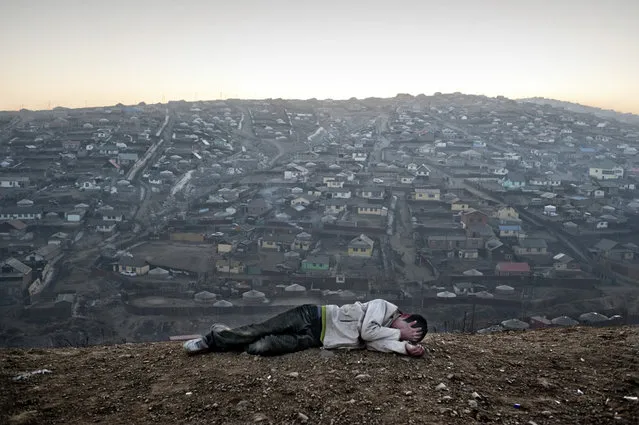
Asia, Mongolia, March 27, 2011. A view of Ulaan Baator over the shoulder of a slumbering drunk. Alcoholism is a huge problem in the city, home to almost half of Mongolia's people. The capital's population has doubled in the past two years, expanding outward in a haphazard sprawl, and many inhabitants live in slums known as the “Gher District”. (Photo by Alessandro Grassani)

“Environmental Migrants: The Last Illusion” by photographer Alessandro Grassani, documents the life of people in Kenya, Mongolia and Bangladesh who migrate to escape environmental stresses to the city of their own countries in hopes for a better life. Here: Asia, Mongolia, March 27, 2011. A view of Ulaan Baator over the shoulder of a slumbering drunk. Alcoholism is a huge problem in the city, home to almost half of Mongolia's people. The capital's population has doubled in the past two years. High levels of unemployment and poverty await herders who abandon rural areas and arrive in the city, illiterate and untrained in any skills necessary for urban jobs. (Photo by Alessandro Grassani)
Details
21 Jul 2015 10:10:00