Loading...
Done
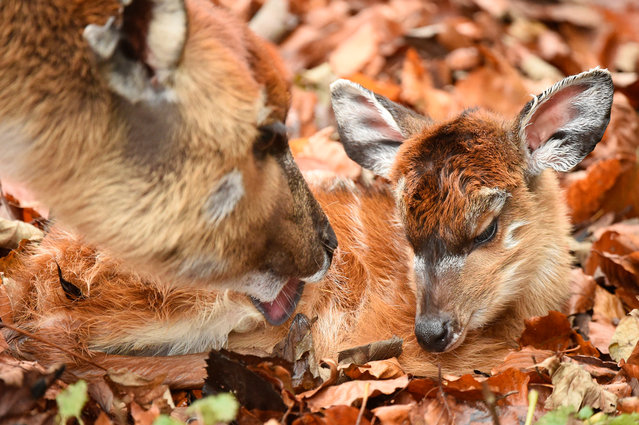
A newly born Sitatunga calf seen at ZSL Whipsnade Zoo on November 24, 2016 in Whipsnade, England. The swamp-dwelling species, also known as a marshbuck, is Africa's only true amphibious antelope. It was snuggled up in the leaves and almost perfectly camouflaged as it mother tended it. (Photo by Tony Margiocchi/Barcroft Images)

A newly born Sitatunga calf seen at ZSL Whipsnade Zoo on November 24, 2016 in Whipsnade, England. The swamp-dwelling species, also known as a marshbuck, is Africa's only true amphibious antelope. It was snuggled up in the leaves and almost perfectly camouflaged as it mother tended it. (Photo by Tony Margiocchi/Barcroft Images)
Details
27 Nov 2016 09:19:00
Green turtles take special care of their carapace, scraping algae off on rocks or letting cleaner fish remove parasites. Thanks to long-term protection of nesting sites, and measures to reduce the numbers caught in fishing gear, some green turtle populations are starting to recover. (Photo by Philip Hamilton/The Guardian)

Teeming with images of spectacular underwater scenes from around the world, Call of the Blue is the culmination of a five-year project by the photographer and ocean conservationist Philip Hamilton. This groundbreaking book includes contributions from acclaimed scientists and ocean “guardians”, who reveal what drove them to answer the call of the blue. (Photo by Philip Hamilton/The Guardian)
Details
23 Nov 2018 00:03:00
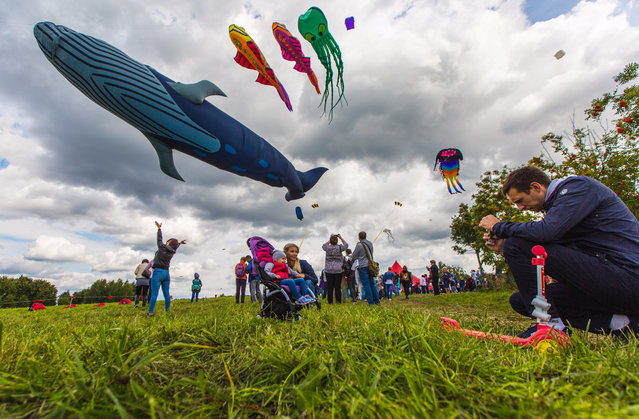
People fly kites during the 2017 Pyostroye Nebo kite festival in Tsaritsyno Park in Moscow, Russia on August 27, 2017. (Photo by Asya Dobrovolskaya/TASS)

People fly kites during the 2017 Pyostroye Nebo kite festival in Tsaritsyno Park in Moscow, Russia on August 27, 2017. (Photo by Asya Dobrovolskaya/TASS)
Details
29 Aug 2017 08:19:00
Hundreds of gannets dive for mackerel off the coast of Shetland, Northern Isles of Scotland on July 2020, where they plunge into the water from heights of up to 100ft at speeds of 60mph. (Photo by David Keep/The Times)

Hundreds of gannets dive for mackerel off the coast of Shetland, Northern Isles of Scotland on July 2020, where they plunge into the water from heights of up to 100ft at speeds of 60mph. (Photo by David Keep/The Times)
Details
09 Aug 2020 00:03:00
Snow and ice adorn trees in Ovacık district, Turkey on February 20, 2020. The country has been experiencing heavy snowfall this month. (Photo by Sidar Can Eren/Anadolu Agency via Getty Images)

Snow and ice adorn trees in Ovacık district, Turkey on February 20, 2020. The country has been experiencing heavy snowfall this month. (Photo by Sidar Can Eren/Anadolu Agency via Getty Images)
Details
02 Sep 2021 02:00:00
People view pelicans napping on a footpath in St James’s Park in London, United Kingdom on a mild day October 18, 2021. (Photo by Stephen Chung/Alamy Live News)

People view pelicans napping on a footpath in St James’s Park in London, United Kingdom on a mild day October 18, 2021. (Photo by Stephen Chung/Alamy Live News)
Details
31 Oct 2021 05:03:00
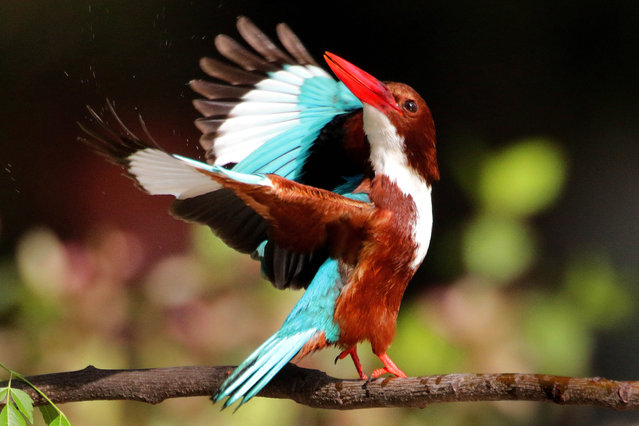
A white-throated kingfisher (Halcyon smyrnensis) sits over a tree in a field in Lahore, Pakistan, 26 March 2021. The most familiar Kingfisher species can be observed perched on branches or walls while on the lookout for grubs, insects and even fish in streams or garden ponds. (Photo by Rahat Dar/EPA/EFE)

A white-throated kingfisher (Halcyon smyrnensis) sits over a tree in a field in Lahore, Pakistan, 26 March 2021. The most familiar Kingfisher species can be observed perched on branches or walls while on the lookout for grubs, insects and even fish in streams or garden ponds. (Photo by Rahat Dar/EPA/EFE)
Details
18 Dec 2021 06:05:00
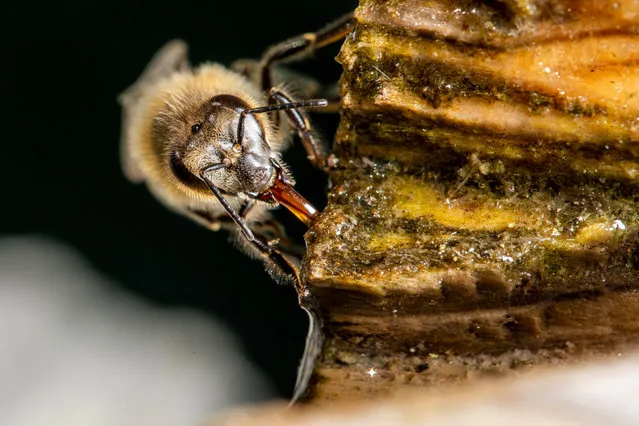
A Western honey bee feeds off acacia pollen at an apiary in Nagyszenas, eastern Hungary, 25 April 2020. The preparation of the bees for the acacia bloom began two weeks later than usual this year; due to the late frosts, this season's yield of Hungaricum acacia honey is expected to be lower. (Photo by Tibor Rosta/EPA/EFE)

A Western honey bee feeds off acacia pollen at an apiary in Nagyszenas, eastern Hungary, 25 April 2020. The preparation of the bees for the acacia bloom began two weeks later than usual this year; due to the late frosts, this season's yield of Hungaricum acacia honey is expected to be lower. (Photo by Tibor Rosta/EPA/EFE)
Details
08 Jan 2023 06:19:00