Loading...
Done
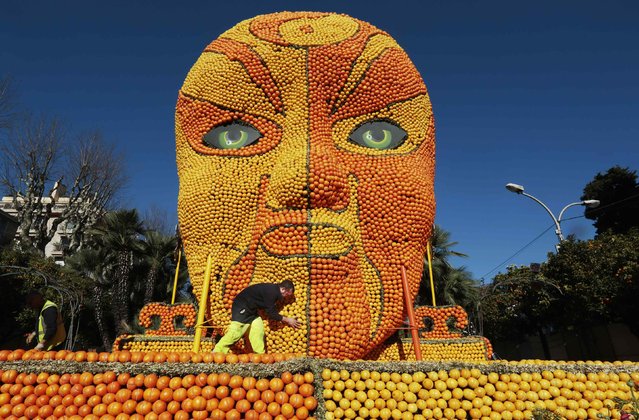
A worker puts the final touches to a replica of a Beijing opera mask made with lemons and oranges during the 82th Lemon festival in Menton February 12, 2015. Over 20,000 hours work for teams to set up the festival and some 145 metric tons of lemons and oranges are used to make displays during the 82th festival, which is themed “Tribulations of a lemon in China”, and runs from February 14 through March 4. (Photo by Eric Gaillard/Reuters)

A worker puts the final touches to a replica of a Beijing opera mask made with lemons and oranges during the 82th Lemon festival in Menton February 12, 2015. Over 20,000 hours work for teams to set up the festival and some 145 metric tons of lemons and oranges are used to make displays during the 82th festival, which is themed “Tribulations of a lemon in China”, and runs from February 14 through March 4. (Photo by Eric Gaillard/Reuters)
Details
13 Feb 2015 13:11:00
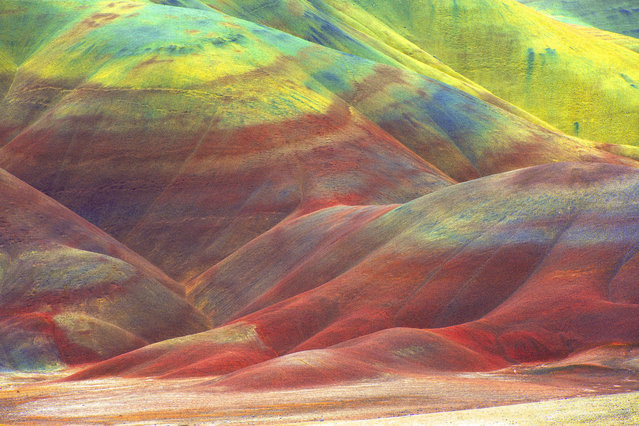
Layers of breathtaking colour streak the rolling hills of this vast desert, making the landscape appear as though it has been tie-dyed. The natural phenomenon, nicknamed the “Painted Desert”, was formed when the area was once a river floodplain. (Photo by Mark Brodkin/Solent News/SIPA Press)

Layers of breathtaking colour streak the rolling hills of this vast desert, making the landscape appear as though it has been tie-dyed. The natural phenomenon, nicknamed the “Painted Desert”, was formed when the area was once a river floodplain. Each colour corresponds to a different underground geological feature – rocks which have seemingly dyed the layers of earth above. Formed from volcanic activity, the hills at the John Day Fossil Beds National Monument in East Central Oregon, USA, are almost bursting with colour. Pictured: The colourful hills at the John Day Fossil Beds National Monument in East Central Oregon, USA. (Photo by Mark Brodkin/Solent News/SIPA Press)
Details
30 Jul 2014 11:00:00
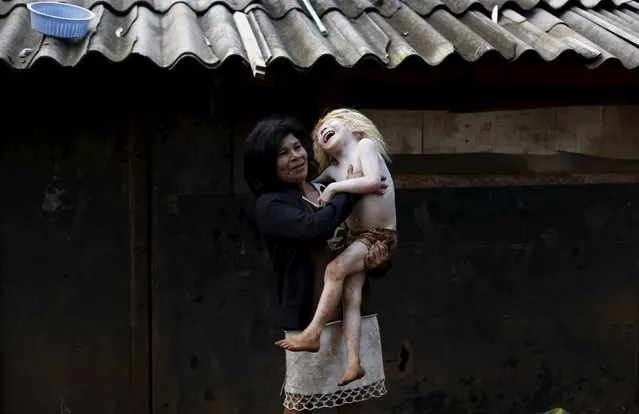
A Guarani Indian woman jokes with her son in the village of Pyau at Jaragua district, in Sao Paulo April 27, 2015. The National Indian Foundation (FUNAI) has recognised 521 hectares of this area as indigenous territory, making it the smallest indigenous reserve in Brazil. Members of the Guarani community have now established a new village outside the demarcation and are being threatened with an eviction through a court order. (Photo by Nacho Doce/Reuters)

A Guarani Indian woman jokes with her son in the village of Pyau at Jaragua district, in Sao Paulo April 27, 2015. The National Indian Foundation (FUNAI) has recognised 521 hectares of this area as indigenous territory, making it the smallest indigenous reserve in Brazil. Members of the Guarani community have now established a new village outside the demarcation and are being threatened with an eviction through a court order. (Photo by Nacho Doce/Reuters)
Details
01 May 2015 12:42:00
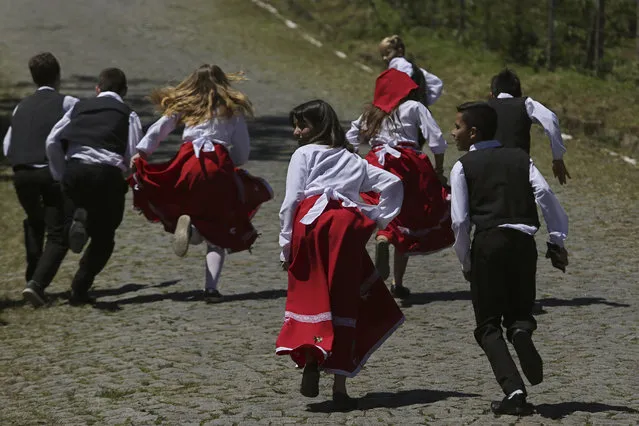
In this November 11, 2017 photo, children dressed in traditional outfits play during the Azorean Culture Festival which celebrates the culture of the Azores, the Portuguese island chain in the mid-Atlantic, in Enseada de Brito, in Brazil's Santa Catarina southern state. “We have to make sure that our culture always stays alive, not let it die”, said Andre Cordeiro, who leads one of the singing and dancing groups that performed this year. “We are able to pass it on from generation to generation”. (Photo by Eraldo Peres/AP Photo)

In this November 11, 2017 photo, children dressed in traditional outfits play during the Azorean Culture Festival which celebrates the culture of the Azores, the Portuguese island chain in the mid-Atlantic, in Enseada de Brito, in Brazil's Santa Catarina southern state. “We have to make sure that our culture always stays alive, not let it die”, said Andre Cordeiro, who leads one of the singing and dancing groups that performed this year. “We are able to pass it on from generation to generation”. (Photo by Eraldo Peres/AP Photo)
Details
04 Dec 2017 07:52:00
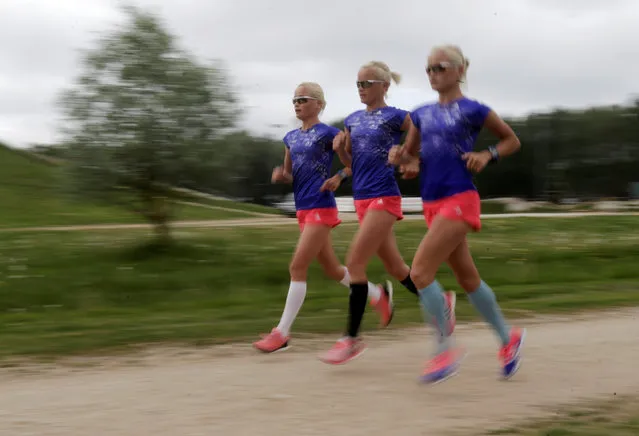
Estonia's olympic team female marathon runners triplets (L-R) Lily, Liina and Leila Luik run during a training session in Tartu, Estonia, May 26, 2016. Leila, Liina and Lily Luik will make Olympics history as the first identical triplets to compete against each other when they cross the start line for the women's marathon in Rio. (Photo by Ints Kalnins/Reuters)

Estonia's olympic team female marathon runners triplets (L-R) Lily, Liina and Leila Luik run during a training session in Tartu, Estonia, May 26, 2016. Leila, Liina and Lily Luik will make Olympics history as the first identical triplets to compete against each other when they cross the start line for the women's marathon in Rio. (Photo by Ints Kalnins/Reuters)
Details
27 May 2016 13:04:00
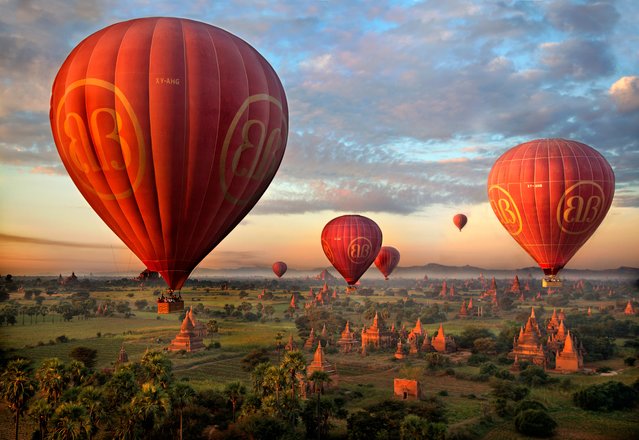
“The fantastic landscape of Bagan in Myanmar features hundreds of temples and pagodas as far as the eye can see. Experiencing this sight at dawn from the basket of a hot air balloon will remain engraved in my memory for ever. Mick Ryan, judge – What a magical photograph and place. The Buddhist temples and pagodas fill the plains of Bagan in Myanmar at sunrise… the golden hour providing beautiful light to illuminate the retrogression of the temples and balloons toward a misty, mountainous distance. An excellent, exotic photograph that makes you want to book a flight”. (Photo by Alastair Swan/The Guardian)

“The fantastic landscape of Bagan in Myanmar features hundreds of temples and pagodas as far as the eye can see. Experiencing this sight at dawn from the basket of a hot air balloon will remain engraved in my memory for ever. Mick Ryan, judge – What a magical photograph and place. The Buddhist temples and pagodas fill the plains of Bagan in Myanmar at sunrise… the golden hour providing beautiful light to illuminate the retrogression of the temples and balloons toward a misty, mountainous distance. An excellent, exotic photograph that makes you want to book a flight”. (Photo by Alastair Swan/The Guardian)
Details
04 Jul 2016 08:36:00
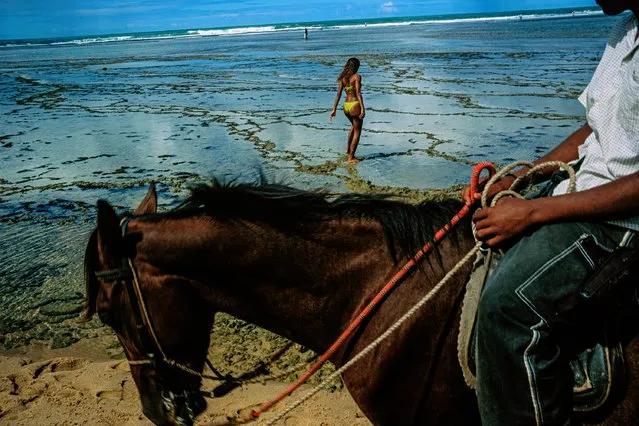
Praia du Forte, Bahia. “This was the lead picture for a National Geographic story on Bahia, because it was both mysterious as well as a “geography” picture showing where the slaves arrived from Nigeria. Beach pictures seem like they should be easy to take, but for me they are actually quite difficult. Too easy to fall into cliche. When I saw the kid coming on the horse, I quickly ran to see if I could make something with a woman in a bikini that was not a bikini shot”. (Photo by David Alan Harvey/The Guardian)

Praia du Forte, Bahia. “This was the lead picture for a National Geographic story on Bahia, because it was both mysterious as well as a “geography” picture showing where the slaves arrived from Nigeria. Beach pictures seem like they should be easy to take, but for me they are actually quite difficult. Too easy to fall into cliche. When I saw the kid coming on the horse, I quickly ran to see if I could make something with a woman in a bikini that was not a bikini shot”. (Photo by David Alan Harvey/The Guardian)
Details
20 Aug 2016 11:35:00
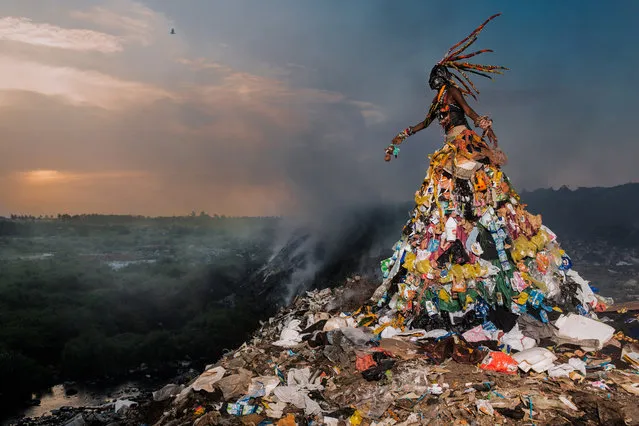
Fabrice Monteiro travelled to the most polluted places in Africa and created terrifying characters who roamed their midst dressed in eerie debris. They are spirits, he says, on a mission to make humans change their ways. Informed by Africa’s environmental problems, Fabrice Monteiro’s photographs aim to highlight urgent ecological issues all over the world. His series “The Prophecy” is on show at Photo Basel 2017 until 18 June. (Photo by Fabrice Monteiro/Photo Basel 2017/Mariane Ibrahim Gallery/The Guardian)

Fabrice Monteiro travelled to the most polluted places in Africa and created terrifying characters who roamed their midst dressed in eerie debris. They are spirits, he says, on a mission to make humans change their ways. Informed by Africa’s environmental problems, Fabrice Monteiro’s photographs aim to highlight urgent ecological issues all over the world. His series “The Prophecy” is on show at Photo Basel 2017 until 18 June. (Photo by Fabrice Monteiro/Photo Basel 2017/Mariane Ibrahim Gallery/The Guardian)
Details
17 Jun 2017 08:38:00