A female tourist wears a protective face mask on the street, following an outbreak of the coronavirus disease (COVID-19), in Tokyo, Japan on March 10, 2020. (Photo by Hannibal Hanschke/Reuters)
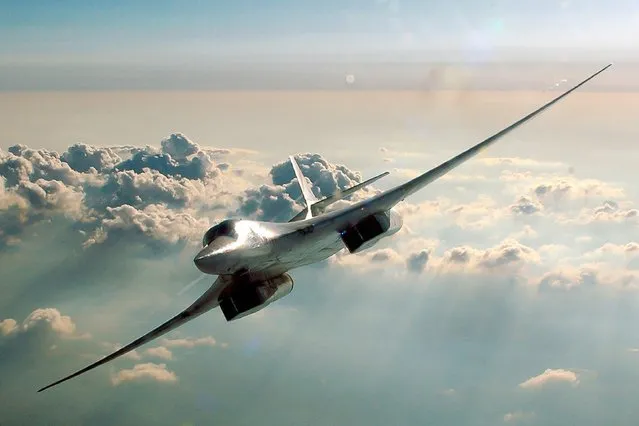
In this undated photo released Tuesday April 13, 2021, by Russian Defense Ministry Press Service, A Tu-160 strategic bomber of the Russian air force is shown on a training mission somewhere in Russia. Russian Defense Minister Sergei Shoigu on Tuesday described a massive military buildup in western Russia as part of drills intended to check the armed forces' readiness amid the threats posed by NATO. (Photo by Vadim Savitsky/Russian Defense Ministry Press Service via AP Photo)
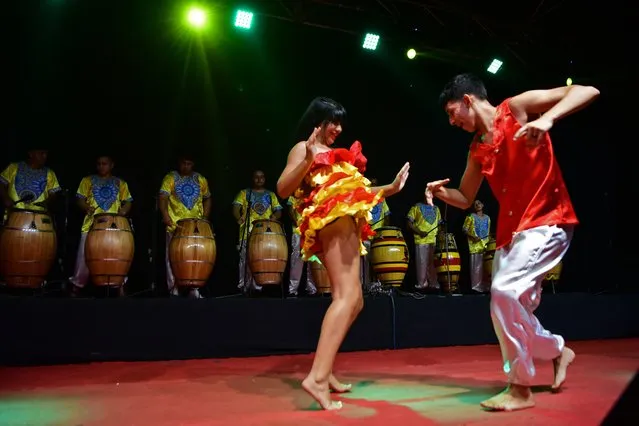
Dancers of the Saint Balthazar Kamba Kua traditional group perform in honour of Saint Balthazar, one of the Three Wise Men, during the Afro-Paraguay festival of Kamba Kua, in Fernando de la Mora, Paraguay, on January 6, 2024. The annual festival is a tradition that keeps Paraguay's Afro-descendants connected with their African roots through ancestral dance, drumming and customs. (Photo by Norberto Duarte/AFP Photo)
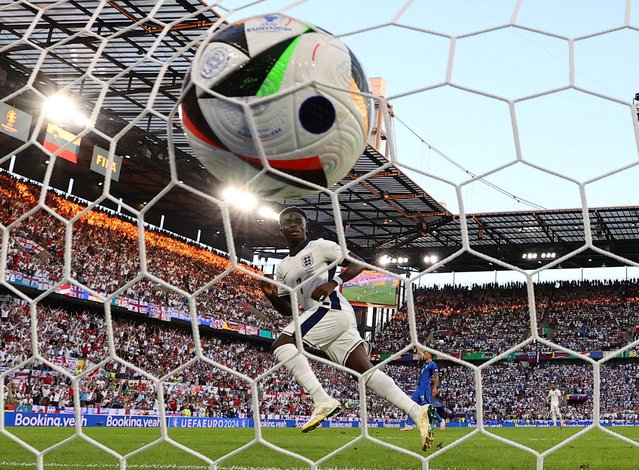
Bukayo Saka of England scores their first goal before it is disallowed during the UEFA EURO 2024 group stage match between England and Slovenia at Cologne Stadium on June 25, 2024 in Cologne, Germany. (Photo by Wolfgang Rattay/Reuters)
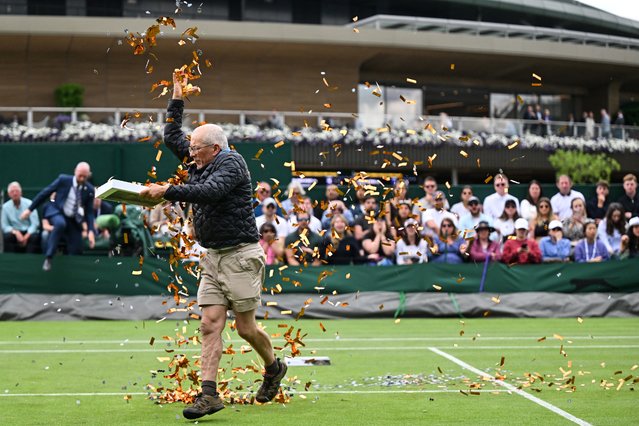
A Just Stop Oil demonstrator throws orange confetti on court 18 as he disrupts the women's singles tennis match between Australia's Daria Saville and Britain's Katie Boulter on the third day of the 2023 Wimbledon Championships at The All England Tennis Club in Wimbledon, southwest London, on July 5, 2023. (Photo by Glyn Kirk/AFP Photo)
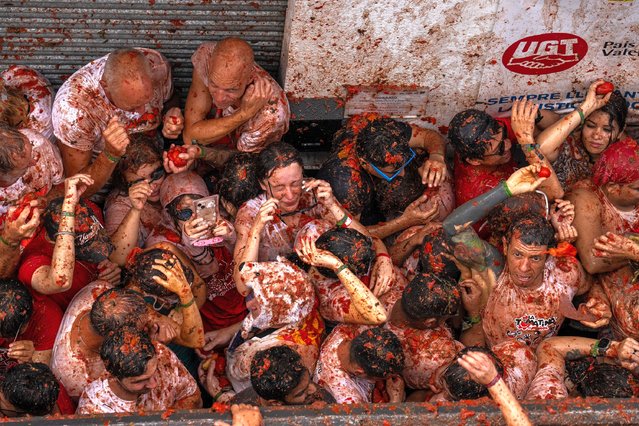
Revellers celebrate and throw tomatoes at each other as they participate in the annual Tomatina festival on August 30, 2023 in Bunol, Spain. Spain's tomato throwing party in the streets of Bunol, Valencia brings together almost 20,000 people, with some 150,000 kilos of tomatoes thrown each year, this year with a backdrop of high food prices affected by Spain's historic drought. (Photo by Zowy Voeten/Getty Images)
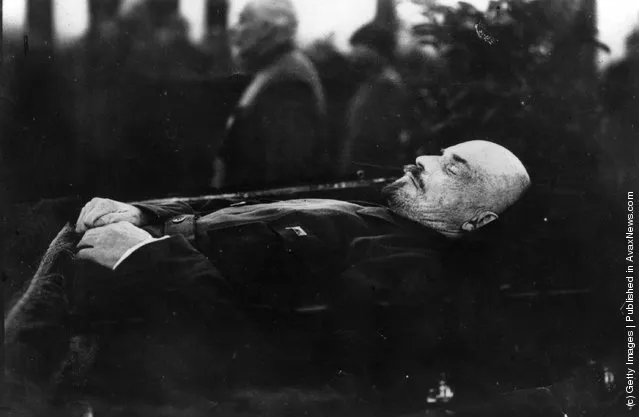
Photo: Vladimir Ilyich Lenin (1870 – 1924) lying in state in the Kremlin. (Photo by Hulton Archive/Getty Images). 1924
Important! For the same article in Russian language click here.
Something quite intriguing is happening within Russian-speaking internet during the last few – should you type a fully academic inquiry (at least, according to Russian academic requirements) in national search engines for "Lenin's mausoleum" – the first thing you get (even in top 10 searches) is website pages talking about black magic and occult. Website authors view this construction differently, but unconditionally agree on one thing: the mausoleum of the "leader of the world proletariat” – the essence of a magical artifact, a sort of “energy vampire”. It was built with a certain purpose: to drain the energy out of miserable Soviet citizens on one hand; and to poison the anthroposphere of one-sixth part of the earth with its vibes (the exact territory that was occupied by the former Soviet Union), depriving the Russian people of will to resist on the other hand. Complete nonsense? No doubt. Nevertheless, an intriguing one. Well, probably because some oddities do exist in mausoleum's history. These oddities are the thing we are going to discuss this time. First, let me refresh you memory on the subject.
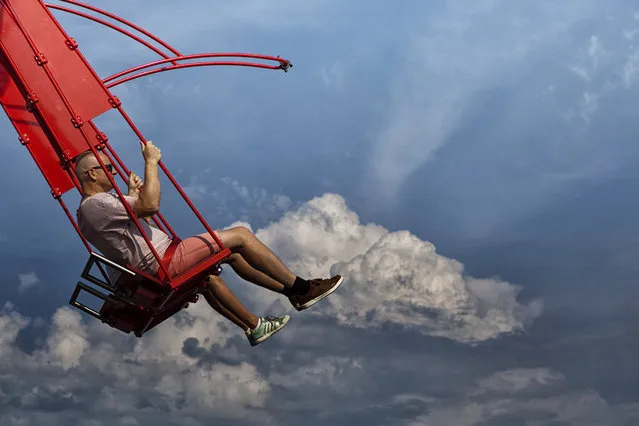
The giant metal structure sits 330ft above the ground on the roof of a 22 storey office block in Dutch capital Amsterdam on September 6, 2016. Tourists sit in a playground-style chair as they propel themselves them over the edge of the building with only thin-air between them and the ground below. Engineers spent several years designing and building the breathtaking swing. By being fixed to the top of a building it reaches new heights – dwarfing other swings around Europe but trailing behind the 1,150ft high mechanical rides at the Stratosphere Hotel in Las Vegas, Nevada. (Photo by Huub Zeeman/SWNS.com)