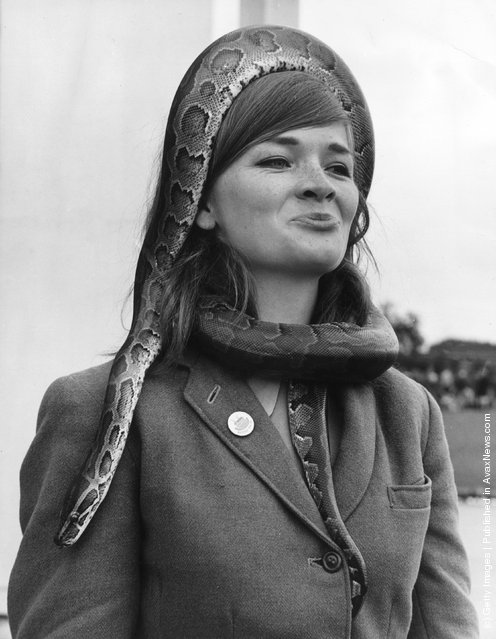
Linda Rooks from Yeovil in Somerset, a hostess at Whipsnade Zoo, wears “Tanga” a 7fy long python as a hat and scarf. (Photo by William Vanderson/Getty Images). 1965
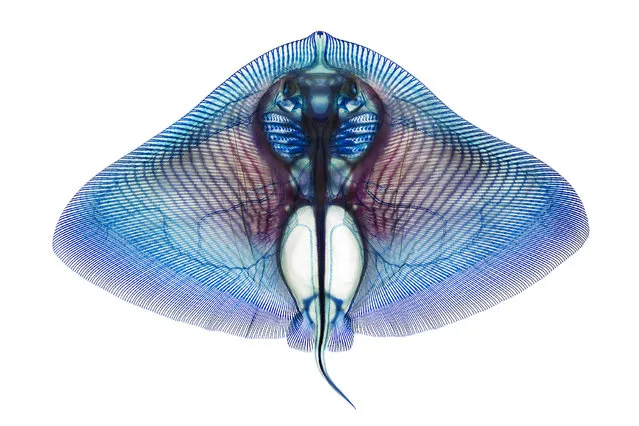
The photographs feature fish that have been specially treated to make the stained skeletal tissues visible through the skin and flesh. The technique, developed by Dr. Adam Summers, uses dyes, hydrogen peroxide, a digestive enzyme and glycerin to make the flesh seem to disappear. Photo: This image of the butterfly ray (Gymnura crebripunctata) helped scientists study the joints in its wings. (Photo by Adam Summers)
Men at work at the Cardiff Institute, making huge baskets, unique in size and construction, for loading oil cake in South Africa. (Photo by Maeers/Getty Images). 1938
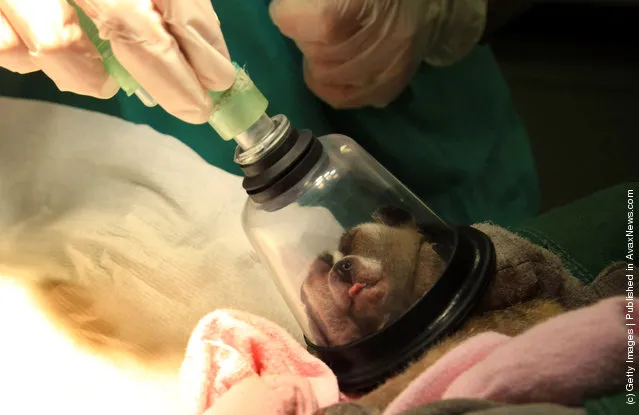
Mr. Ben, a pygmy slow loris, is administed anesthetic during one of Bristol Zoo's in-house veterinary clinic routine health check-up and teeth clean as part of the Zoo's standard animal husbandry and welfare procedure at Bristol Zoo on June 18, 2009 in Bristol, England. (Photo by Matt Cardy/Getty Images)
Robot couple Xiaolan (L) and Xiaotao carry trays of food at a restaurant in Jinhua, Zhejiang province, China, May 18, 2015. The restaurant, which opened on Monday, has two robots delivering food for customers. The robots were designed as a couple, Xiaolan and Xiaotao, according to local media. (Photo by Reuters/Stringer)
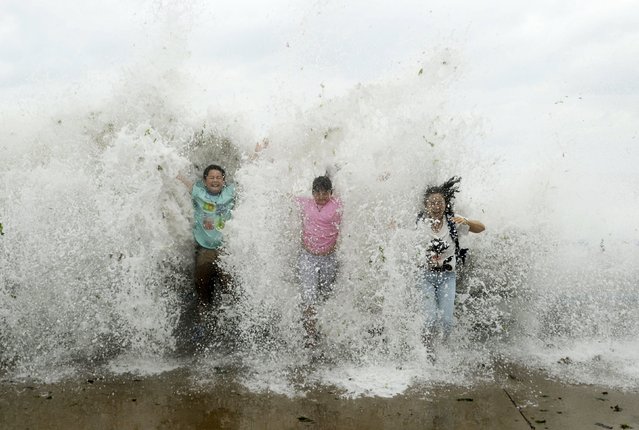
Tourists standing near the sea shore are hit by a wave, which surged past a barrier under the influence of Typhoon Chan-hom, in Qingdao, Shandong province, China, July 12, 2015. One of the most powerful typhoons to strike eastern China in decades disrupted air, rail and sea transport on Saturday after forcing the evacuation of more than a million people from the provinces of Zhejiang and Jiangsu, state media reported. (Photo by Reuters/Stringer)