Loading...
Done
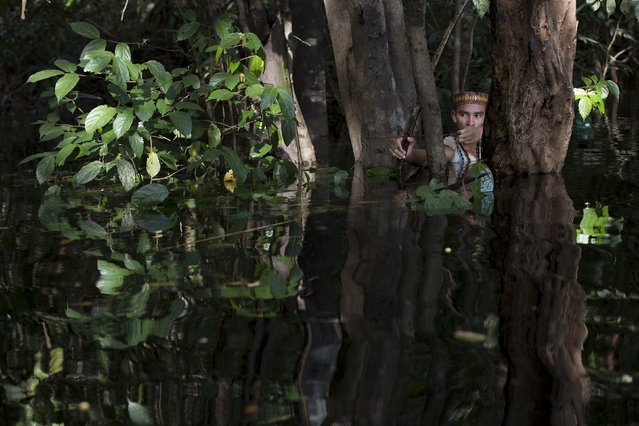
Kambeba Indian, Dream Braga, 18, aims his arrow in a jungle near the village Tres Unidos, Amazon state May 9, 2015. Dream Braga has been shooting fish with a bow and arrow for most of his life. In the Amazonian village where he grew up, that was what kids did for food and fun. (Photo by Bruno Kelly/Reuters)

Kambeba Indian, Dream Braga, 18, aims his arrow in a jungle near the village Tres Unidos, Amazon state May 9, 2015. Dream Braga has been shooting fish with a bow and arrow for most of his life. In the Amazonian village where he grew up, that was what kids did for food and fun. He participated in the Indigenous Archery Project which recruits Amazon native children to compete with modern archery equipment and try for a place on the national team, with the 2016 Olympics in Rio de Janeiro as their ultimate goal. After training with Olympic coaches for three months, he has now been promoted to Brazil's national team. (Photo by Bruno Kelly/Reuters)
Details
17 May 2015 11:19:00
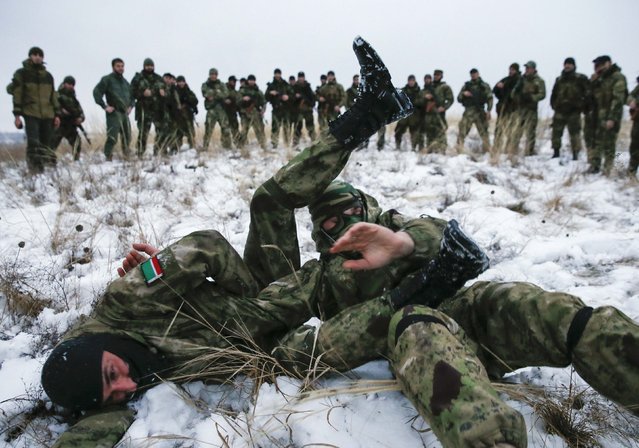
Pro-Russian separatists from the Chechen “Death” battalion take part in a training exercise in the territory controlled by the self-proclaimed Donetsk People's Republic, eastern Ukraine, December 8, 2014. Chanting “Allahu Akbar” (God is greatest), dozens of armed men in camouflage uniforms from Russia's republic of Chechnya train in snow in a camp in the rebel-held east Ukraine. (Photo by Maxim Shemetov/Reuters)

Pro-Russian separatists from the Chechen “Death” battalion take part in a training exercise in the territory controlled by the self-proclaimed Donetsk People's Republic, eastern Ukraine, December 8, 2014. Chanting “Allahu Akbar” (God is greatest), dozens of armed men in camouflage uniforms from Russia's republic of Chechnya train in snow in a camp in the rebel-held east Ukraine. They say their “Death” unit fighting Ukrainian forces has 300 people, mostly former state security troops in the mainly-Muslim region where Moscow waged two wars against Islamic insurgents and which is now run by a Kremlin-backed strongman. (Photo by Maxim Shemetov/Reuters)
Details
11 Dec 2014 13:58:00
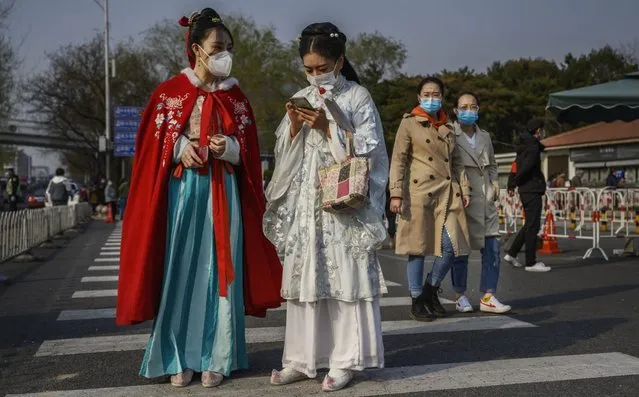
Chinese women wear protective masks as they are dressed in traditional clothing from the Qing Dynasty era outside a park on March 29, 2020 in Beijing, China. A limited section of the iconic tourist site was re-opened to the public this week allowing a smaller number of visitors to reserve tickets online in advance and to enter after passing health screening. With the pandemic hitting hard across the world, China recorded its first day with no new domestic cases of the coronavirus last week, since the government imposed sweeping measures to keep the disease from spreading. For two months, millions of people across China have been restricted in how they move from their homes, while other cities have been locked down in ways that appeared severe at the time but are now being replicated in other countries trying to contain the virus. Officials believe the worst appears to be over in China, though there are concerns of another wave of infections as the government attempts to reboot the worlds second largest economy. In Beijing, it is mandatory to wear masks outdoors, retail stores operate on reduced hours, restaurants employ social distancing among patrons, and tourist attractions at risk of drawing large crowds remain closed. Monitoring and enforcement of virus-related measures and the quarantine of anyone arriving to Beijing is carried out by neighborhood committees and a network of Communist Party volunteers who wear red arm bands. A primary concern for Chinese authorities remains the arrival of flights from Europe and elsewhere, given the exposure of passengers in regions now regarded as hotbeds for transmission. Since January, China has recorded more than 81,000 cases of COVID-19 and at least 3200 deaths, mostly in and around the city of Wuhan, in central Hubei province, where the outbreak first started. (Photo by Kevin Frayer/Getty Images)

Chinese women wear protective masks as they are dressed in traditional clothing from the Qing Dynasty era outside a park on March 29, 2020 in Beijing, China. A limited section of the iconic tourist site was re-opened to the public this week allowing a smaller number of visitors to reserve tickets online in advance and to enter after passing health screening. (Photo by Kevin Frayer/Getty Images)
Details
01 Apr 2020 00:05:00
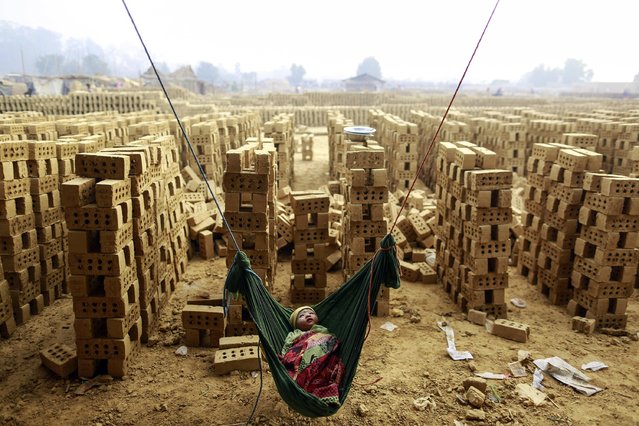
A boy sleeps in a hammock while his mother works at a brick kiln on the outskirts of Yangon February 1, 2015. (Photo by Soe Zeya Tun/Reuters)

A boy sleeps in a hammock while his mother works at a brick kiln on the outskirts of Yangon February 1, 2015. (Photo by Soe Zeya Tun/Reuters)
Details
02 Feb 2015 09:58:00
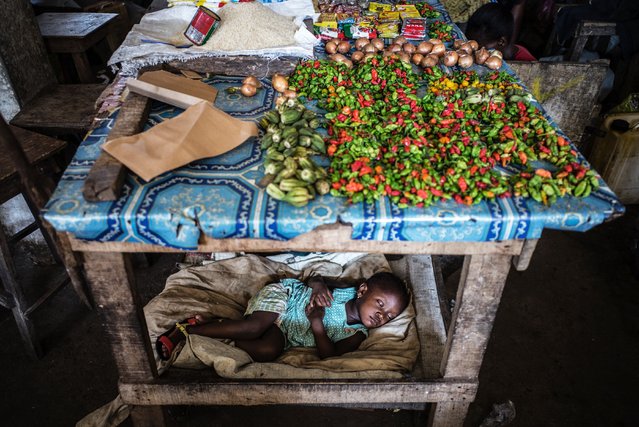
A child sleeps under a table at the Jorkpan market in Sinkor district in Monrovia, on May 2, 2016. (Photo by Marco Longari/AFP Photo)

A child sleeps under a table at the Jorkpan market in Sinkor district in Monrovia, Liberia on May 2, 2016. (Photo by Marco Longari/AFP Photo)
Details
10 May 2016 12:49:00
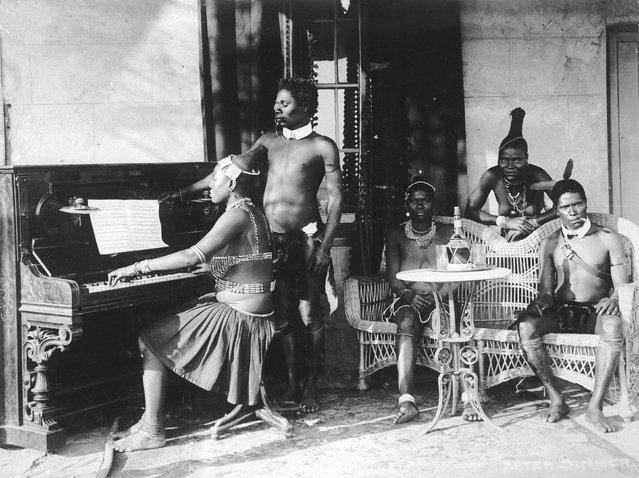
circa 1925:  A Zulu woman playing the piano while a group of others sit and listen.  (Photo by General Photographic Agency/Getty Images)

“The Zulu are the largest South African ethnic group, with an estimated 10–11 million people living mainly in the province of KwaZulu-Natal. Small numbers also live in Zimbabwe, Zambia, and Mozambique. Their language, Zulu, is a Bantu language; more specifically, part of the Nguni subgroup. The Zulu Kingdom played a major role in South African history during the 19th and 20th centuries. Under apartheid, Zulu people were classed as third-class citizens and suffered from state-sanctioned discrimination. They remain today the most numerous ethnic group in South Africa, and now have equal rights along with all other citizens”. – Wikipedia.

Photo: A Zulu woman playing the piano while a group of others sit and listen (to put it briefly, Englishmen scoff over Zulu). South Africa, circa 1925. (Photo by General Photographic Agency)

Details
03 Feb 2014 09:40:00
Bicycle Cafe In Zurich, Switzerland

In the past, having a car was synonymous to success. Now, however, having a bicycle in the new trend. Riding a bicycle is all pros and no cons. It makes you slimmer and healthier, it allows you to enjoy the fresh air, traffic jams are no longer a problem, and of course you don’t waste money on gas. However, there was always a problem of leaving your bike unattended. With thieves lurking behind every corner, there is always a risk of someone stealing your bicycle. Thus, the authorities of Zurich have decided to do something for cyclists. They’ve created the first café for cyclists where the person can sit on his bike while enjoying a cup of coffee. This is a great idea since the visitors will not have to worry about their bikes being stolen. Though to visit such a café, you might want to bring a cushion with you, since sitting on small, hard plastic seat is not very relaxing.
Details
22 Dec 2014 11:49:00
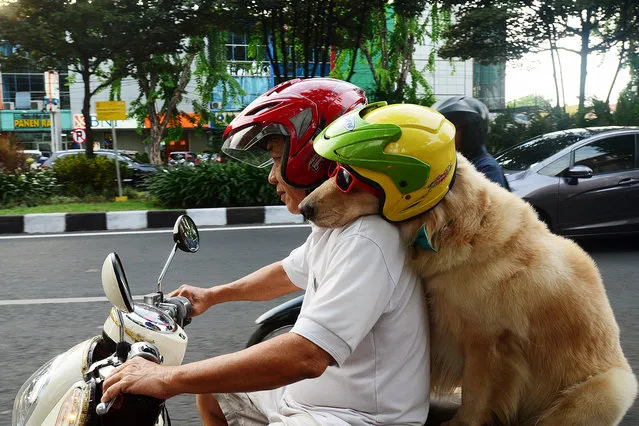
Cool rider Ace on the back on the motorbike, on January 12, 2015, in Surabaya, Indonesia. A pair of dogs enjoy a bit of bark-and-ride – as they weave through Indonesiaís traffic on the back of a motorcycle. Wearing red-framed sunglasses and a helmet the two golden retrievers happily sandwich their owner on the fast bike. (Photo by Jefta Images/Barcroft Media/ABACAPress)

Cool rider Ace on the back on the motorbike, on January 12, 2015, in Surabaya, Indonesia. A pair of dogs enjoy a bit of bark-and-ride – as they weave through Indonesiaís traffic on the back of a motorcycle. Wearing red-framed sunglasses and a helmet the two golden retrievers happily sandwich their owner on the fast bike. Unsurprisingly, the sight of the docile dogs hitching a fast ride in Surabaya, Indonesia, attracts a lot of attention from onlookers. Ace and Armani have been riding since they were just a few months old and now at the age of three the pair jump onto the bike whenever they think their owner is heading out. (Photo by Jefta Images/Barcroft Media/ABACAPress)
Details
29 Jan 2015 11:28:00