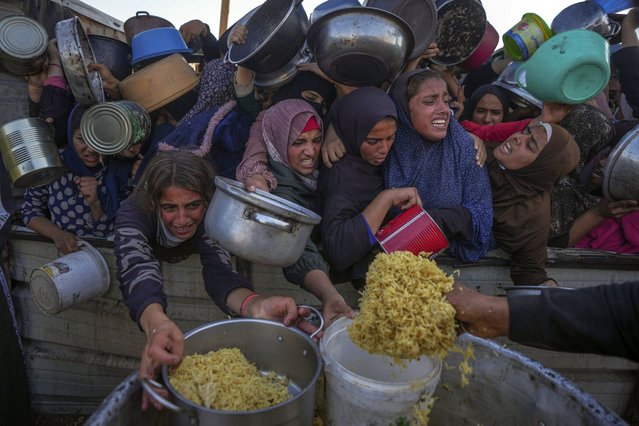
Palestinian girls struggle as they get donated food at a distribution center in Khan Younis, Gaza Strip, on Friday, December 6, 2024. (Photo by Abdel Kareem Hana/AP Photo)
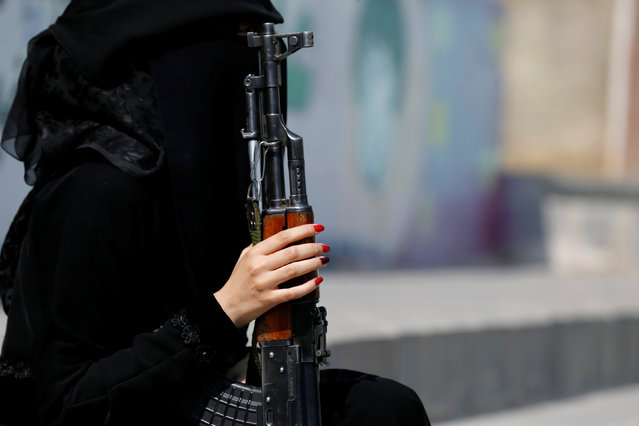
A woman loyal to the Houthi movement holds a rifle as she takes part in a parade to show support to the movement in Sanaa, Yemen September 6, 2016. The Saudi-led Arab coalition launched a military campaign against the Huthis and their allies in March 2015, after the rebels closed in on Gulf-backed President Abedrabbo Mansour Hadi in his southern refuge of Aden, forcing him into exile. (Photo by Khaled Abdullah/Reuters)
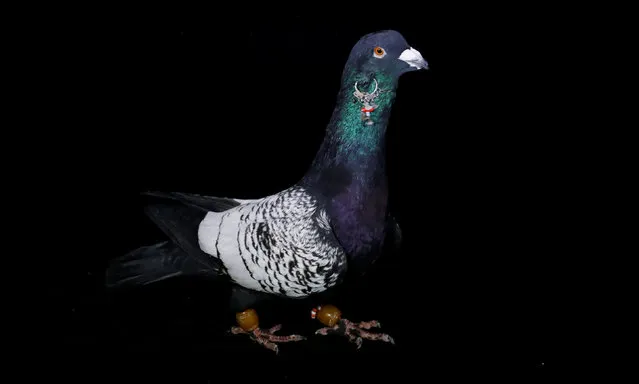
A pigeon, known as Siyah Kinifirli, with an approximate market value of 1000 Turkish Lira ($263), bred by 23-year-old Ismail Ozbek, is pictured in Sanliurfa, Turkey, December 23, 2016. As night-time approaches in Sanliurfa, southeastern Turkey, most of the alleyways of the city's old bazaar are emptying out of buyers and vendors, except for one. (Photo by Umit Bektas/Reuters)
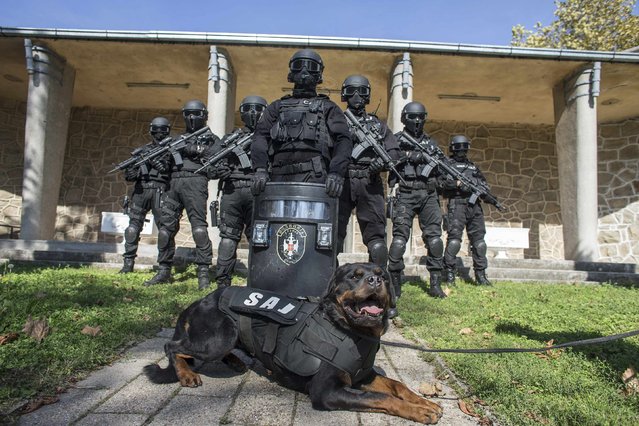
Serbian police officers of the Special Anti-Terrorist Unit pose for a picture in their base outside Belgrade October 8, 2014. When the killing of an unarmed black teenager by a white policeman in Ferguson, Missouri, in August sparked sometimes violent protests, the response of police in camouflage gear and armoured vehicles wielding stun grenades and assault rifles seemed more like a combat operation than a public order measure. Some U.S. police departments have recently acquired U.S. military-surplus hardware from wars abroad, but there are many law enforcers around the world whose rules of engagement also allow the use of lethal force with relatively few restrictions. But for every regulation that gives police wide scope to use firearms, there is another code that sharply limits their use. In Serbia, police may use measures ranging from batons to special vehicles, water cannon and tear gas on groups of people who have gathered illegally and are behaving in a way that is violent or could cause violence, but they may use firearms only when life is endangered. (Photo by Marko Djurica/Reuters)
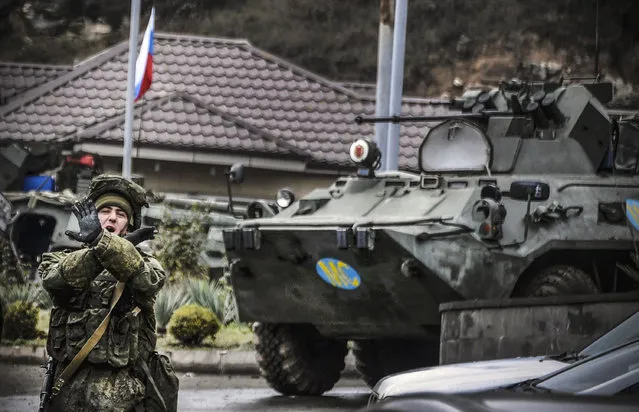
A Russian peacekeeper shouts “No pictures!” at a checkpoint outside the city of Stepanakert on November 13, 2020, during a ceasefire in the military conflict between Armenia and Azerbaijan over the breakaway region of Nagorno-Karabakh. Russian began deploying 2,000 peacekeepers to Nagorno-Karabakh on November 10 after Armenia and Azerbaijan agreed a peace deal to end weeks of fierce fighting over the disputed region. (Photo by Alexander Nemenov/AFP Photo)
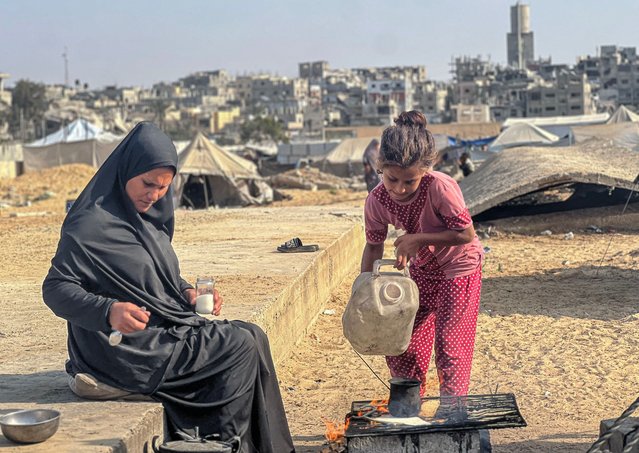
Alaa Shabat lives with her six children in a tent erected inside the Austrian cemetery in Khan Younis, southern Gaza Strip, on November 13, 2025, after her husband became ill and unable to work. (Photo by Tariq Mohammad/APAImages/Rex Features/Shutterstock)
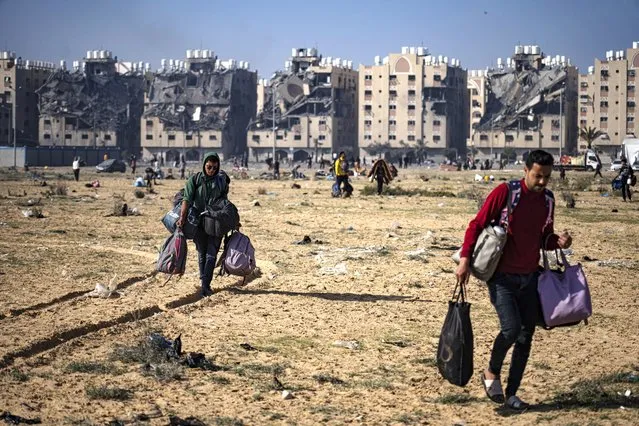
Palestinians flee from their neighbourhood in Khan Younis, Gaza Strip, during the ongoing Israeli bombardment, Saturday, December 2, 2023. (Photo by Fatima Shbair/AP Photo)
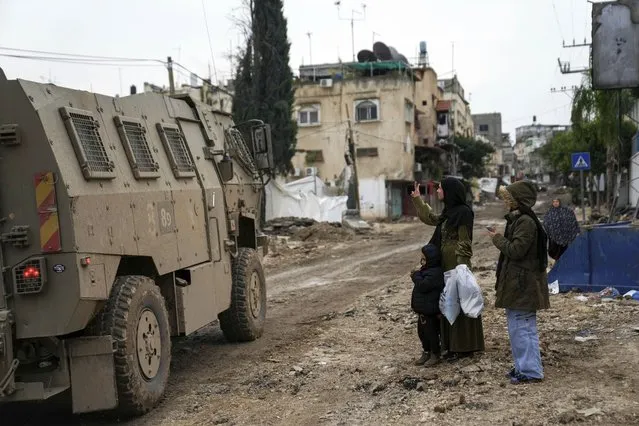
A Palestinian woman flashes a V-sign towards Israeli troops during an army raid in the Tulkarem refugee camp, West Bank, Wednesday, January 17, 2024. An Israeli airstrike killed four Palestinians during a raid in the West Bank. The military says it targeted a group of militants who had opened fire and were throwing explosives at Israeli soldiers in the Tulkarem refugee camp. The Palestinian Health Ministry says four people were killed. (Photo by Nasser Nasser/AP Photo)