Loading...
Done
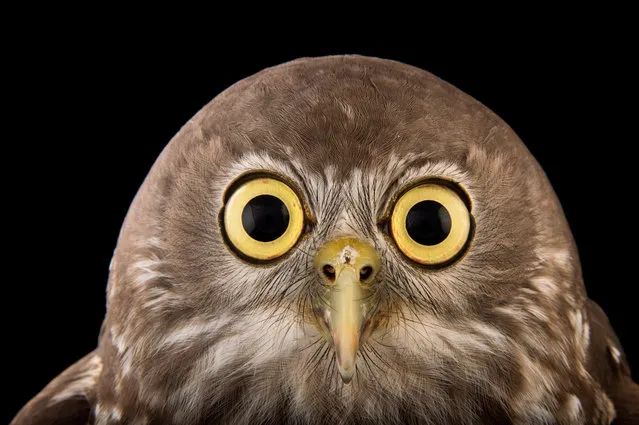
The National Geographic Photo Ark is a travelling exhibition of photographer Joel Sartore’s quest to create a photo archive of biodiversity around the world. So far, Sartore has captured studio portraits of more than 6,000 species – a number that he hopes to double. On 1 July, the ark will open at Melbourne zoo – the first time it has been exhibited in the southern hemisphere. More than 50 portraits will be on display, including many of Australian endangered animals being protected by programs at the zoo itself. These captions have been edited from text supplied by Melbourne zoo. Here: Barking owl. So-named because its call sounds like a barking dog, these birds are native to Australia, Indonesia and Papua New Guinea. In Victoria they are listed as an endangered species, and in 2003 there were estimated to be fewer than 50 breeding pairs. The main threat to the species in Victoria is loss of habitat, especially large trees with hollows in which they can nest and on which many of their prey depend. Apart from a bark, they may utter a chilling scream when they feel threatened. (Photo by Joel Sartore/National Geographic Photo Ark/The Guardian)

The National Geographic Photo Ark is a travelling exhibition of photographer Joel Sartore’s quest to create a photo archive of biodiversity around the world. So far, Sartore has captured studio portraits of more than 6,000 species – a number that he hopes to double. On 1 July, the ark will open at Melbourne zoo – the first time it has been exhibited in the southern hemisphere. More than 50 portraits will be on display, including many of Australian endangered animals being protected by programs at the zoo itself. These captions have been edited from text supplied by Melbourne zoo. Here: Barking owl. (Photo by Joel Sartore/National Geographic Photo Ark/The Guardian)
Details
01 Jul 2017 07:45:00
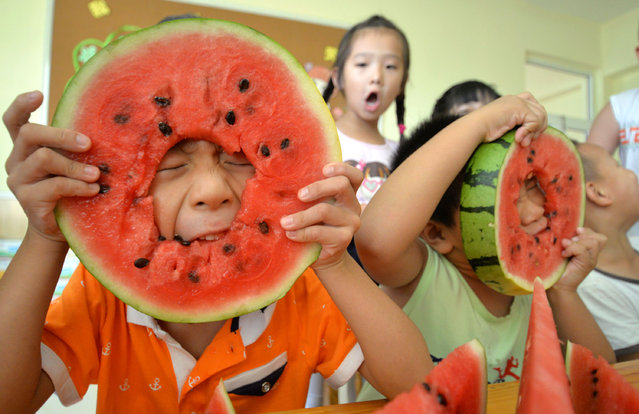
Children eat watermelons to meet the “beginning of autumn” at a kindergarten in Handan, China on August 7, 2015. Chinese tradition to eat watermelons or peaches before that day symbolises “biting away summer”. The solar term ‘beginning of autumn’ falls on 8 August this year. (Photo by Xinhua/REX Shutterstock)

Children eat watermelons to meet the “beginning of autumn” at a kindergarten in Handan, China on August 7, 2015. Chinese tradition to eat watermelons or peaches before that day symbolises “biting away summer”. The solar term ‘beginning of autumn’ falls on 8 August this year. (Photo by Xinhua/REX Shutterstock)
Details
11 Aug 2015 14:29:00
Bella Hadid celebrating her 23rd birthday at L’Avenue at Saks Fifth Avenue New York, NY on October 10, 2019. (Photo by David Warren/Sipa USA)

American model Bella Hadid celebrating her 23rd birthday at L’Avenue at Saks Fifth Avenue New York, NY on October 10, 2019. (Photo by David Warren/Sipa USA)
Details
13 Oct 2019 00:01:00
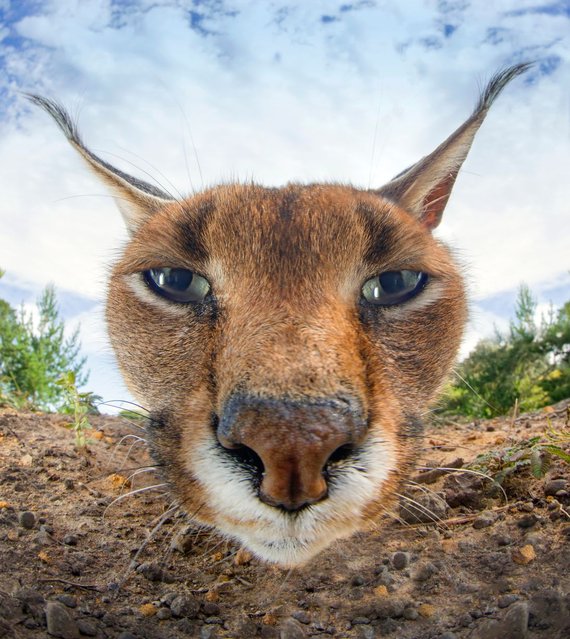
A close up of a caracal lynx's face looking into a camera on January 2014 in Western Cape, South Africa. (Photo by Dale Morris/Barcroft Media)

A close up of a caracal lynx's face looking into a camera on January 2014 in Western Cape, South Africa. (Photo by Dale Morris/Barcroft Media)
Details
30 Mar 2014 11:50:00
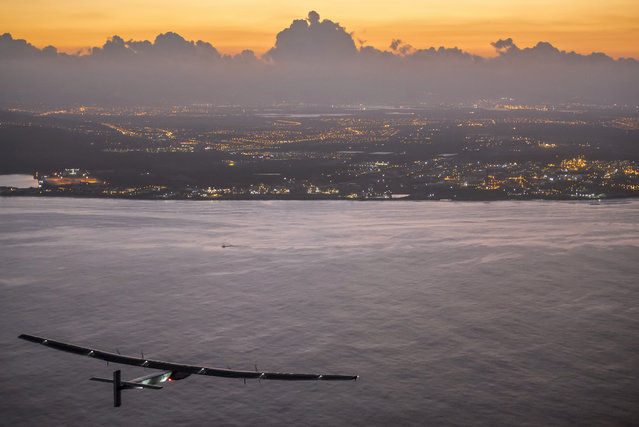
In this photo provided by Jean Revillard, Solar Impulse 2, a plane powered by the sun's rays and piloted by Andre Borschberg, approaches Kalaeloa Airport near Honolulu, Friday, July 3, 2015. (Photo by Jean Revillard/Global Newsroom via AP Photo)

In this photo provided by Jean Revillard, Solar Impulse 2, a plane powered by the sun's rays and piloted by Andre Borschberg, approaches Kalaeloa Airport near Honolulu, Friday, July 3, 2015. His 120-hour voyage from Nagoya, Japan broke the record for the world's longest nonstop solo flight, his team said. (Photo by Jean Revillard/Global Newsroom via AP Photo)
Details
04 Jul 2015 11:37:00
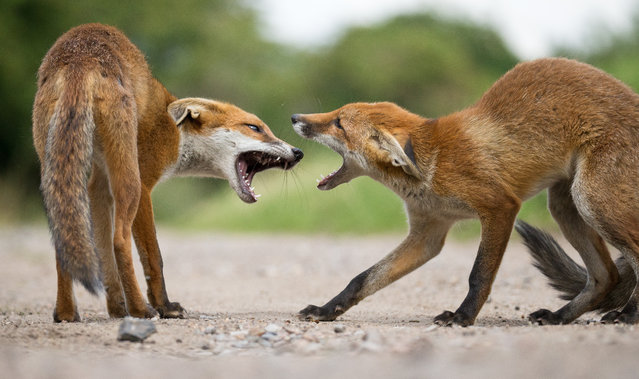
Four-month-old fox cubs squaring up to each other in Walthamstow, England on August 7, 2015. (Photo by Greg Morgan/Barcroft Media)

Four-month-old fox cubs squaring up to each other in Walthamstow, England on August 7, 2015. (Photo by Greg Morgan/Barcroft Media)
Details
09 Aug 2015 10:54:00
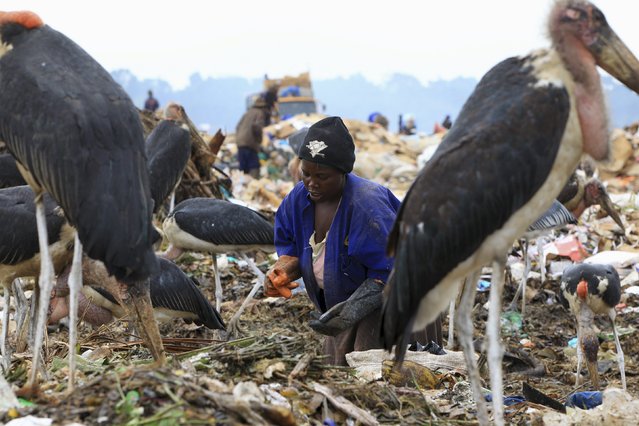
A woman whose livelihood depends on selling recyclable wastes collects trash from a dumping site while surrounded by Marabou storks on the outskirts of Uganda's capital Kampala March 31, 2015. (Photo by James Akena/Reuters)

A woman whose livelihood depends on selling recyclable wastes collects trash from a dumping site while surrounded by Marabou storks on the outskirts of Uganda's capital Kampala March 31, 2015. (Photo by James Akena/Reuters)
Details
04 Apr 2015 10:41:00
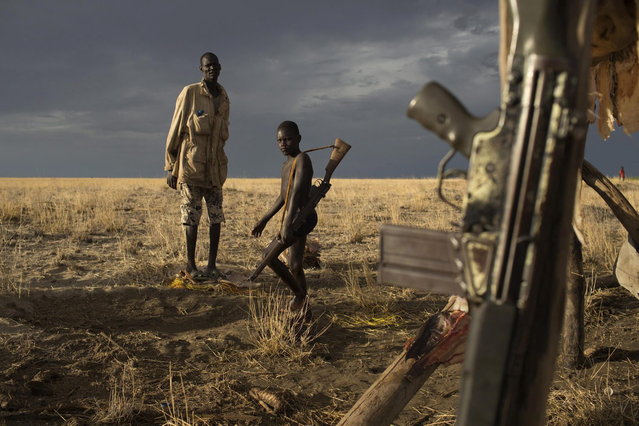
A Turkana man and a boy carrying a gun look on as a G3 battle rifle hangs from a structure used to dry fish at a fishing camp on the shores of Lake Turkana, some kilometres from Todonyang near the Kenya-Ethiopia border in northwestern Kenya October 12, 2013. (Photo by Siegfried Modola/Reuters)

A Turkana man and a boy carrying a gun look on as a G3 battle rifle hangs from a structure used to dry fish at a fishing camp on the shores of Lake Turkana, some kilometres from Todonyang near the Kenya-Ethiopia border in northwestern Kenya October 12, 2013The Turkana are traditionally nomadic pastoralists, but they have seen the pasture that they need to feed their herds suffer from recurring droughts and many have turned to fishing. However, Lake Turkana is overfished, and scarcity of food and pastureland is fuelling long-standing conflict with Ethiopian indigenous Dhaasanac, who have seen grazing grounds squeezed by large-scale government agricultural schemes in southern Ethiopia. The Dhaasanac now venture ever deeper into Kenyan territory in search of fish and grass, clashing with neighbours. Fighting between the communities has a long history, but the conflict has become ever more fatal as automatic weapons from other regional conflicts seep into the area. While the Turkana region is short of basics like grass and ground-water, it contains other resources including oil reserves and massive, newly discovered underground aquifers. (Photo by Siegfried Modola/Reuters)
Details
05 Dec 2013 12:08:00