Loading...
Done
“Two-Handed Saw, 2014”. “Most of the neighbors have switched to power tools to run their households, the buzz of chain saws and weed-whackers overpowering the quieter sounds of country life, but my aunts hold on to the two-handed saw that's decades old, the sickle and scythe that need to be sharpened and polished after each use, the old axe that's becoming heavier each year. Each of these objects is familiar, holding memories of their brother, who succumbed to cancer a few years ago, of days before my grandfather lost his vision in the 50's, of busier days and longer futures”, Sablin told. (Photo by Nadia Sablin)

In northwest Russia, in a small village called Alekhovshchina, Nadia Sablin's aunts spend the warmer months together in the family home and live as the family has always lived, chopping wood to heat the house and making their own clothes. Sablin's book of photographs, “Aunties: The Seven Summers of Alevtina and Ludmila”, is published by Duke University Press. Here: “Two-Handed Saw, 2014”. (Photo by Nadia Sablin)
Details
25 Feb 2016 12:12:00
A sifaka lemur eats leaves at the Berenty Reserve in Toliara province, Madagascar, February 15, 2022. (Photo by Alkis Konstantinidis/Reuters)

A sifaka lemur eats leaves at the Berenty Reserve in Toliara province, Madagascar, February 15, 2022. (Photo by Alkis Konstantinidis/Reuters)
Details
06 Mar 2022 05:40:00
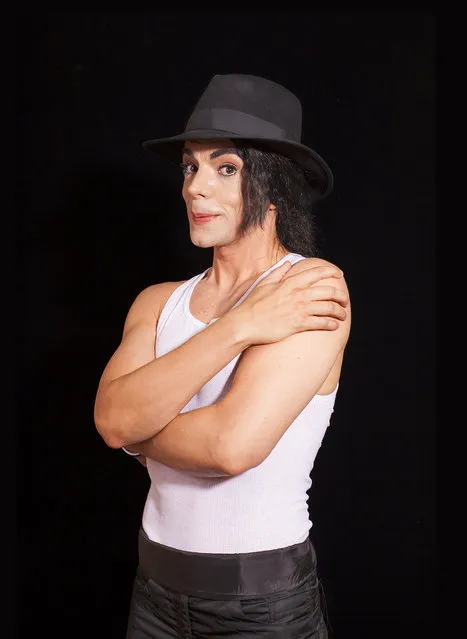
Hunt started working as Michael Jackson after receiving compliments at a Halloween party in his hometown of Fort Worth, Texas. His Michael Jackson is from the 2000s, and like a true lookalike, he uses mannerisms and a voice that he’s styled after Michael Jackson when interacting with his audiences. After working in Las Vegas, he returned to Fort Worth and finds work as an actor. (Photo and caption by Lorena Turner)

“Michael Jackson, the performer, consistently transcended racial and gender perceptions; Michael Jackson tribute artists, impersonators and lookalikes reflect this in that they embody a wide span of inspiration and intention. The current crop of impersonators are people who take great care in their appearance – some spend a lot of money and time on their make up and clothing, while others are more concerned with the physical gestures associated with his dances while expressing very little concern in the creation of an illusion”. – Lorena Turner. (Photo and caption by Lorena Turner)
Details
17 Jun 2015 08:09:00
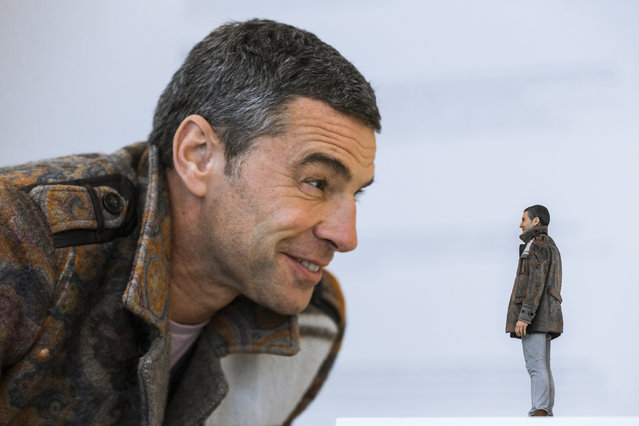
Customer Andreas Kroker looks at a 3D-printed figure of himself at the Twinkind 3D printing studio in Berlin, December 13, 2013. (Photo by Thomas Peter/Reuters)

Customer Andreas Kroker looks at a 3D-printed figure of himself at the Twinkind 3D printing studio in Berlin, December 13, 2013. A 3D-printed likeness is produced by taking a 360 degree photographic scan of a person, which is then rendered into a 3D digital model and retouched to meet the requirements for printing. The printing machine uses this digital model to produce a high-resolution solid figure. Twinkind co-founder Timo Schaedel said, people often come to the session well-groomed, with fresh hair-cuts and their best clothes, “just as they used to do in the past, when they had their portrait taken in a photo studio”. (Photo by Thomas Peter/Reuters)
Details
17 Jul 2014 11:22:00
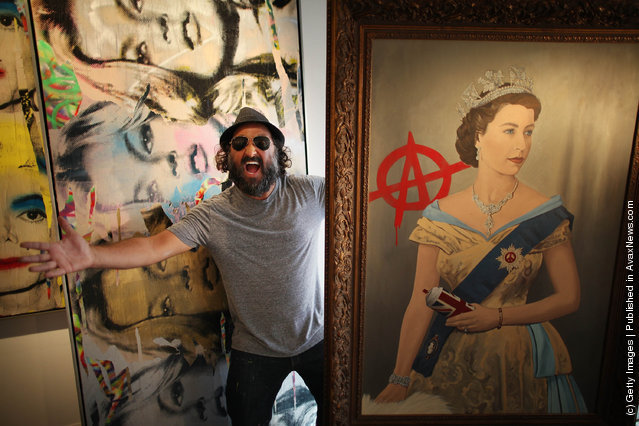
Artist Mr Brainwash stands with his paintings 'The Queen' (R) and 'Kate Moss' at the Opera Gallery

“Mr. Brainwash (“MBW”) is a pseudonym for Thierry Guetta. According to the Banksy directed film Exit Through the Gift Shop, Guetta is a French citizen who now lives in Los Angeles, having been a proprietor of a clothing store and videographer who evolved into a street artist and gallery artist, influenced by the street artists he documented through video over the years. According to the film, Guetta was first introduced to street art by his cousin, the French street artist, Invader”. – Wikipedia

Photo: Artist Mr. Brainwash stands with his paintings “The Queen” (R) and “Kate Moss” at the Opera Gallery on October 3, 2011 in London, England. Works by pop artist and film maker Thierry Guetta, known as Mr. Brainwash, are on display at the gallery from October 6th to 31st, 2011. (Photo by Peter Macdiarmid/Getty Images)
Details
04 Oct 2011 10:57:00
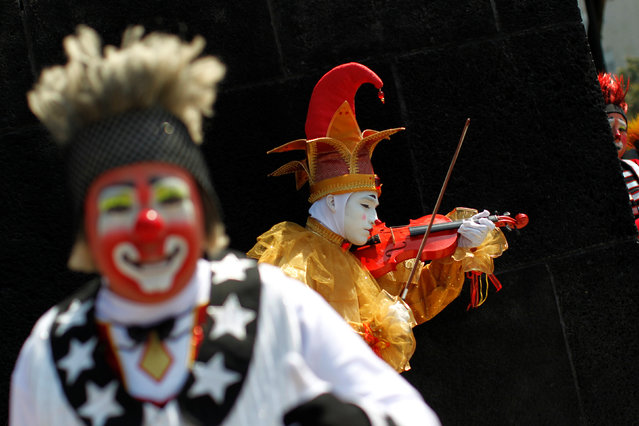
A clown plays the violin during the XXI Convention of Clowns, at the Jimenez Rueda Theatre, in Mexico City, Mexico, October 19, 2016. (Photo by Carlos Jasso/Reuters)

A clown plays the violin during the XXI Convention of Clowns, at the Jimenez Rueda Theatre, in Mexico City, Mexico, October 19, 2016. In the wake of the creepy clown sightings in several states of North and South Americas and Europe that caused widespread panic, professional clowns from across Latin America came together at an annual convention in Mexico to give a serious message: “We are clowns, not killers!”. Around 200 clowns took part in the 21st International Clown Convention, dressed in bright coloured clothes and makeup, and chanted the word as they clicked group pictures to counter the “creepy clown” craze. (Photo by Carlos Jasso/Reuters)
Details
20 Oct 2016 10:58:00
People enjoy carnival while shouting slogans of female empowerment and anti harrassment in Sao Paulo, Brazil on January 28, 2018. The carnival is marked by a lot of fun, but also has space to talk about more serious things – without losing the good mood. Parading for the first time in São Paulo, the Vaca Profana block proposed a reflection on sieges and machismo. With the breasts on display singing not only frevos but, mainly, shouting words of disorder, in order to stimulate female empowerment and against harassment. Our body is our struggle. The preservation of our physical integrity, our freedom of choice. Nude or clothed, we demand respect. (Photo by Cris Faga/Rex Features/Shutterstock)

People enjoy carnival while shouting slogans of female empowerment and anti harrassment in Sao Paulo, Brazil on January 28, 2018. The carnival is marked by a lot of fun, but also has space to talk about more serious things – without losing the good mood. Parading for the first time in São Paulo, the Vaca Profana block proposed a reflection on sieges and machismo. (Photo by Cris Faga/Rex Features/Shutterstock)
Details
29 Jan 2018 08:29:00
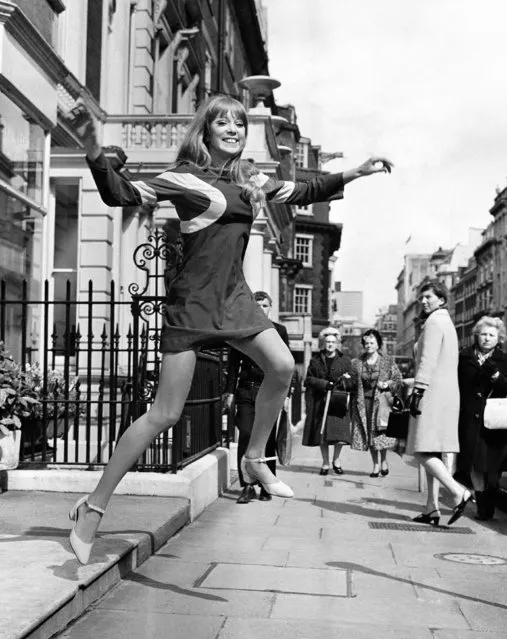
File photo dated 21/04/66 of Pattie Boyd in London's West End wearing a mini skirt, as the British designer Mary Quant, widely credited with popularising the mini skirt has recalled its “feeling of freedom and liberation” 50 years after she took the fashion world by storm. (Photo by PA Wire)

File photo dated 21/04/66 of Pattie Boyd in London's West End wearing a mini skirt, as the British designer Mary Quant, widely credited with popularising the mini skirt has recalled its “feeling of freedom and liberation” 50 years after she took the fashion world by storm. Quant, who named the skirt after her favourite make of car, said she “couldn't have imagined” in 1964 that it would become a staple of women's clothing, but added: “It seemed then to be obvious, and so right”. (Photo by PA Wire)
Details
29 Jan 2015 11:33:00