Loading...
Done
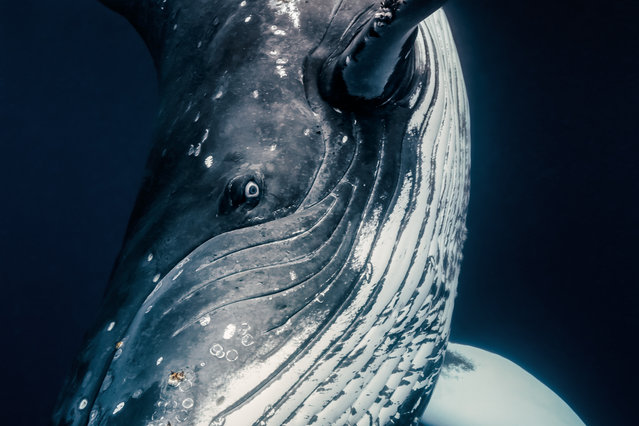
“To look into a whale’s eye is life-changing and humbling. Well, it’s the same with dolphins but they are mostly very fast in the water. A whale’s eye is unexpectedly looking, just like a human eye, kinda checking you out”. (Photo by Rita Kluge/The Guardian)

With the humpback calving season drawing to a close, here’s a look at some of Rita Kluge’s distinctive marine photos from the south Pacific. The Sydney-based photographer fell in love with whales after witnessing southern rights from the New South Wales coastline as they travelled to and from their feeding grounds in the Antarctic. She has since been to Tonga, where humpbacks breed and calf in winter months, to photograph them in the water. (Photo by Rita Kluge/The Guardian)
Details
26 Oct 2016 11:09:00


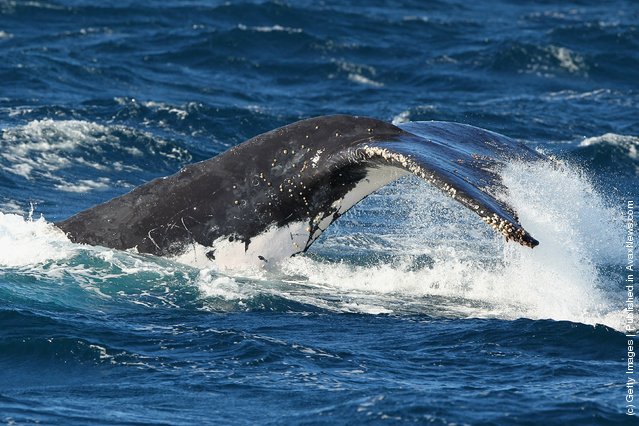
A humpback whale is seen at the beginning of whale watching season during a Manly Whale Watching tour on June 8, 2011 in Sydney, Australia. The first day of winter in New South Wales, June 1st, marks the start of the Humback and southern right whales migration from southern regions to the north to warmer waters. Whale watchers should expect tohave plenty to see with the whale population increasing each year. The migration north continues through July and with the whales returning between September and November. (Photo by Cameron Spencer/Getty Images)
Details
08 Jun 2011 09:49:00
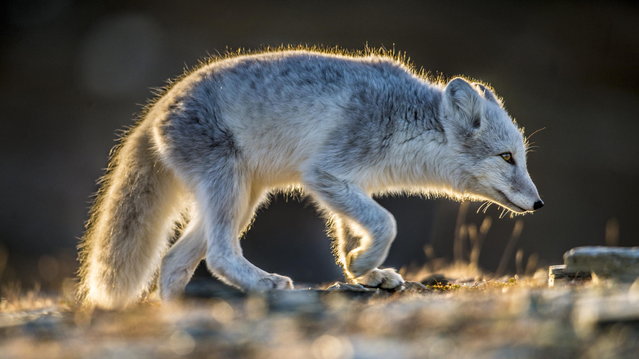
Arctic Fox. (Photo by Trond Eriksen)

“The arctic fox (Vulpes lagopus), also known as the white fox, polar fox, or snow fox, is a small fox native to the Arctic regions of the Northern Hemisphere and is common throughout the Arctic tundra biome. It is well adapted to living in cold environments. It has a deep thick fur which is brown in summer and white in winter. It averages in size at about 85.3 cm (33.6 in) in body length, with a generally rounded body shape to minimize the escape of body heat. – Wikipedia. (Photo by Trond Eriksen)
Details
26 May 2014 14:09:00
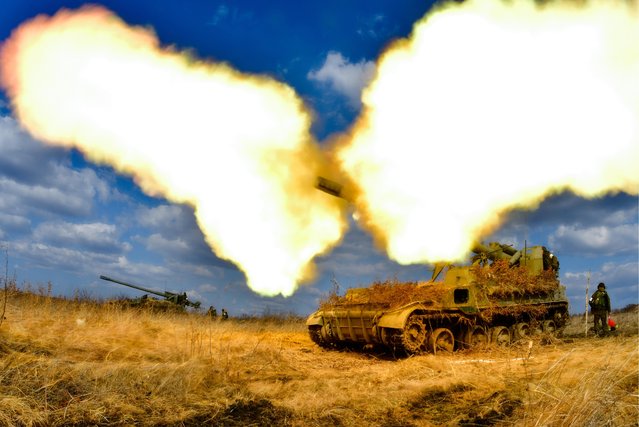
A 2S5 Giatsint self- propelled gun fires during tactical exercises held by artillery detachments of the Russian Eastern Military District' s 5th Army at the Sergeyevsky training ground in Primorye Territory, Russia on March 21, 2017. (Photo by Yuri Smityuk/TASS)

A 2S5 Giatsint self- propelled gun fires during tactical exercises held by artillery detachments of the Russian Eastern Military District' s 5th Army at the Sergeyevsky training ground in Primorye Territory, Russia on March 21, 2017. Over 2500 servicemen practice combat skills received in 2017 winter training exercises. (Photo by Yuri Smityuk/TASS)
Details
22 Mar 2017 10:22:00
Artists watch burning an effigy of Lady Maslenitsa as they celebrate Maslenitsa, or Pancake Week, in Baikonur, Kazakhstan, March 13, 2016. (Photo by Shamil Zhumatov/Reuters)

Artists watch burning an effigy of Lady Maslenitsa as they celebrate Maslenitsa, or Pancake Week, in Baikonur, Kazakhstan, March 13, 2016. Maslenitsa is widely viewed as a pagan holiday marking the end of winter and is celebrated with pancake eating and shows of strength, while the Orthodox Church considers it as the week of feasting before Lent. (Photo by Shamil Zhumatov/Reuters)
Details
14 Mar 2016 10:37:00
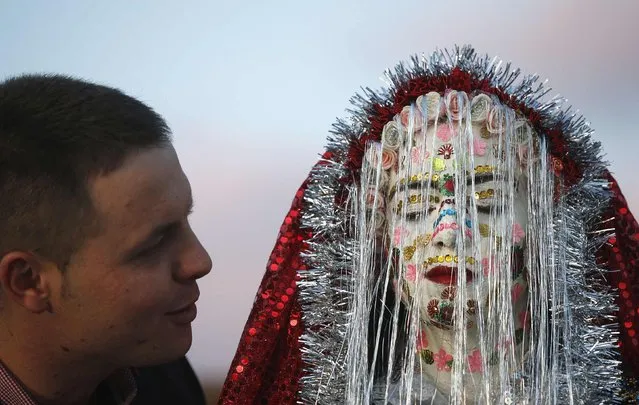
Bulgarian Muslims Azim Liumankov and his bride Fikrie Bindzheva pose in front of their house during their wedding ceremony in the village of Ribnovo, in the Rhodope Mountains, February 15, 2015. (Photo by Stoyan Nenov/Reuters)

Bulgarian Muslims Azim Liumankov and his bride Fikrie Bindzheva pose in front of their house during their wedding ceremony in the village of Ribnovo, in the Rhodope Mountains, February 15, 2015. The remote mountain village of Ribnovo in southwest Bulgaria has kept its traditional winter marriage ceremony alive despite decades of Communist persecution, followed by poverty that forced many men to seek work abroad. (Photo by Stoyan Nenov/Reuters)
Details
17 Feb 2015 12:46:00
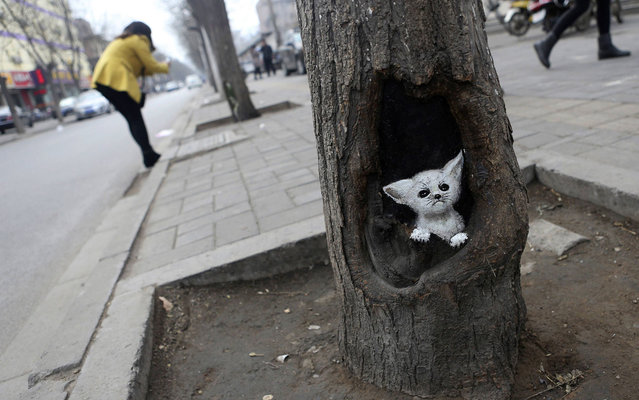
An image of a Fennec fox painted on a tree hole by Wang Yue is seen in Shijiazhuang, on March 13, 2013. Wang Yue, a senior at Dalian Industry University, uses her paintbrush to turn ugly tree holes into lovely views in Shijiazhuang, capital city of Hebei Province, China. Wang and her companions call the tree-hole paintings “meitu”, which means “beautiful journey”. The paintings on the trees have brightened the city during the dull, grey winter. (Photo by Pillar Lee/Reuters)

An image of a Fennec fox painted on a tree hole by Wang Yue is seen in Shijiazhuang, on March 13, 2013. Wang Yue, a senior at Dalian Industry University, uses her paintbrush to turn ugly tree holes into lovely views in Shijiazhuang, capital city of Hebei Province, China. Wang and her companions call the tree-hole paintings “meitu”, which means “beautiful journey”. The paintings on the trees have brightened the city during the dull, grey winter. (Photo by Pillar Lee/Reuters)

P.S. All pictures are presented in high resolution. To see Hi-Res images – just TWICE click on any picture. In other words, click small picture – opens the BIG picture. Click BIG picture – opens VERY BIG picture (if available; this principle works anywhere on the site AvaxNews).
Details
16 Mar 2013 11:27:00
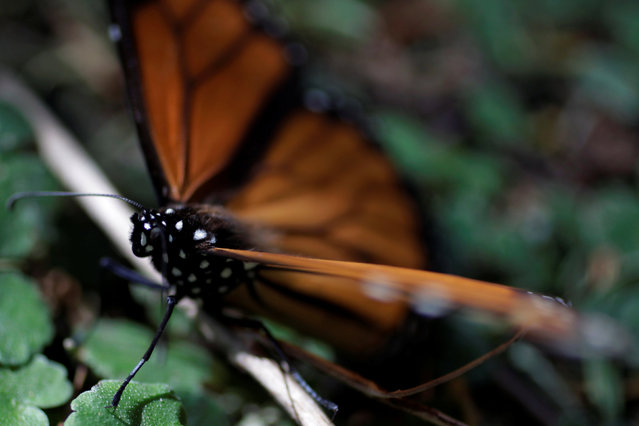
A monarch butterfly rests on the ground at the Sierra Chincua butterfly sanctuary on a mountain in Angangeo, Michoacan November 24, 2016. Angangueo is a town and municipality located in far eastern Michoacán state in central Mexico noted for its history of mining and its location in the Monarch Butterfly Biosphere Reserve. The Monarch Butterfly Biosphere Reserve is a World Heritage Site containing most of the over-wintering sites of the eastern population of the monarch butterfly. The reserve is located in the Trans-Mexican Volcanic Belt pine-oak forests ecoregion on the border of Michoacán and State of Mexico, 100 km (62 miles), northwest of Mexico City. Millions of butterflies arrive in the reserve annually. Butterflies only inhabit a fraction of the 56,000 hectares of the reserve from October–March. (Photo by Carlos Jasso/Reuters)

A monarch butterfly rests on the ground at the Sierra Chincua butterfly sanctuary on a mountain in Angangeo, Michoacan November 24, 2016. Angangueo is a town and municipality located in far eastern Michoacán state in central Mexico noted for its history of mining and its location in the Monarch Butterfly Biosphere Reserve. The Monarch Butterfly Biosphere Reserve is a World Heritage Site containing most of the over-wintering sites of the eastern population of the monarch butterfly. (Photo by Carlos Jasso/Reuters)
Details
26 Nov 2016 10:20:00