A person dressed as Santa Claus jumps into the sea during the Copa Nadal (Christmas Cup) swimming race in Barcelona, Spain on December 25, 2024. (Photo by Bruna Casas/Reuters)
Soldiers take a selfie on the plateform at a metro station in Ho Chi Minh City on December 22, 2024. Thousands of selfie-taking Ho Chi Minh City residents crammed into train carriages on December 22, as the traffic-clogged business hub celebrated the opening of its first-ever metro line after years of delays. (Photo by Nhac Nguyen/AFP Photo)
Revellers play with water as they celebrate the Songkran holiday, which marks the Thai New Year, in Bangkok, Thailand, on April 13, 2025. (Photo by Chalinee Thirasupa/Reuters)
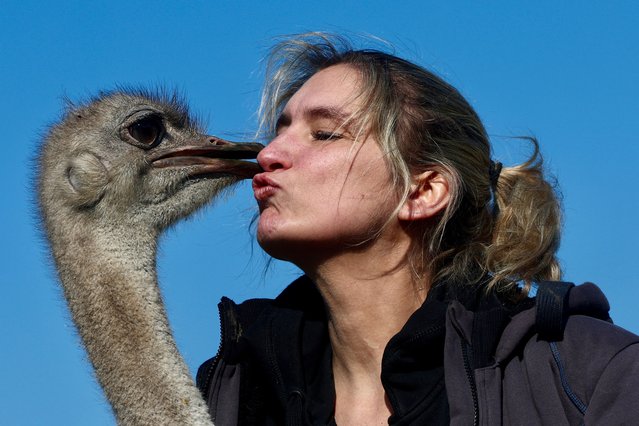
Belgian Wendy Adriaens, the founder of De Passiehoeve, an animal rescue farm where animals support people with autism, depression, anxiety, or drug problems, offers a hug to Blondie, a 6-year-old female ostrich at Passiehoeve farm, in Kalmthout, Belgium on March 8, 2024. (Photo by Yves Herman/Reuters)
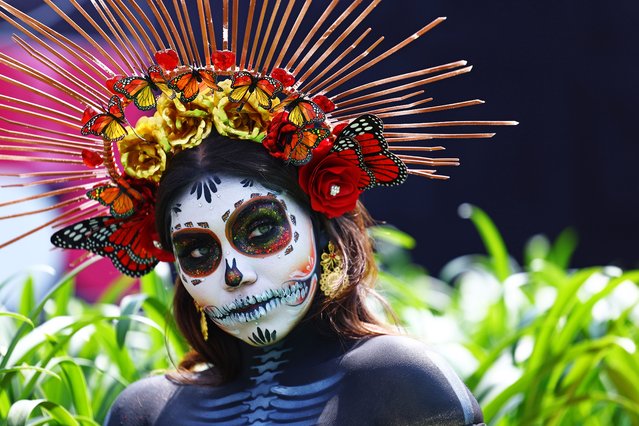
A Day of the Dead performer is seen in the Paddock during previews ahead of the F1 Grand Prix of Mexico at Autodromo Hermanos Rodriguez on October 24, 2024 in Mexico City, Mexico. (Photo by Mark Thompson/Getty Images)
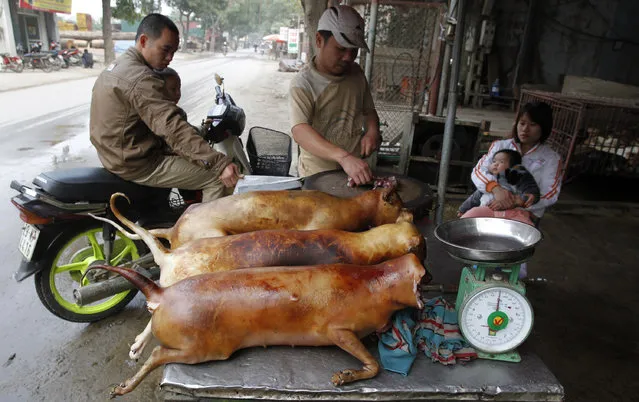
A vendor (C) cuts slaughtered dogs for sale at his roadside stall in Duong Noi village, outside Hanoi December 16, 2011. While animal rights activists have condemned eating dog meat as cruel treatment of the animals, it is still an accepted popular delicacy for some Vietnamese, as well in some other Asian countries. Duong Noi is well-known as a dog-meat village, where hundreds of dogs are killed each day for sale as popular traditional food. Dog-eating as a custom is rooted in Vietnam and was developed as a result of poverty. One kilogram of dog meat costs about 130,000 dongs ($6.2). (Photo by Reuters/Kham)