Loading...
Done
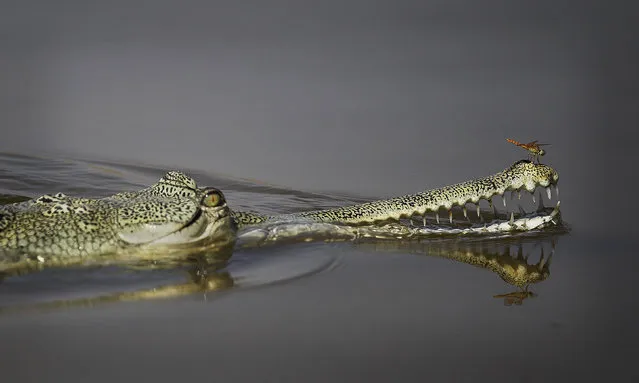
In this photo taken Wednesday, April 30, 2014, a dragonfly sits on the nose of a Gharial, rare crocodile-like creatures, in the River Chambal near Bhopepura village in the northern Indian state of Uttar Pradesh. The narrow 250-mile stretch of the Chambal is a place of crocodiles and jackals, of river dolphins and the occasional wolf. Hundreds of species of birds, storks, geese, babblers, larks, falcons and so many more, nest along the river. (Photo by Altaf Qadri/AP Photo)

In this photo taken Wednesday, April 30, 2014, a dragonfly sits on the nose of a Gharial, rare crocodile-like creatures, in the River Chambal near Bhopepura village in the northern Indian state of Uttar Pradesh. The narrow 250-mile stretch of the Chambal is a place of crocodiles and jackals, of river dolphins and the occasional wolf. Hundreds of species of birds, storks, geese, babblers, larks, falcons and so many more, nest along the river. Endangered birds lay small speckled eggs in tiny pits they dig in the sandbars. Gharials, rare crocodile-like creatures that look like they swaggered out of the Mesozoic Era, are commonplace here and nowhere else. (Photo by Altaf Qadri/AP Photo)
Details
23 Feb 2015 12:55:00
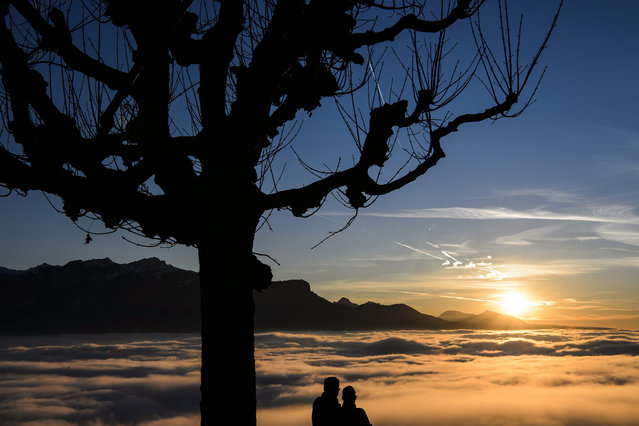
A couple watches the sunset over a sea of fog covering the Geneva Lake from Chardonne, Switzerland, 28 December 2015. (Photo by Jean-Christophe Bott/EPA)

A couple watches the sunset over a sea of fog covering the Geneva Lake from Chardonne, Switzerland, 28 December 2015. (Photo by Jean-Christophe Bott/EPA)
Details
30 Dec 2015 08:00:00
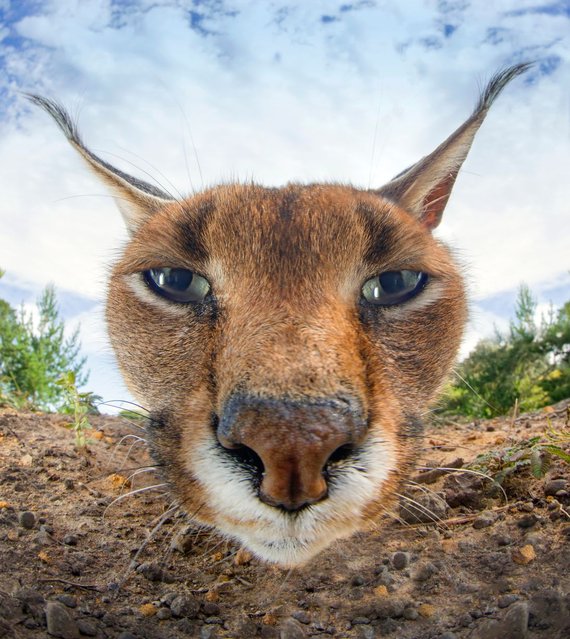
A close up of a caracal lynx's face looking into a camera on January 2014 in Western Cape, South Africa. (Photo by Dale Morris/Barcroft Media)

A close up of a caracal lynx's face looking into a camera on January 2014 in Western Cape, South Africa. (Photo by Dale Morris/Barcroft Media)
Details
30 Mar 2014 11:50:00
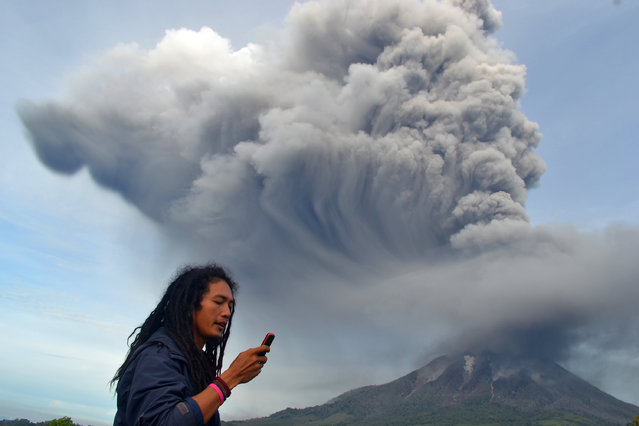
A man uses his mobile phone as Mount Sinabung continues to erupt, with hot smoke spewing from the volcano, in the Karo district on the north of Indonesia's Sumatra island on November 18, 2013. Officials said a week ago at more than 5,000 people had fled their homes since the volcano erupted early this month. (Photo by Sutanta Aditya/AFP Photo)

Starting in September, Indonesia's Mount Sinabung began erupting yet again. In the days that followed, ash and smoke were shot into the air multiple times. As a result, nearby towns turned gray from repeated blows by the volcano. Photo: A man uses his mobile phone as Mount Sinabung continues to erupt, with hot smoke spewing from the volcano, in the Karo district on the north of Indonesia's Sumatra island on November 18, 2013. Officials said a week ago at more than 5,000 people had fled their homes since the volcano erupted early this month. (Photo by Sutanta Aditya/AFP Photo)
Details
22 Nov 2013 08:08:00
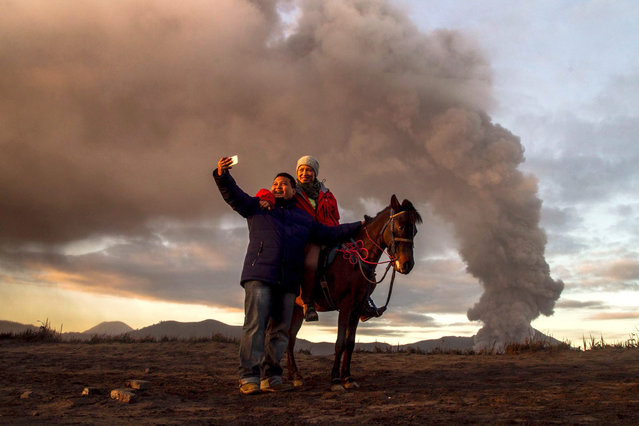
Indonesian tourists take a selfie as Mount Bromo spews volcanic material and ash into the air during an eruption in Probolinggo, East Java, Indonesia, 31 December 2015. Indonesia's Mount Bromo is on the second highest alert level as its activity has increased in the last two months. (Photo by Fully Handoko/EPA)

Indonesian tourists take a selfie as Mount Bromo spews volcanic material and ash into the air during an eruption in Probolinggo, East Java, Indonesia, 31 December 2015. Indonesia's Mount Bromo is on the second highest alert level as its activity has increased in the last two months. (Photo by Fully Handoko/EPA)
Details
13 Jan 2016 08:06:00
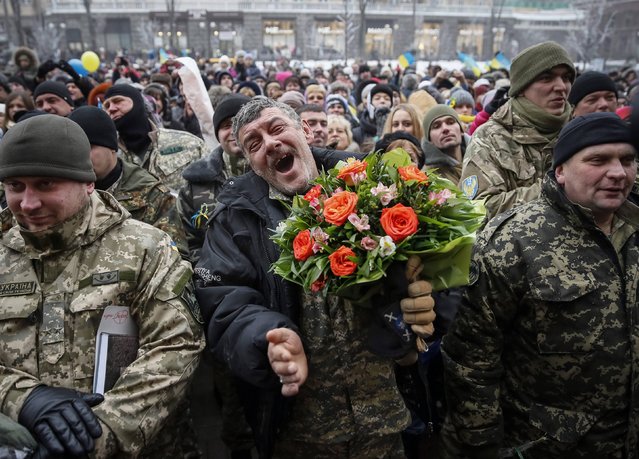
Servicemen of “Kiev 12” military defence battalion react as they take part in a welcoming ceremony in central Ukrainian capital Kiev December 6, 2014. Servicemen of the battalion returned to Kiev after taking part in fighting in eastern Ukraine. (Photo by Gleb Garanich/Reuters)

Servicemen of “Kiev 12” military defence battalion react as they take part in a welcoming ceremony in central Ukrainian capital Kiev December 6, 2014. Servicemen of the battalion returned to Kiev after taking part in fighting in eastern Ukraine. (Photo by Gleb Garanich/Reuters)
Details
07 Dec 2014 11:15:00
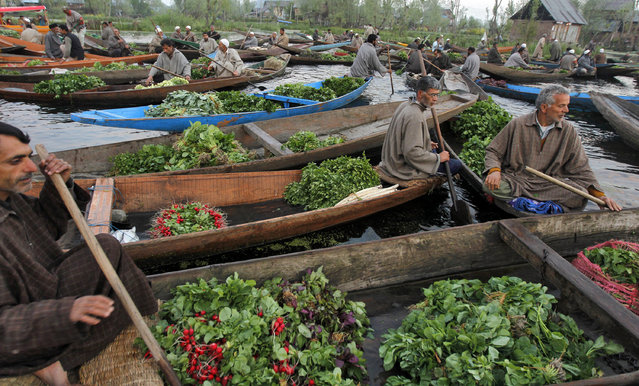
Kashmiri vegetable vendors assemble at a floating market in the interiors of the Dal Lake in Srinagar April 17, 2012. (Photo by Danish Ismail/Reuters)

Kashmiri vegetable vendors assemble at a floating market in the interiors of the Dal Lake in Srinagar April 17, 2012. (Photo by Danish Ismail/Reuters)
Details
03 Jul 2015 13:11:00
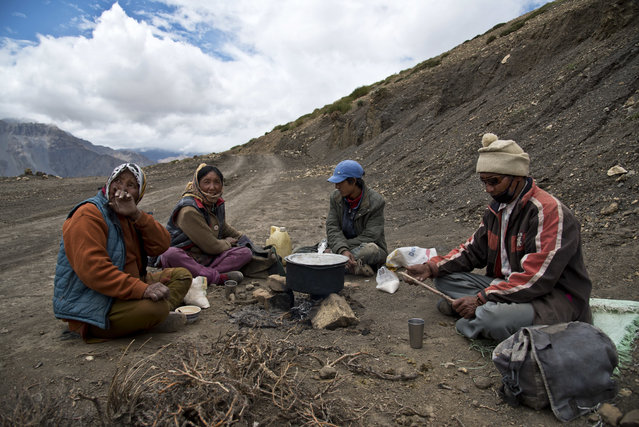
In this August 17, 2016, photo, from left to right, Chhering Chodom, 60, Tashi Yangzom, 50, Lobsang Chhering, 27, and Dorje Tandup, 58, drink milk tea on the side of the road. For centuries, the sleepy valley nestled in the Indian Himalayas remained a hidden Buddhist enclave forbidden to outsiders. Enduring the harsh year-round conditions of the high mountain desert, the people of Spiti Valley lived by a simple communal code – share the Earth's bounty, be hospitable to neighbors, and eschew greed and temptation at all turns. That's all starting to change, for better or worse. Since India began allowing its own citizens as well as outsiders to visit the valley in the early 1990s, tourism and trade have boomed. And the marks of modernization, such as solar panels, asphalt roads and concrete buildings, have begun to appear around some of the villages that dot the remote landscape at altitudes above 4,000 meters (13,000 feet). (Photo by Thomas Cytrynowicz/AP Photo)

In this August 17, 2016, photo, from left to right, Chhering Chodom, 60, Tashi Yangzom, 50, Lobsang Chhering, 27, and Dorje Tandup, 58, drink milk tea on the side of the road. For centuries, the sleepy valley nestled in the Indian Himalayas remained a hidden Buddhist enclave forbidden to outsiders. Enduring the harsh year-round conditions of the high mountain desert, the people of Spiti Valley lived by a simple communal code – share the Earth's bounty, be hospitable to neighbors, and eschew greed and temptation at all turns. That's all starting to change, for better or worse. (Photo by Thomas Cytrynowicz/AP Photo)
Details
15 Sep 2016 09:22:00