Loading...
Done
Women compare their bikini marks after sunbathing on a terrace to have the perfect bikini line ('marquinha' in Portuguese), at the Erika Bronze spa in Rio de Janeiro, Brazil, November 17, 2016. (Photo by Pilar Olivares/Reuters)

Women compare their bikini marks after sunbathing on a terrace to have the perfect bikini line (“marquinha” in Portuguese), at the Erika Bronze spa in Rio de Janeiro, Brazil, November 17, 2016. Women start arriving at the spa between 7am and 8am and will tan for approximately 3 hours. (Photo by Pilar Olivares/Reuters)
Details
26 Nov 2016 10:44:00
Dajana Djuric, 25, who has worked as a chimney sweep since the age of six, cleans a chimney in Brcko, Bosnia and Herzegovina. Picture taken March 3, 2016. (Photo by Dado Ruvic/Reuters)

Dajana Djuric, 25, who has worked as a chimney sweep since the age of six, cleans a chimney in Brcko, Bosnia and Herzegovina. Dajana Djuric, believed to be the only female chimney sweep in Bosnia and Herzegovina, has to contend with perilous roofs in the depth of winter. (Photo by Dado Ruvic/Reuters)
Details
09 Mar 2016 13:07:00
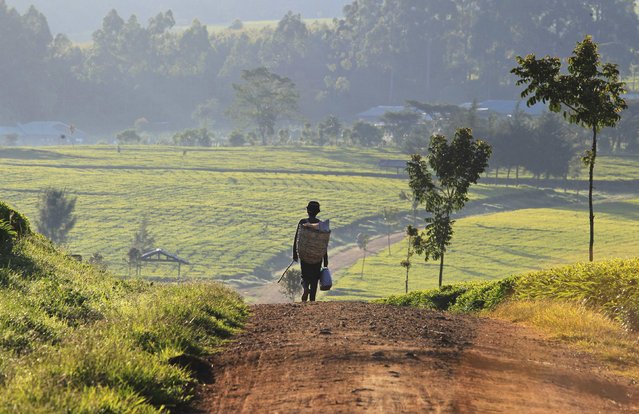
A man walks in the early morning to start his day picking tea leaves at a plantation in Nandi Hills, in Kenya's highlands region west of capital Nairobi, November 5, 2014. Emerald-coloured tea bushes blanketing the rolling hills of Nandi County have long provided a livelihood for small-scale farmers, helping make Kenya one of the world's biggest tea exporters. But ideal weather and bigger harvests, instead of producing bumper earnings, have led to a glut of Kenya's speciality black tea. (Photo by Noor Khamis/Reuters)

A man walks in the early morning to start his day picking tea leaves at a plantation in Nandi Hills, in Kenya's highlands region west of capital Nairobi, November 5, 2014. Emerald-coloured tea bushes blanketing the rolling hills of Nandi County have long provided a livelihood for small-scale farmers, helping make Kenya one of the world's biggest tea exporters. But ideal weather and bigger harvests, instead of producing bumper earnings, have led to a glut of Kenya's speciality black tea. (Photo by Noor Khamis/Reuters)

Details
17 Nov 2014 12:44:00
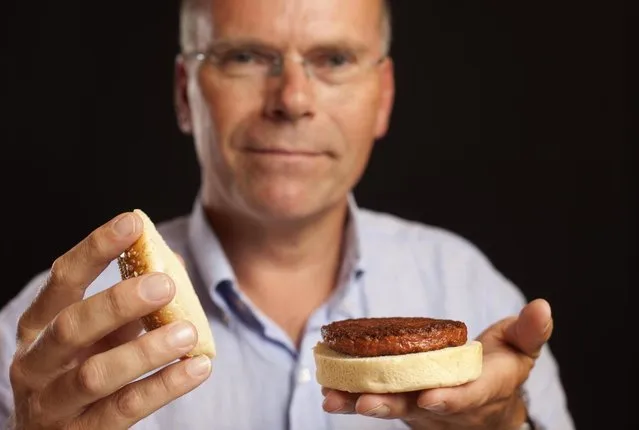
In this handout image provided by Ogilvy, a burger made from cultured beef, which has been developed by Professor Mark Post of Maastricht University in the Netherlands (pictured) is shown to the media during a press conference on August 5, 2013 in London, England. Cultured Beef could help solve the coming food crisis and combat climate change with commercial production of Cultured Beef beginning within ten to twenty years. (Photo by David Parry via Getty Images)

In this handout image provided by Ogilvy, a burger made from cultured beef, which has been developed by Professor Mark Post of Maastricht University in the Netherlands (pictured) is shown to the media during a press conference on August 5, 2013 in London, England. The in-vitro burger, cultured from cattle stem cells, the first example of what its creator says could provide an answer to global food shortages and help combat climate change, was fried in a pan and tasted by two volunteers. The burger is the result of years of research by Dutch scientist Mark Post, a vascular biologist at the University of Maastricht, who is working to show how meat grown in petri dishes might one day be a true alternative to meat from livestock.The meat in the burger has been made by knitting together around 20,000 strands of protein that has been cultured from cattle stem cells in Post's lab. (Photo by David Parry)

Details
06 Aug 2013 08:48:00
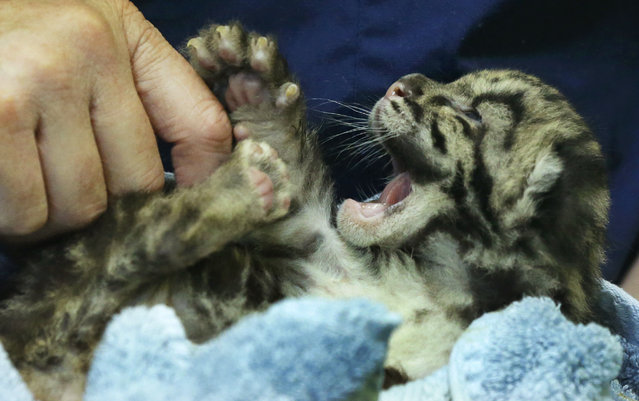
Andy Goldfarb, a staff biologist at the Point Defiance Zoo & Aquarium, plays with one of the four clouded leopard cubs currently at the zoo Friday, June 5, 2015 in Tacoma, Wash. The quadruplets were born on May 12, 2015 and now weigh about 1.7 lbs. each. Friday was their first official day on display for public viewing, usually during their every-four-hours bottle-feeding sessions, which were started after the cubs' mother did not show enough interest in continuing to nurse them. (AP Photo/Ted S. Warren)

Andy Goldfarb, a staff biologist at the Point Defiance Zoo & Aquarium, plays with one of the four clouded leopard cubs currently at the zoo Friday, June 5, 2015 in Tacoma, Wash. The quadruplets were born on May 12, 2015 and now weigh about 1.7 lbs. each. Friday was their first official day on display for public viewing, usually during their every-four-hours bottle-feeding sessions, which were started after the cubs' mother did not show enough interest in continuing to nurse them. (AP Photo/Ted S. Warren)
Details
19 Jun 2015 09:06:00
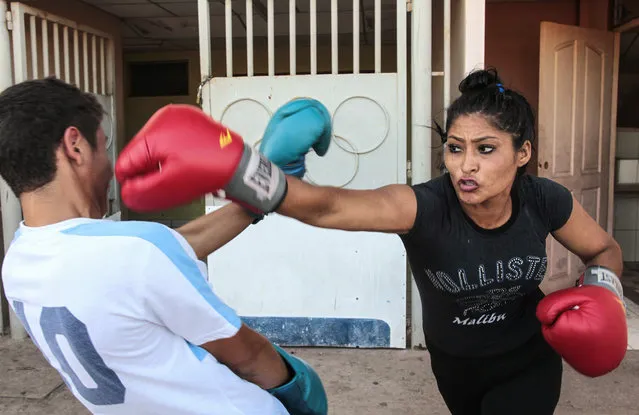
Irene Aguirre, 23, attends a boxing class at the National Institute of Sport in Managua March 4, 2015. (Photo by Oswaldo Rivas/Reuters)

Irene Aguirre, 23, attends a boxing class at the National Institute of Sport in Managua March 4, 2015. A study done by the Psychology alumni of the National Autonomous University of Nicaragua (UNAN-Managua) revealed that about 1 million women in Nicaragua suffer from domestic violence. (Photo by Oswaldo Rivas/Reuters)
Details
16 Mar 2015 11:05:00


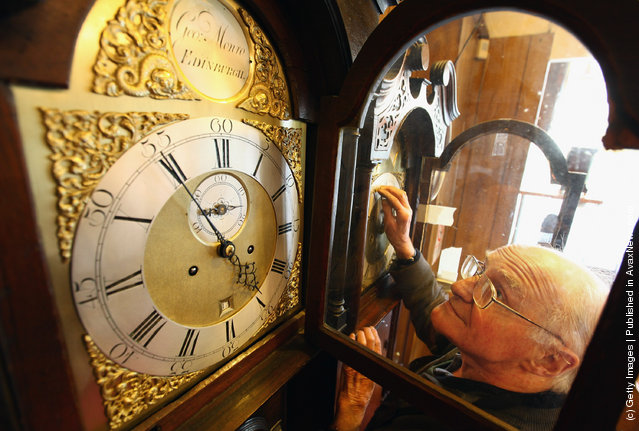
Archie McQuater, 82-year-old clockmaker at Craiglea clocks, adjusts a clock face to British Summer Time (BST) on March 25, 2011 in Edinburgh, Scotland. Clocks will be put forward by one hour at 1:00 AM GMT on Sunday March 27, 2011 officially the start of British Summer Time. British Summer Time will end this year on October 30. (Photo by Jeff J Mitchell/Getty Images)
Details
26 Mar 2011 12:06:00


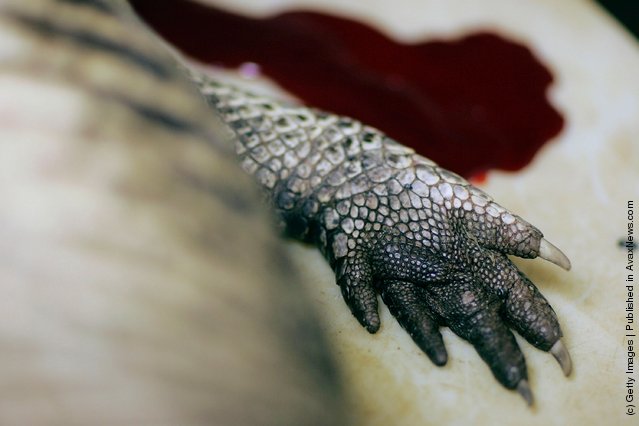
An alligator is skinned at All American Gator August 16, 2006 in Pembroke Park, Florida. The company processes gators for their skins, meat and trophies and was at full capacity a day after the start of gator hunting season. This year more than 4,000 licenses were sold with each license allowing hunters to kill two gators. The hunt has been expanded by 41 days over previous years, running August 15 to November 1. (Photo by Joe Raedle/Getty Images)
Details
04 Apr 2011 10:51:00