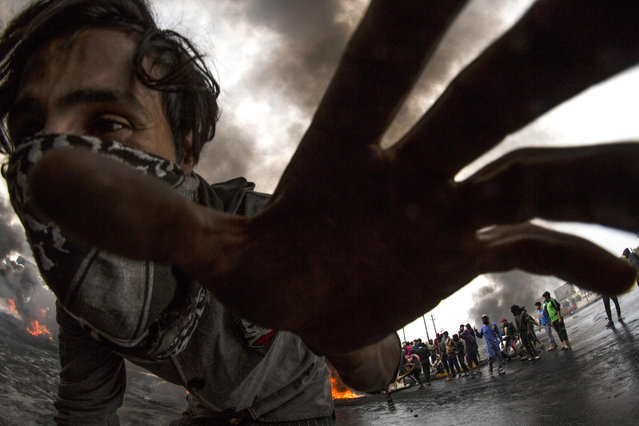
An Iraqi demonstrator runs as others burn tyres to cut-off roads in the southern city of Basra on November 25, 2019. (Photo by Hussein Faleh/AFP Photo)
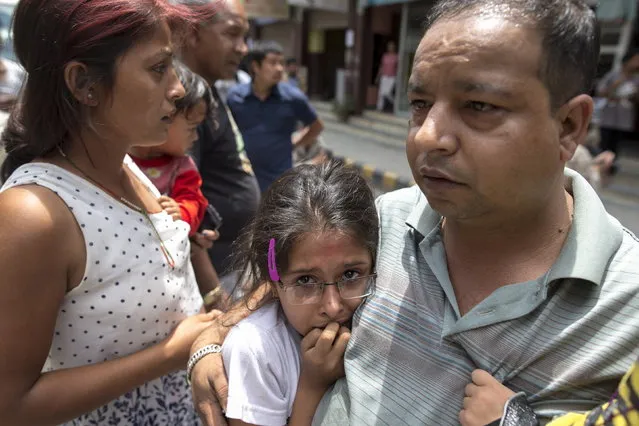
Local residents evacuate onto a street minutes after an earthquake in central Kathmandu, Nepal, May 12, 2015. A 7.3 magnitude earthquake killed at least 37 people and spread panic in Nepal on Tuesday, bringing down buildings already weakened by a devastating tremor less than three weeks ago and unleashing landslides in Himalayan valleys near Mount Everest. The earthquake was centered 76 km (47 miles) east of the capital in a hilly area close to the border with Tibet, according to coordinates provided by the U.S. Geological Survey. (Photo by Athit Perawongmetha/Reuters)
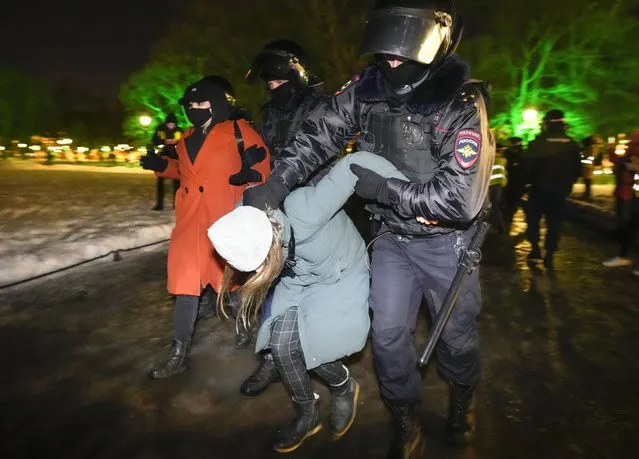
Police detain demonstrators during an action against Russia's attack on Ukraine in St. Petersburg, Russia, Monday, February 28, 2022. Protests against the Russian invasion of Ukraine resumed on Monday, with people taking to the streets of Moscow and St. Petersburg and other Russian towns despite mass arrests. (Photo by Dmitri Lovetsky/AP Photo)
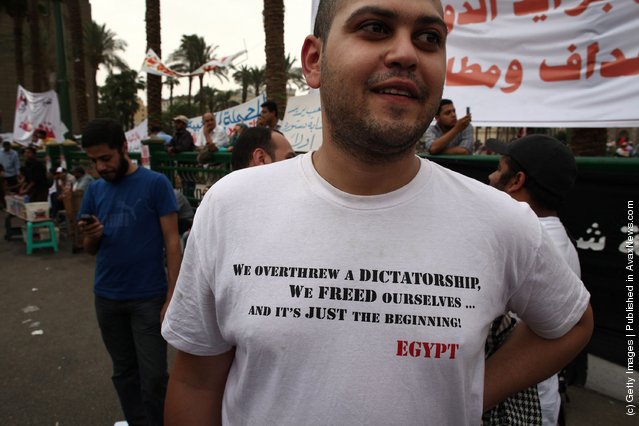
A demonstrator wears a message on a t-shirt in Tahrir Square on May 27, 2011 in Cairo, Egypt. The ruling Supreme Council of the Armed Forces said that there would be no use of violence against protests dubbed “the Second Revolution of Anger” taking place in Cairo and other cities in Egypt. (Photo by Peter Macdiarmid/Getty Images)
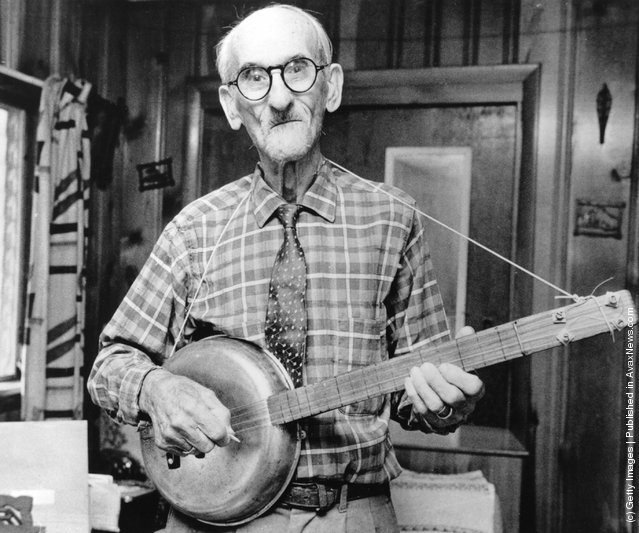
Retired 90 year old Frank Foss of St. Petersburg, Florida, with his home made banjo, made from a frying pan, a length of wood and some strings. (Photo by Fox Photos/Getty Images). 2nd July 1972
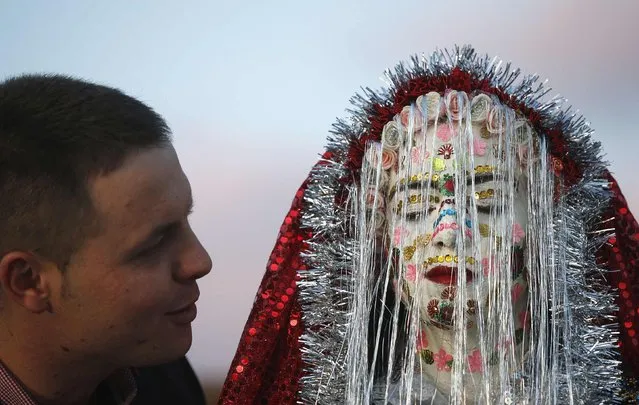
Bulgarian Muslims Azim Liumankov and his bride Fikrie Bindzheva pose in front of their house during their wedding ceremony in the village of Ribnovo, in the Rhodope Mountains, February 15, 2015. The remote mountain village of Ribnovo in southwest Bulgaria has kept its traditional winter marriage ceremony alive despite decades of Communist persecution, followed by poverty that forced many men to seek work abroad. (Photo by Stoyan Nenov/Reuters)
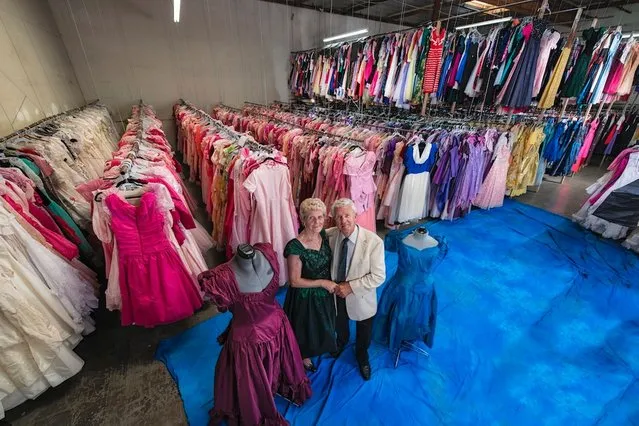
There are many types of collections. Some are formed by purposefully collecting certain objects, such as stamps or coins. However, some collections are only a byproduct of an obsession, a quirk of mind. For example, Paul Brockmann got into the habit of buying his girlfriend and later his wife a dress every time they went ballroom dancing. It might seem excessive to some, but it was his way of showing his affection. Overtime, this collection grew to be enormous, counting 55,000 dresses in total. Basic math tells us that either they went ballroom dancing three times per day for every day of their lives, or he bought them in huge bundles every time.
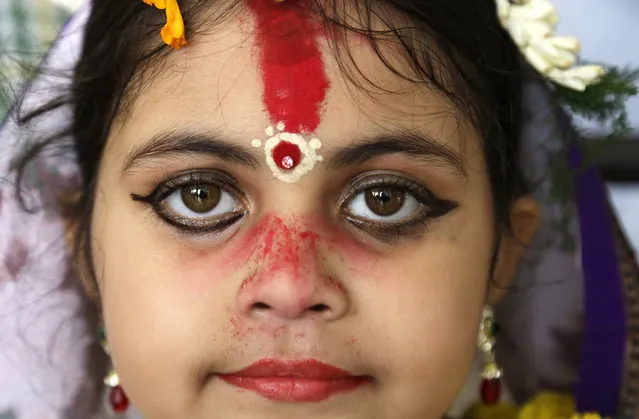
A young Hindu girl sits for a ceremony where she and other girls are worshipped as “Kumari”, or living goddess, during Ram Navami festival, at a temple in Kolkata, India, Saturday, March 28, 2015. Ram Navami marks the birth of Hindu God Rama. (Photo by Bikas Das/AP Photo)