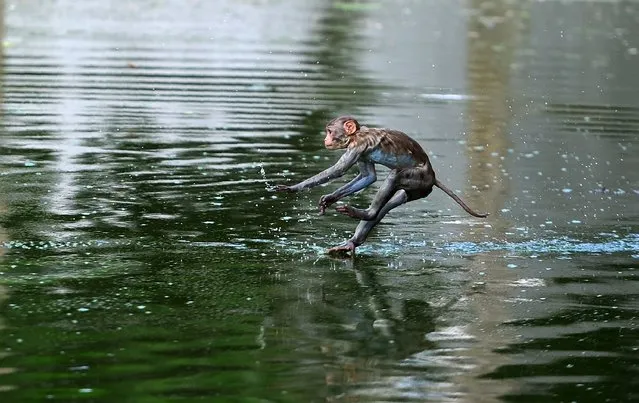
A monkey leaps into a pond on a hot day in Allahabad on May 19, 2017. According to local reports temperatures have soared in the northern Indian city to 47.28 Celsius. (Photo by Sanjay Kanojia/AFP Photo)
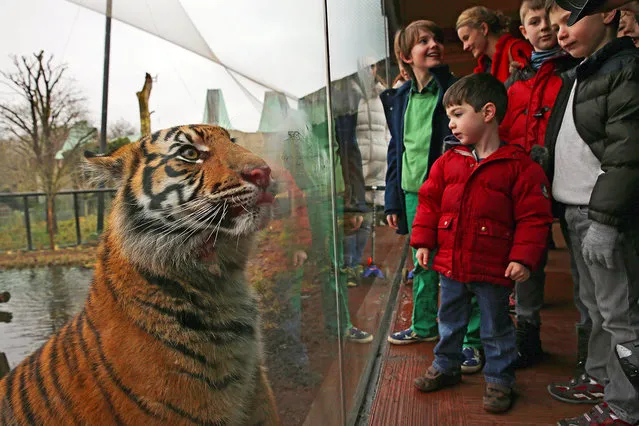
A Sumatran Tiger looks at visiting children from it's enclosure during the ZSL London Zoo's annual stocktake of animals on January 5, 2015 in London, England. The zoo's annual stocktake requires keepers to check on the numbers of every one of the 800 different animal species, including every invertebrate, bird, fish, mammal, reptile, and amphibian. (Photo by Dan Kitwood/Getty Images)
In this February 28, 2015 photo, teammates struggle to lift a bull off the trapped leg of a charro, during the bull riding event at a charreada in Mexico City. National Charros Association President Manuel Basurto Rojas said: “We in charreria are taking things into our own hands. We have codes, we have rules, for how to treat the animals. On the other hand, there is a lot of danger involved for the men doing these tricks”. (Photo by Rebecca Blackwell/AP Photo)
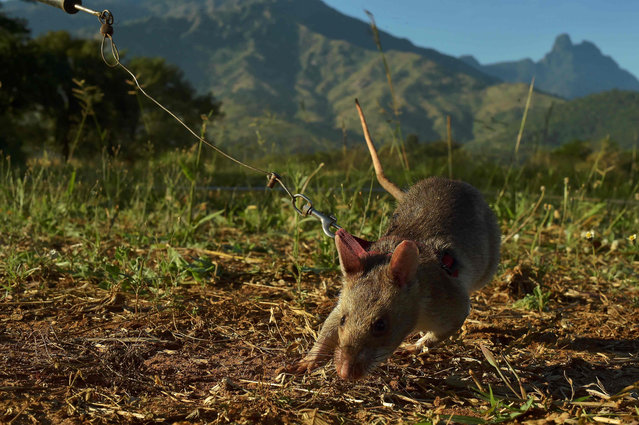
An African giant pouched rat sniffs for traces of landmine explosives at APOPO's training facility in Morogoro on June 17, 2016. APOPO trains the rats to detect both tuberculosis and landmines at its facility. Every year landmines kill or maim thousands of people worldwide. The trained rats sniff for explosive and so are able to detect the presence of landmines far faster than conventional methods which involve metal detection. (Photo by Carl De Souza/AFP Photo)
A Peru fan cheers of her team during a Quarterfinal match between Colombia and Peru at MetLife Stadium as part of Copa America Centenario US 2016 on June 17, 2016 in East Rutherford, New Jersey, US. (Photo by Chris Szagola/LatinContent/Getty Images)
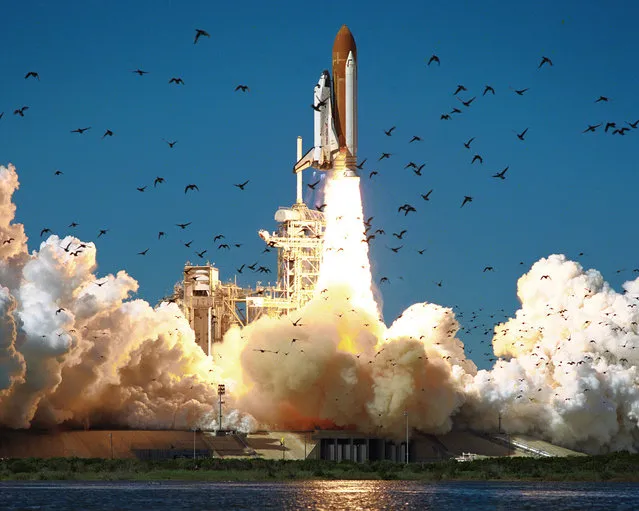
A wide-angle view shows the ascent of the shuttle Challenger on January 28, 1986. In the seconds after ignition, the rocket engines' hot blast began the process of destruction. (Photo by NASA)
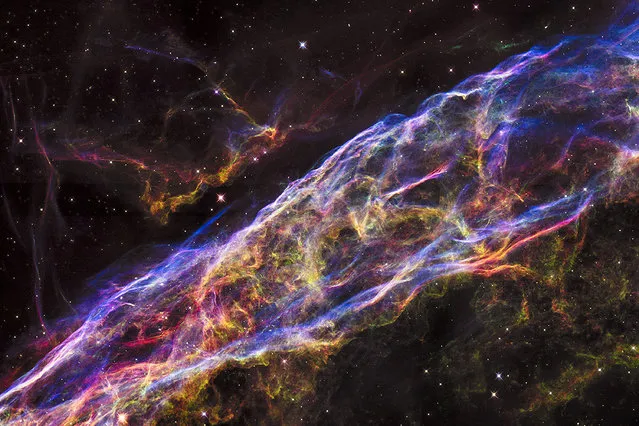
A small section of the expanding remains of the Veil Nebula, a massive star that exploded about 8,000 years ago. The entire nebula is 110 light-years across, covering six full moons on the sky as seen from Earth, and resides about 2,100 light-years away in the constellation Cygnus, the Swan. (Photo by Reuters/NASA/ESA/Hubble)