Loading...
Done
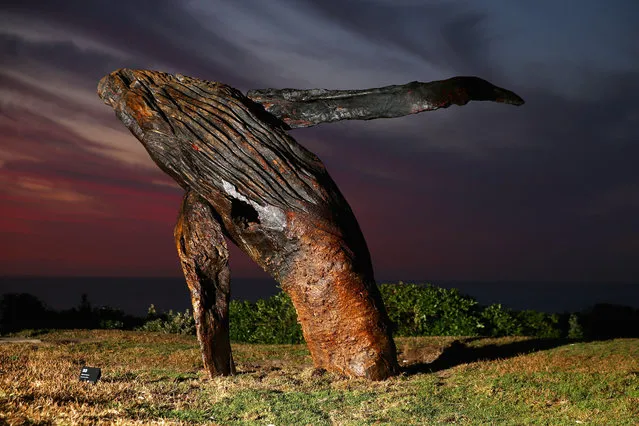
The annual Sculpture by the Sea exhibition in Sydney features dozens of sculptures on Bondi and Tamarama beaches and along the coastal path between them. The free outdoor exhibition, now in its 18th year, stretches for 2km along the coastline and includes work by artists from 16 countries. It runs from 23 October to 9 November 2014. Here: “Breaching” by Michael Greve is displayed during the 2014 Sculptures by the Sea exhibition at Marks Park on October 23, 2014 in Sydney, Australia. (Photo by Cameron Spencer/Getty Images)

The annual Sculpture by the Sea exhibition in Sydney features dozens of sculptures on Bondi and Tamarama beaches and along the coastal path between them. The free outdoor exhibition, now in its 18th year, stretches for 2km along the coastline and includes work by artists from 16 countries. It runs from 23 October to 9 November 2014. Here: “Breaching” by Michael Greve is displayed during the 2014 Sculptures by the Sea exhibition at Marks Park on October 23, 2014 in Sydney, Australia. (Photo by Cameron Spencer/Getty Images)
Details
24 Oct 2014 12:53:00
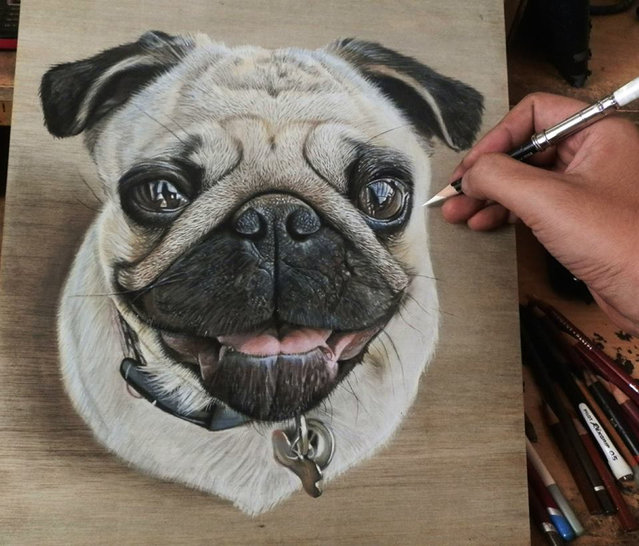
These hyper realistic drawings are so lifelike they could pass for photographs. The incredibly detailed works of art were created by self-taught artist Ivan Hoo, from Singapore, who earns a living from his realistic drawings and paintings. Here: Ivan Hoos drawing of a pug. (Photo by Ivan Hoo/Caters News)

These hyper realistic drawings are so lifelike they could pass for photographs. The incredibly detailed works of art were created by self-taught artist Ivan Hoo, from Singapore, who earns a living from his realistic drawings and paintings. The 31-year-old takes up to three days to complete the impressive pieces, which include animal portraits and still life drawings of everyday items such as a Starbucks cup. The A3 sketches are completed using a range of soft pastel pencils and are drawn from still life, or a photograph taken by Ivan himself. Here: Ivan Hoos drawing of a pug. (Photo by Ivan Hoo/Caters News)
Details
18 Nov 2014 11:42:00
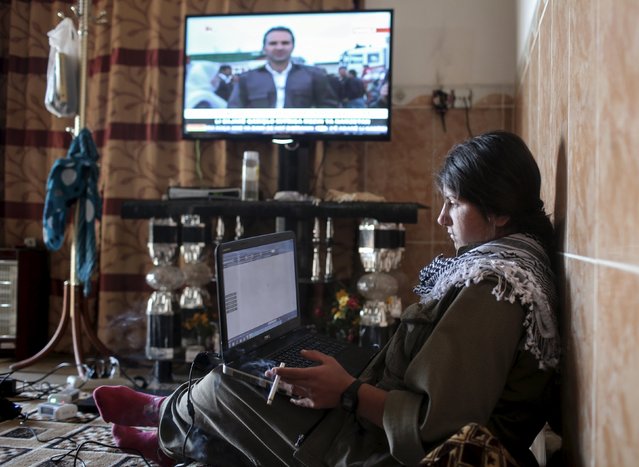
A female Kurdistan Workers Party (PKK) fighter works on her laptop while watching a Kurdish TV station at a base in the Sinjar mountains, March 11, 2015. (Photo by Asmaa Waguih/Reuters)

A female Kurdistan Workers Party (PKK) fighter works on her laptop while watching a Kurdish TV station at a base in the Sinjar mountains, March 11, 2015. Women fighters at a Kurdistan Workers Party (PKK) base on Mount Sinjar in northwest Iraq, just like their male counterparts, have to be ready for action at any time. Smoke from the front line, marking their battle against Islamic State, which launched an assault on northern Iraq last summer, is visible from the base. Many of the women have cut links with their families back home; the fighters come from all corners of the Kurdish region. (Photo by Asmaa Waguih/Reuters)
Details
04 May 2015 09:44:00
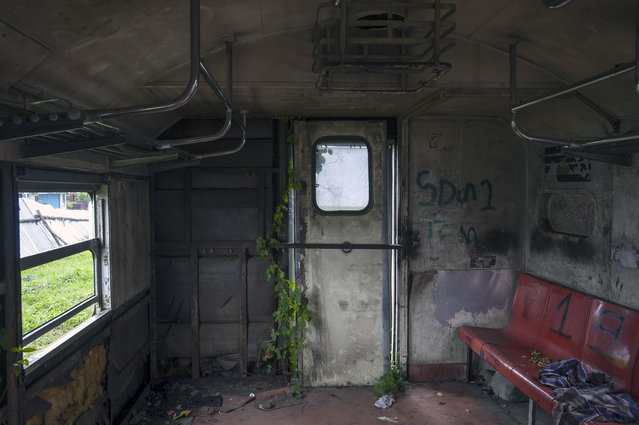
The carriages have decayed over time, on February 27, 2015, in Purwakarta, Indonesia. Dozens of trains are stacked on top of each other in what looks like a post-apocalyptic world. The old electric trains that travelled in and out of Jakarta, Indonesia, are weathered and decayed over time. The trains were used everyday since the 1980s and carried thousands of people to work. (Photo by HKV/Barcroft Media)

The carriages have decayed over time, on February 27, 2015, in Purwakarta, Indonesia. Dozens of trains are stacked on top of each other in what looks like a post-apocalyptic world. The old electric trains that travelled in and out of Jakarta, Indonesia, are weathered and decayed over time. The trains were used everyday since the 1980s and carried thousands of people to work. Now the carriages, which were once the lifeblood of public transport in the south-Asian city, have been left to rust among shrubbery. (Photo by HKV/Barcroft Media)
Details
21 Apr 2015 11:13:00
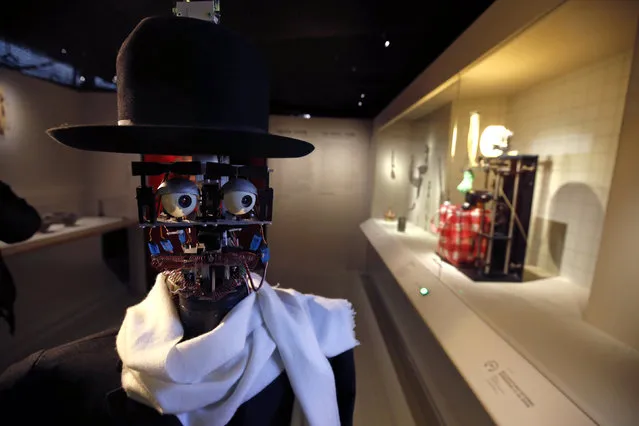
The Berenson robot strolls among visitors during the exhibition “Persona : Oddly Human” at the Quai Branly museum in Paris, France, February 23, 2016. The Berenson robot, developed in France in 2011, is the brainchild of anthropologist Denis Vidal and robotics engineer Philippe Gaussier. Its programming allows it to record reactions of museum visitors to certain pieces of art and then use the data to develop its own unique taste, which allows “Berenson” to judge whether or not it likes a certain work of art within an exhibition. (Photo by Philippe Wojazer/Reuters)

The Berenson robot strolls among visitors during the exhibition “Persona : Oddly Human” at the Quai Branly museum in Paris, France, February 23, 2016. The Berenson robot, developed in France in 2011, is the brainchild of anthropologist Denis Vidal and robotics engineer Philippe Gaussier. Its programming allows it to record reactions of museum visitors to certain pieces of art and then use the data to develop its own unique taste, which allows “Berenson” to judge whether or not it likes a certain work of art within an exhibition. (Photo by Philippe Wojazer/Reuters)
Details
25 Feb 2016 12:26:00
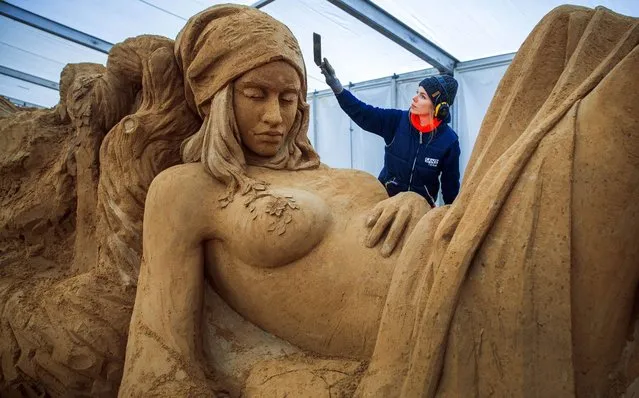
Marieke van der Meer from the Netherlands works on her sculpture “Flora” at the sand sculpture show in Binz on Ruegen island, Germany, 09 March 2016. With the motto “Fascination Nature”, 50 sand artists have created oversized sculptures. The sculptors use 16,000 tons of special sand that is pressed into big blocks first and then formed. The 7th sand sculpture show on 5,600 square meters of exhibition ground opens on 12 March 2016. (Photo by Ens Buettner/EPA)

Marieke van der Meer from the Netherlands works on her sculpture “Flora” at the sand sculpture show in Binz on Ruegen island, Germany, 09 March 2016. With the motto “Fascination Nature”, 50 sand artists have created oversized sculptures. The sculptors use 16,000 tons of special sand that is pressed into big blocks first and then formed. The 7th sand sculpture show on 5,600 square meters of exhibition ground opens on 12 March 2016. (Photo by Ens Buettner/EPA)
Details
10 Mar 2016 13:03:00
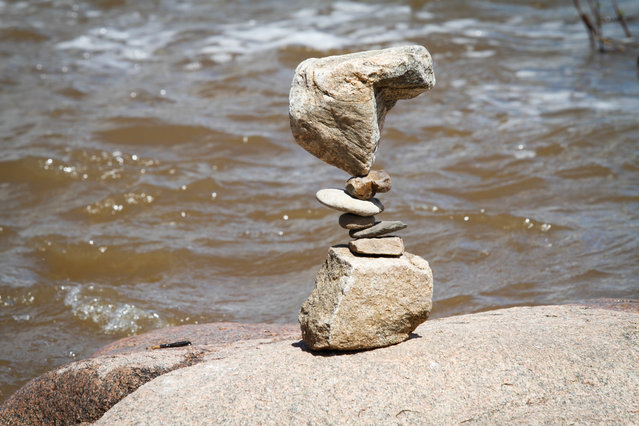
Tim Anderson final balanced rock stack in the Llano River. Tim Anderson, rock balancing “pro” from Pennsylvania, carefully worked to balance his stack on a dry spot in the Llano river Saturday March 12, 2016. He was an honored guest of the festival and enjoyed visiting Texas so he came for another year. The river was higher this year because of the rains so the balancers could not get to the better rock that were available last year. (Photo by Nell Carroll/American-Statesman)

Tim Anderson final balanced rock stack in the Llano River. Tim Anderson, rock balancing “pro” from Pennsylvania, carefully worked to balance his stack on a dry spot in the Llano river Saturday March 12, 2016. He was an honored guest of the festival and enjoyed visiting Texas so he came for another year. The river was higher this year because of the rains so the balancers could not get to the better rock that were available last year. (Photo by Nell Carroll/American-Statesman)
Details
19 Mar 2016 12:47:00
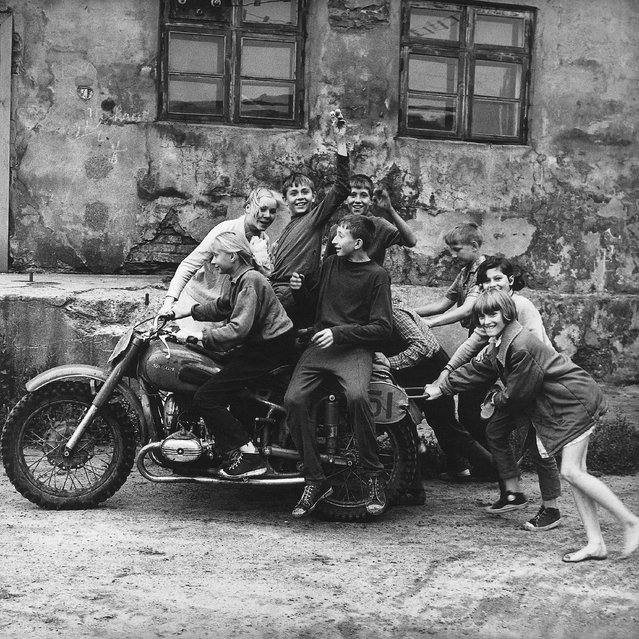
When he started using a camera there were very few documentary photographers working outside the government. Sutkus instead looked to writers and film-makers, and says he drew inspiration from the works of Franz Kafka, Jean-Paul Sartre, Ernest Hemingway and Vladimir Nabokov. Here: The first Lithuanian bikers, 1974. (Photo by Antanas Sutkus)

Rebelling against political propaganda, acclaimed photographer Antanas Sutkus embarked on a life-long journey to capture the everyday scenes around him. Antanas Sutkus, born in 1939, studied journalism at Vilnius University in the late 1950s before becoming disillusioned by the confines of the Soviet-controlled press. He began taking photographs instead, and soon co-founded the Lithuanian Association of Art Photographers. Here: The first Lithuanian bikers, 1974. (Photo by Antanas Sutkus)
Details
11 Apr 2016 10:54:00