Loading...
Done
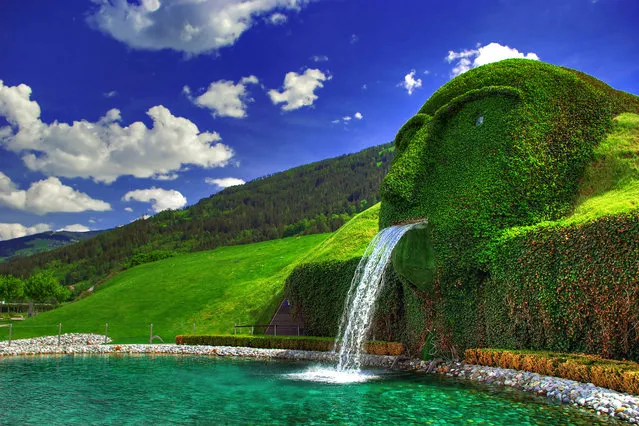
The Swarovski Crystal Head Fountain In Austria

A stone giant exhausted after his long travels decided to rest a while and drink from a pond far below. He lay down and started drinking from the crystal clear pond. So delicious was the water that he was unable to quench his thirst no matter how much he tried. Weeks have passed, months, years. The body of the stone giant became one with the hills and even his tongue has turned to water. This might seem like a fairy tale, yet you’ll be able to see this stone giant if you ever come to Wattens, Austria. He’s still there, guarding the entrance to Swarovski Kristallwelted, otherwise known as the Crystal Worlds. This is a one-of-a-kind theme park that was created by the people who first created Swarovski crystals.
Details
02 Mar 2015 08:30:00
Legs Photography By Stacey Baker


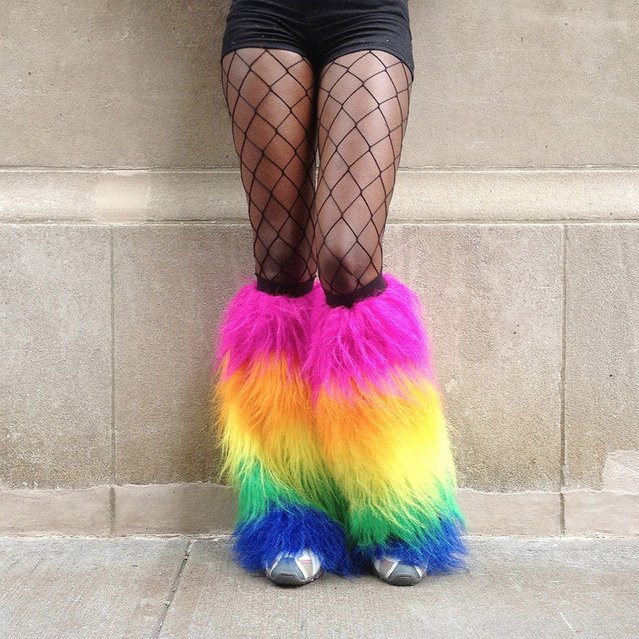
When you look at the pictures created by Stacey Baker, you immediately think that these photos must have been staged by the photographer to convey some deep meaning. In reality, however, Stacy created her new series called “CitiLegs”, which has about 300 pictures of female legs, by asking passing girls and women in Manhattan, New York if she could photograph their legs. And that is when the realization hits you – “Some people actually dress like that!” What kind of a person would wear neon-green shorts over orange leggings with leopard-patterned boots, the toes of which are completely torn? Yes, there is a possibility that such a person might be insane; however, there are just too many “crazy” photos in this series! (Photo by Stacey Baker)
Details
19 Nov 2014 14:23:00
Baatara Gorge Waterfall

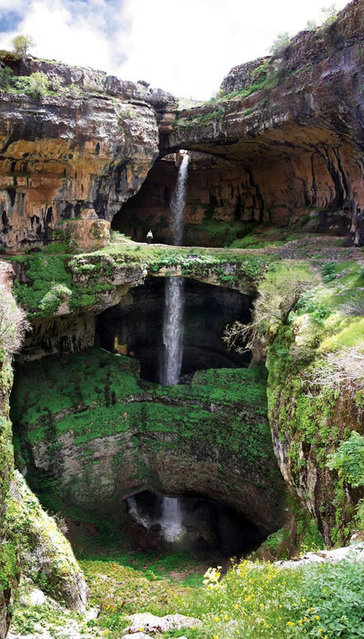
Discovered in 1952 by French bio-speleologist Henri Coiffait, the waterfall and accompanying sinkhole were fully mapped in the 1980s by the Spéléo club du Liban. The cave is also known as the "Cave of the Three Bridges." Traveling from Laklouk to Tannourine one passes the village of Balaa, and the "Three Bridges Chasm" (in French "Gouffre des Trois Ponts") is a five-minute journey into the valley below where one sees three natural bridges, rising one above the other and overhanging a chasm descending into Mount Lebanon. During the spring melt, a 90–100-metre (300–330 ft) cascade falls behind the three bridges and then down into the 250-metre (820 ft) chasm. A 1988 fluorescent dye test demonstrated that the water emerged at the spring of Dalleh in Mgharet al-Ghaouaghir.
Details
31 Aug 2013 11:27:00
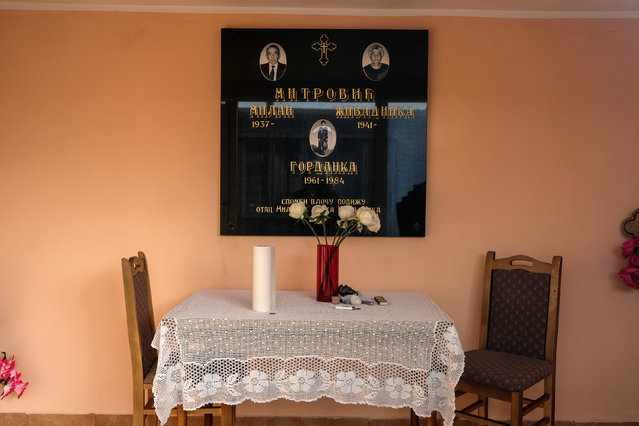
Pictures of deceased people are seen inside a chapel at a cemetery in the village of Smoljinac, Serbia, October 25, 2016. (Photo by Marko Djurica/Reuters)

Pictures of deceased people are seen inside a chapel at a cemetery in the village of Smoljinac, Serbia, October 25, 2016. From a distance, the cemetery in the eastern Serbian village of Smoljinac looks like a residential neighbourhood eerily placed among graves. But once inside the grounds, after passing a section with the usual stone slabs, visitors find rows of small bungalows painted in pastel colours. They have one or two rooms, large windows and ornate plaques – some inside, some outside – memorialising the deceased. These are the burial chapels of Smoljinac, cosy cabins with a furnished room inside, a storage place for wreaths and funeral paraphernalia, and the family crypt below. Some even have electric power inside. (Photo by Marko Djurica/Reuters)
Details
12 Nov 2016 10:37:00
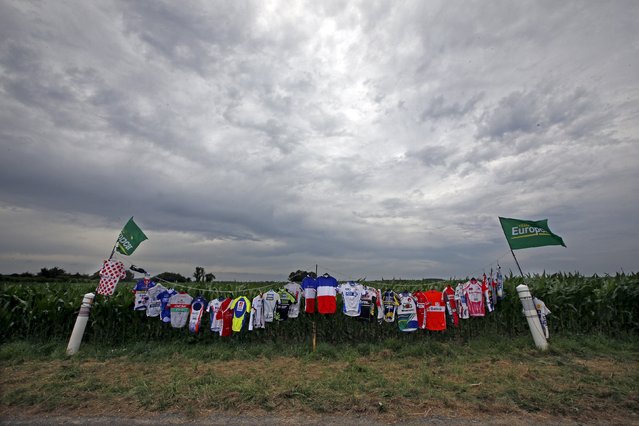
Cycling jerseys, part of a collection belonging to French cycling fan Gerald, hang from a line during the 4th stage of the Tour de France cycling race from Seraing in Belgium to Cambrai in France, July 7, 2015. (Photo by Eric Gaillard/Reuters)

Cycling jerseys, part of a collection belonging to French cycling fan Gerald, hang from a line during the 4th stage of the Tour de France cycling race from Seraing in Belgium to Cambrai in France, July 7, 2015. Photographing the Tour de France cycling race comes with highs and lows: the buzz from capturing just the right image, the tedium of long journeys, the painstaking set-up of equipment, the breath-taking scenery. Reuters photographers have worked not only to capture the thrills and spills on the roads and mountain passes. They have also shot a set of pictures showing their own quirky view from behind the scenes as they travelled through the Netherlands, Belgium and France. (Photo by Eric Gaillard/Reuters)
Details
25 Jul 2015 12:42:00
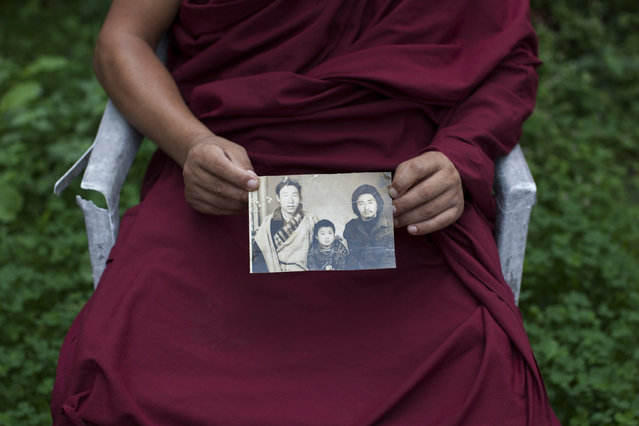
In this Saturday, September 27, 2014 photo, Tibetan monk Dorjee, 38, displays a photograph of his father, left, and himself, center, taken in Tibet, in Dharamsala, India. Dorjee said he held back his tears when he spoke with his parents on the phone after a separation period of 27 years. He exchanged a few words with his father but said his mother fainted on hearing his voice. (Photo by Tsering Topgyal/AP Photo)

“When I was 8 years old, my parents paid a smuggler to take me across the Himalayas, a weekslong walk over the mountains from Tibet to India. It was a trek that tens of thousands of other Tibetans have taken since the Dalai Lama fled a failed 1959 uprising against Chinese rule. My parents must have had their reasons to send me here; they must have had the best of intentions. But 18 years later, I still don't know why they did it. They are not political people. They are small farmers who raise barley and a few yak in a rural area not far from Lhasa, the Tibetan capital. I have not seen them since I left...”. – Tsering Topgyal via The Associated Press. (Photo by Tsering Topgyal/AP Photo)
Details
05 Nov 2014 12:27:00
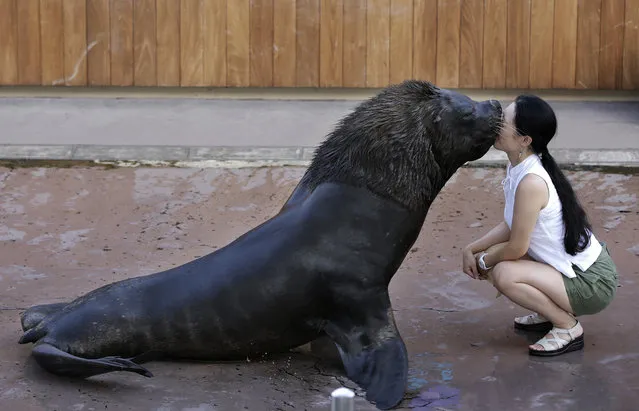
A walrus kisses a visitor during a sea animal show at the Hakkeijima Sea Paradise aquarium-amusement park complex in Yokohama, southwest of Tokyo, Monday, September 11, 2017. (Photo by Shizuo Kambayashi/AP Photo)

A walrus kisses a visitor during a sea animal show at the Hakkeijima Sea Paradise aquarium-amusement park complex in Yokohama, southwest of Tokyo, Monday, September 11, 2017. (Photo by Shizuo Kambayashi/AP Photo)
Details
13 Sep 2017 07:15:00
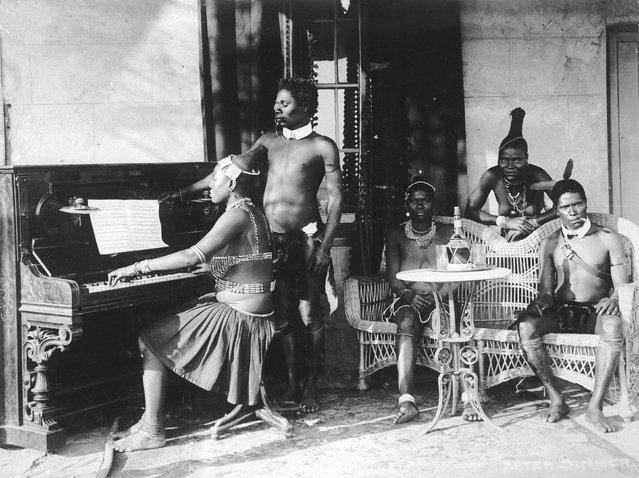
circa 1925:  A Zulu woman playing the piano while a group of others sit and listen.  (Photo by General Photographic Agency/Getty Images)

“The Zulu are the largest South African ethnic group, with an estimated 10–11 million people living mainly in the province of KwaZulu-Natal. Small numbers also live in Zimbabwe, Zambia, and Mozambique. Their language, Zulu, is a Bantu language; more specifically, part of the Nguni subgroup. The Zulu Kingdom played a major role in South African history during the 19th and 20th centuries. Under apartheid, Zulu people were classed as third-class citizens and suffered from state-sanctioned discrimination. They remain today the most numerous ethnic group in South Africa, and now have equal rights along with all other citizens”. – Wikipedia.

Photo: A Zulu woman playing the piano while a group of others sit and listen (to put it briefly, Englishmen scoff over Zulu). South Africa, circa 1925. (Photo by General Photographic Agency)

Details
03 Feb 2014 09:40:00