Loading...
Done
Lola is seen at left in everyday clothes – and then at right in her work clothes. She works as a clown in Paris. (Photo by Bruno Fert/Picturetank)

“The series of photos called Workwears, by French photographer Bruno Fert, visually juxtaposes people’s private lives with their lives at work. A firefighter, a fisherman, a nurse, a diver, a judge. One by one, Fert’s photos show people in their homes wearing everyday clothing – followed by another photo showing them dressed in the clothing of their chosen professions. Our reaction, Fert said, reminds us how tightly humans hold on to certain stereotypes about some professions. “I like to break those stereotypes”, he said”. – Thom Patterson via CNN. Here: Lola is seen at left in everyday clothes – and then at right in her work clothes. She works as a clown in Paris. (Photo by Bruno Fert/Picturetank)
Details
29 Oct 2014 12:40:00
Katjinga, a Rhodesian ridgeback dog who lives on a 20-acre farm in Germany, adopted an abandoned pot-bellied piglet in August 2009. The tiny black piglet, named Paulinchen, had been so small at birth that her mother likely overlooked it. Katjinga's owner, Roland Adam, found the piglet alone and cold and brought it to his 8-year-old dog

Katjinga, a Rhodesian ridgeback dog who lives on a 20-acre farm in Germany, adopted an abandoned pot-bellied piglet in August 2009. The tiny black piglet, named Paulinchen, had been so small at birth that her mother likely overlooked it. Katjinga's owner, Roland Adam, found the piglet alone and cold and brought it to his 8-year-old dog. (Photo by Fame Pictures)
Details
23 Apr 2012 13:45:00


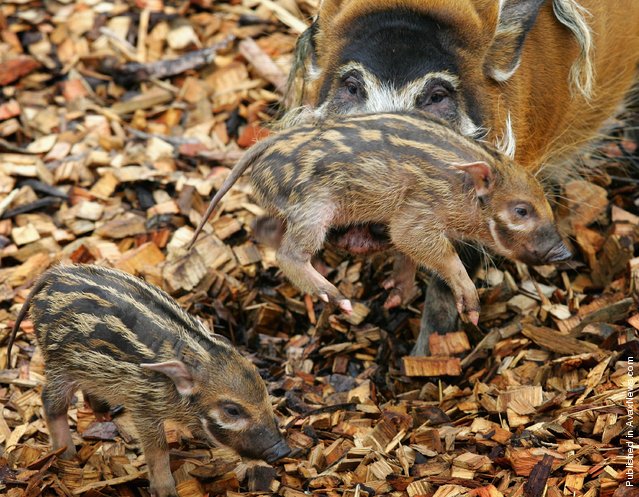
“The Red River Hog (Potamochoerus porcus), also known as the Bush Pig (but not to be confused with P. larvatus, common name “Bushpig”), is a wild member of the pig family living in Africa, with most of its distribution in the Guinean and Congolian forests. It is rarely seen away from rainforests, and generally prefers areas near rivers or swamps.

Red River Hogs eat grass, berries, roots, insects, molluscs, small vertebrates and carrion. They are capable of causing damage to plantations. Red River Hogs typically live in herds of 6-20 members led by a dominant boar. Sows rear 3-6 piglets at a time.”

Photo: Two 17 day old red river hoglet twins forage for food next to their mother Bahiti at London Zoo on August 23, 2007 in London, England. Red River hoglets inhabit the forests and swamps of West and Central Africa. The recent additions to the London Zoo pig pen have been eagerly awaited by zoo keepers. (Photo by Chris Jackson/Getty Images)
Details
18 Mar 2011 15:15:00
A journalist operate a harness with multiple recording devices capable of recording and live streaming outside the Great Hall of the People where the opening session of the Chinese People's Political Consultative Conference (CPPCC) was held in Beijing, China, Friday, March 3, 2017. Thousands of delegates have gathered at the Chinese capital for the opening of the annual session of the Chinese People's Political Consultative Conference, which advises the rubberstamp parliament, whose annual session begins Sunday. (Photo by Ng Han Guan/AP Photo)

A journalist operate a harness with multiple recording devices capable of recording and live streaming outside the Great Hall of the People where the opening session of the Chinese People's Political Consultative Conference (CPPCC) was held in Beijing, China, Friday, March 3, 2017. Thousands of delegates have gathered at the Chinese capital for the opening of the annual session of the Chinese People's Political Consultative Conference, which advises the rubberstamp parliament, whose annual session begins Sunday. (Photo by Ng Han Guan/AP Photo)
Details
04 Mar 2017 09:58:00
Giant panda Ying Ying rests on a rock in its enclosure while a visitor takes a selfie at Ocean Park in Hong Kong, China, 24 September 2020. An An turned 35 in August. Giant pandas in the wild can live up to 20 years on average, while lifespans of those under human care can reach over 30 years. (Photo by Jerome Favre/EPA/EFE)

Giant panda Ying Ying rests on a rock in its enclosure while a visitor takes a selfie at Ocean Park in Hong Kong, China, 24 September 2020. An An turned 35 in August. Giant pandas in the wild can live up to 20 years on average, while lifespans of those under human care can reach over 30 years. (Photo by Jerome Favre/EPA/EFE)
Details
08 Oct 2020 00:03:00
The sun begins to set over this rusty beachside mansion that has been left abandoned for more than 25 years in Thailand, June 2017. A deserted beachside mansion in southern Thailand has retained its beauty – despite no one living there for more than 25 years. In June this year abandoned photographer, Dax Ward, ventured to the Prachuap Khiri-Khan Province to capture the haunting attraction on camera. (Photo by Dax Ward/Barcroft Images)

The sun begins to set over this rusty beachside mansion that has been left abandoned for more than 25 years in Thailand, June 2017. A deserted beachside mansion in southern Thailand has retained its beauty – despite no one living there for more than 25 years. In June this year abandoned photographer, Dax Ward, ventured to the Prachuap Khiri-Khan Province to capture the haunting attraction on camera. (Photo by Dax Ward/Barcroft Images)
Details
07 Aug 2017 07:39:00
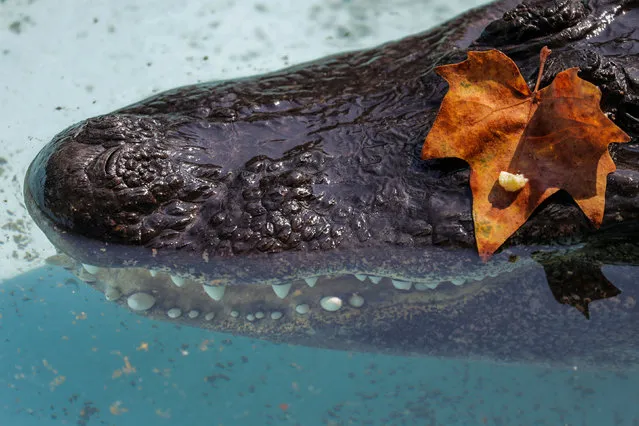
An alligator named Muja is seen in its enclosure in Belgrade's Zoo, Serbia, August 14, 2018. Muja is officially the oldest American alligator in the world living in captivity. He was brought to Belgrade from Germany in 1937, a year after the opening of the Zoo. Muja survived three bombings of Belgrade, the Second World War and all hardships the Zoo went through. (Photo by Marko Djurica/Reuters)

An alligator named Muja is seen in its enclosure in Belgrade's Zoo, Serbia, August 14, 2018. Muja is officially the oldest American alligator in the world living in captivity. He was brought to Belgrade from Germany in 1937, a year after the opening of the Zoo. Muja survived three bombings of Belgrade, the Second World War and all hardships the Zoo went through. (Photo by Marko Djurica/Reuters)
Details
19 Aug 2018 00:03:00
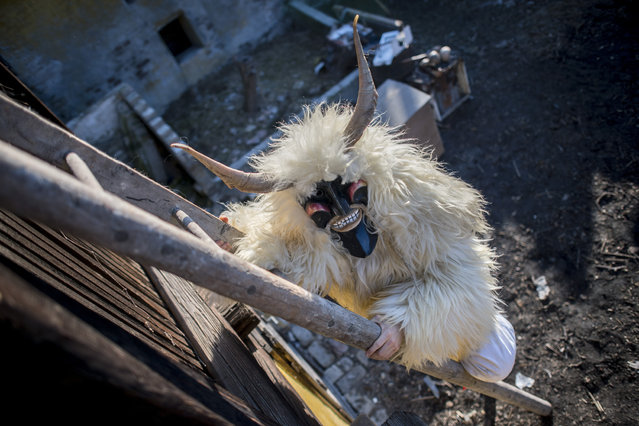
A man wears a busho mask and a costume made of sheep pelt while climbing up a ladder outside a barn in Mohacs, Hungary, 20 February 2020, on the first day of carnival. The traditional Busho carnival, which marks the end of winter, dates back to the 16th century. According to local legend, members of an ethnic South Slavic group living in Mohacs at the time dressed up in similar costumes and wore wooden masks to scare away Ottoman invaders, who mistook them for demons. (Photo by Tamas Soki/EPA/EFE)

A man wears a busho mask and a costume made of sheep pelt while climbing up a ladder outside a barn in Mohacs, Hungary, 20 February 2020, on the first day of carnival. The traditional Busho carnival, which marks the end of winter, dates back to the 16th century. According to local legend, members of an ethnic South Slavic group living in Mohacs at the time dressed up in similar costumes and wore wooden masks to scare away Ottoman invaders, who mistook them for demons. (Photo by Tamas Soki/EPA/EFE)
Details
23 Feb 2020 00:07:00