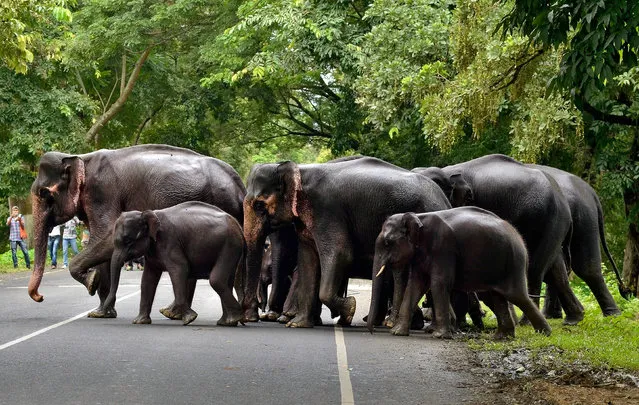
A herd of elephants cross a road that passes through the flooded Kaziranga National Park in the northeastern state of Assam, India, July 12, 2017. (Photo by Anuwar Hazarika/Reuters)
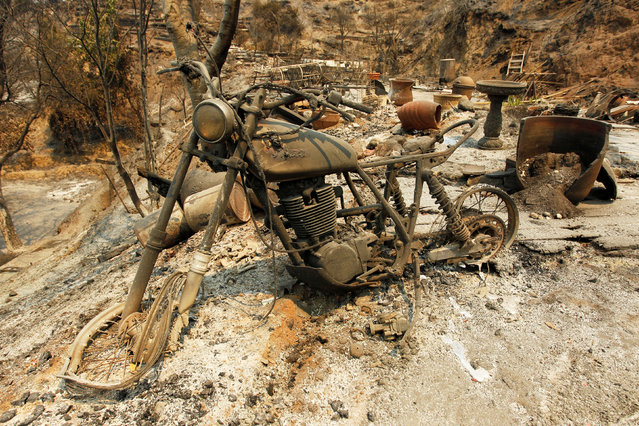
A motorcycle sits at the site of a destroyed home after the Soberanes Fire burned through the Palo Colorado area, north of Big Sur, California, July 31, 2016. (Photo by Michael Fiala/Reuters)
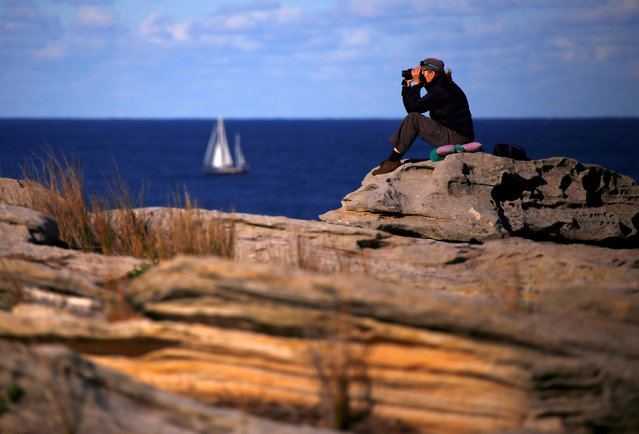
A boat sails behind a woman looking through binoculars as she sits on a cliff on a sunny day in Sydney, Australia, May 29, 2016. (Photo by David Gray/Reuters)
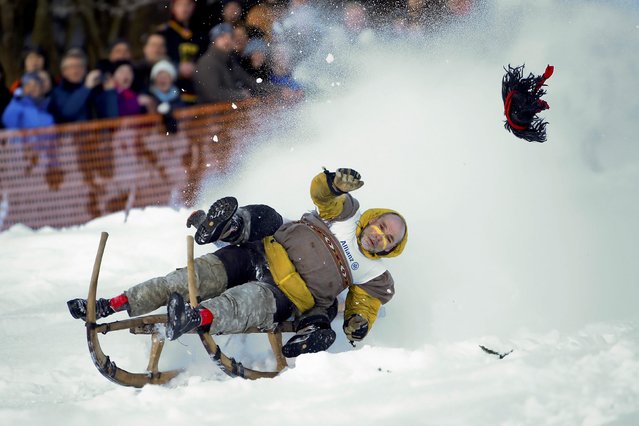
Men soar through the air on a wooden sledge during a traditional Bavarian horn sledge race, known as “Schnablerrennen”, in Gaissach near Bad Toelz, Germany, January 22, 2017. (Photo by Michael Dalder/Reuters)
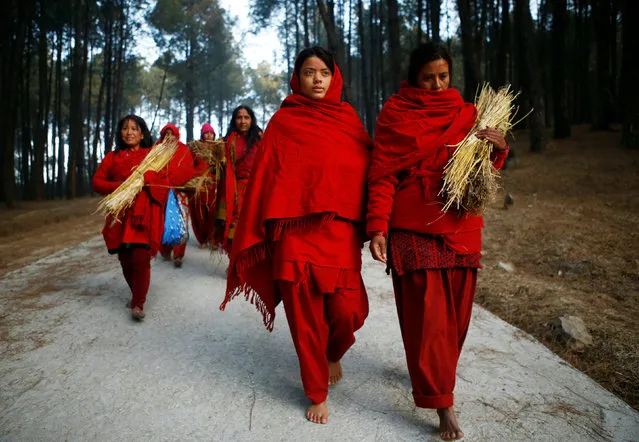
Devotees walk through the woods of Changu Narayan as they arrive to perform rituals and prayers during the Swasthani Bratakatha festival in Bhaktapur, Nepal February 8, 2017. (Photo by Navesh Chitrakar/Reuters)
A priest sprinkles holy water at a cat at a drive-through pet blessing, ahead of World Animal Day, at a mall in Quezon City, Metro Manila, Philippines on October 2, 2022. (Photo by Lisa Marie David/Reuters)
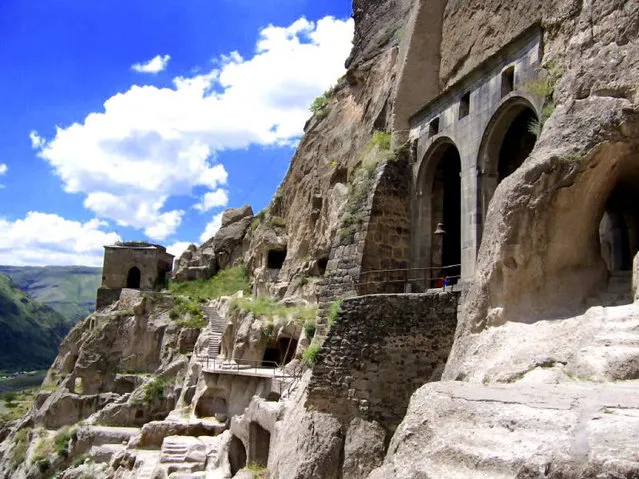
Vardzia is a cave monastery site in southern Georgia, excavated from the slopes of the Erusheti Mountain on the left bank of the Mtkvari River, thirty kilometres from Aspindza. The main period of construction was the second half of the twelfth century. The caves stretch along the cliff for some five hundred metres and in up to nineteen tiers. The Church of the Dormition, dating to the 1180s during the golden age of Tamar and Rustaveli, has an important series of wall paintings. The site was largely abandoned after the Ottoman takeover in the sixteenth century. Now part of a state heritage reserve, the extended area of Vardzia-Khertvisi has been submitted for future inscription on the UNESCO World Heritage List