Loading...
Done
Victoria amazonica

The species has very large leaves, up to 3 m in diameter, that float on the water's surface on a submerged stalk, 7–8 m in length. The species was once called Victoria regia after Queen Victoria, but the name was superseded. V. amazonica is native to the shallow waters of the Amazon River basin, such as oxbow lakes and bayous. It is depicted in the Guyanese coat of arms. The flowers are white the first night they are open and become pink the second night. They are up to 40 cm in diameter, and are pollinated by beetles.
Details
03 Sep 2012 06:58:00
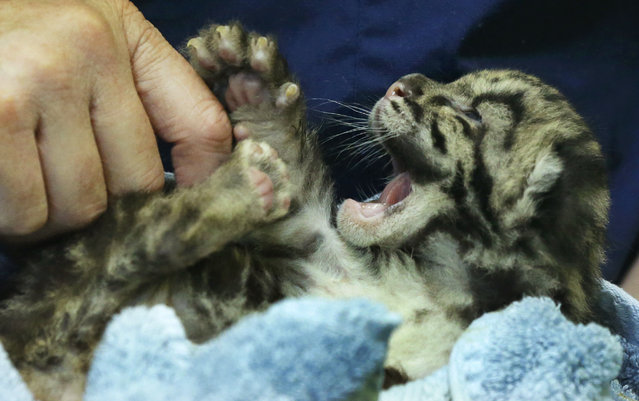
Andy Goldfarb, a staff biologist at the Point Defiance Zoo & Aquarium, plays with one of the four clouded leopard cubs currently at the zoo Friday, June 5, 2015 in Tacoma, Wash. The quadruplets were born on May 12, 2015 and now weigh about 1.7 lbs. each. Friday was their first official day on display for public viewing, usually during their every-four-hours bottle-feeding sessions, which were started after the cubs' mother did not show enough interest in continuing to nurse them. (AP Photo/Ted S. Warren)

Andy Goldfarb, a staff biologist at the Point Defiance Zoo & Aquarium, plays with one of the four clouded leopard cubs currently at the zoo Friday, June 5, 2015 in Tacoma, Wash. The quadruplets were born on May 12, 2015 and now weigh about 1.7 lbs. each. Friday was their first official day on display for public viewing, usually during their every-four-hours bottle-feeding sessions, which were started after the cubs' mother did not show enough interest in continuing to nurse them. (AP Photo/Ted S. Warren)
Details
19 Jun 2015 09:06:00
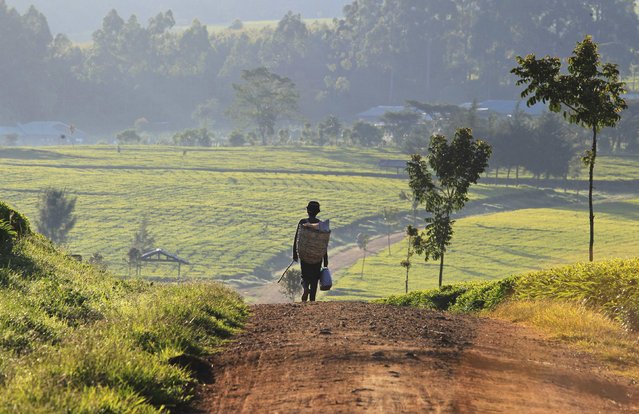
A man walks in the early morning to start his day picking tea leaves at a plantation in Nandi Hills, in Kenya's highlands region west of capital Nairobi, November 5, 2014. Emerald-coloured tea bushes blanketing the rolling hills of Nandi County have long provided a livelihood for small-scale farmers, helping make Kenya one of the world's biggest tea exporters. But ideal weather and bigger harvests, instead of producing bumper earnings, have led to a glut of Kenya's speciality black tea. (Photo by Noor Khamis/Reuters)

A man walks in the early morning to start his day picking tea leaves at a plantation in Nandi Hills, in Kenya's highlands region west of capital Nairobi, November 5, 2014. Emerald-coloured tea bushes blanketing the rolling hills of Nandi County have long provided a livelihood for small-scale farmers, helping make Kenya one of the world's biggest tea exporters. But ideal weather and bigger harvests, instead of producing bumper earnings, have led to a glut of Kenya's speciality black tea. (Photo by Noor Khamis/Reuters)

Details
17 Nov 2014 12:44:00
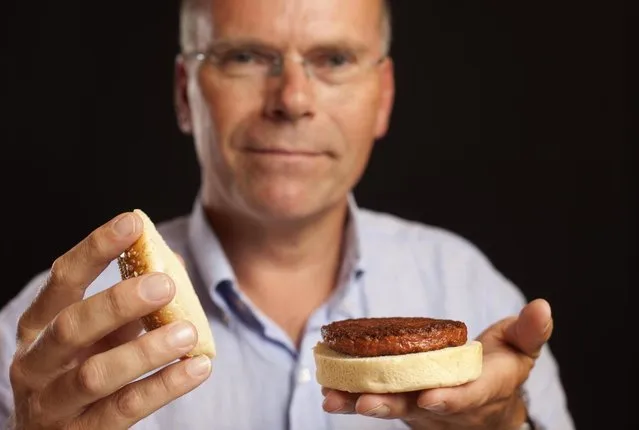
In this handout image provided by Ogilvy, a burger made from cultured beef, which has been developed by Professor Mark Post of Maastricht University in the Netherlands (pictured) is shown to the media during a press conference on August 5, 2013 in London, England. Cultured Beef could help solve the coming food crisis and combat climate change with commercial production of Cultured Beef beginning within ten to twenty years. (Photo by David Parry via Getty Images)

In this handout image provided by Ogilvy, a burger made from cultured beef, which has been developed by Professor Mark Post of Maastricht University in the Netherlands (pictured) is shown to the media during a press conference on August 5, 2013 in London, England. The in-vitro burger, cultured from cattle stem cells, the first example of what its creator says could provide an answer to global food shortages and help combat climate change, was fried in a pan and tasted by two volunteers. The burger is the result of years of research by Dutch scientist Mark Post, a vascular biologist at the University of Maastricht, who is working to show how meat grown in petri dishes might one day be a true alternative to meat from livestock.The meat in the burger has been made by knitting together around 20,000 strands of protein that has been cultured from cattle stem cells in Post's lab. (Photo by David Parry)
Details
06 Aug 2013 08:48:00
Colombian fans during the International Friendly match between Canada and Colombia at Sports Illustrated Stadium on October 14, 2025 in Harrison, Nueva Jersey. (Photo by Leonardo Ramirez/eyepix via ZUMA Press Wire/Alamy Live News)

Colombian fans during the International Friendly match between Canada and Colombia at Sports Illustrated Stadium on October 14, 2025 in Harrison, Nueva Jersey. (Photo by Leonardo Ramirez/eyepix via ZUMA Press Wire/Alamy Live News)
Details
23 Oct 2025 04:12:00


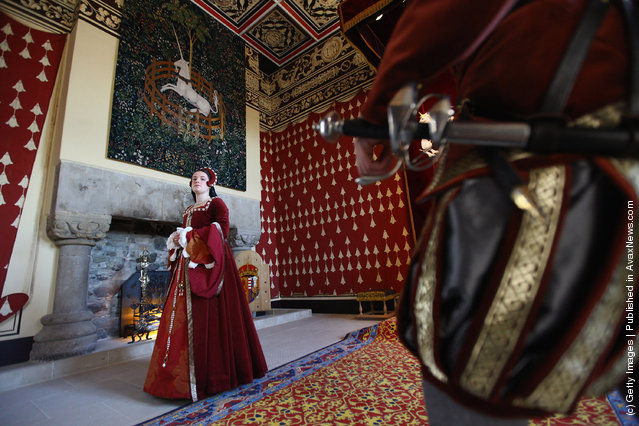
Laura Titch, dressed as Mary of Guise, and Duncan Maclachlan, dressed as Alexander of Stewart, rehearse for Stirling Castle's grand renaissance palace opening on June 3, 2011 in Stirling, Scotland. The palace has been closed for two years, while a Ј12 million pound project was undertaken to return the palace to how it might have looked back in the 1540s, when it was home to Mary of Guise, the widow of James V. Their daughter, Mary Queen of Scots, was raised there before living in France. (Photo by Jeff J Mitchell/Getty Images)
Details
04 Jun 2011 06:24:00
A woman smokes a cigarette next to man wearing a mask during lunch hour at the central business district in Singapore September 29, 2015. (Photo by Edgar Su/Reuters)

A woman smokes a cigarette next to man wearing a mask during lunch hour at the central business district in Singapore September 29, 2015. The 3-hour haze Pollutant Standards Index (PSI) reached a high of 173 at 8am on Tuesday, according to the National Environment Agency. Slash-and-burn agriculture in neighboring Indonesia has blanketed Singapore in a choking haze for weeks. (Photo by Edgar Su/Reuters)
Details
02 Oct 2015 08:00:00
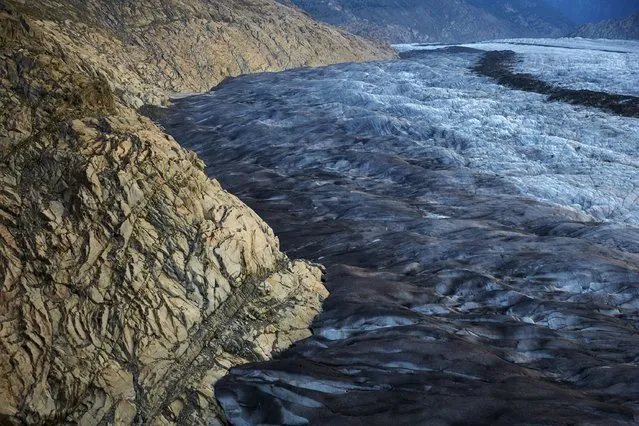
The Aletsch Glacier is pictured at dusk in Fiesch, Switzerland, August 11, 2015. (Photo by Denis Balibouse/Reuters)

The Aletsch Glacier is pictured at dusk in Fiesch, Switzerland, August 11, 2015. One of Europe's biggest glaciers, the Great Aletsch coils 23 km (14 miles) through the Swiss Alps – and yet this mighty river of ice could almost vanish in the lifetimes of people born today because of climate change. The glacier, 900 metres (2,950 feet) thick at one point, has retreated about 3 km (1.9 miles) since 1870 and that pace is quickening. (Photo by Denis Balibouse/Reuters)
Details
18 Oct 2015 08:05:00