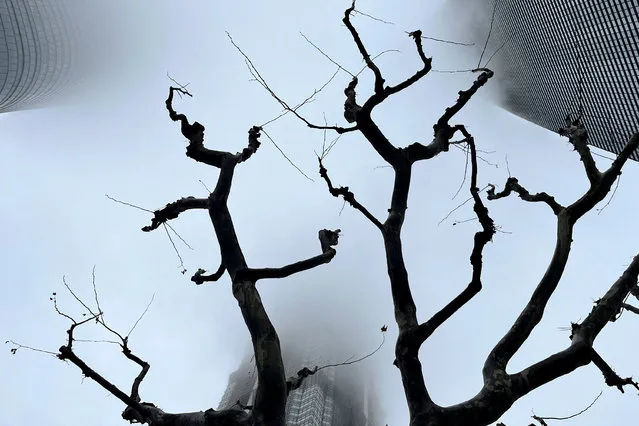
Buildings in Lujiazui financial district are seen shrouded in fog amid an orange alert for heavy fog in Shanghai, China on January 31, 2024. (Photo by Xihao Jiang/Reuters)
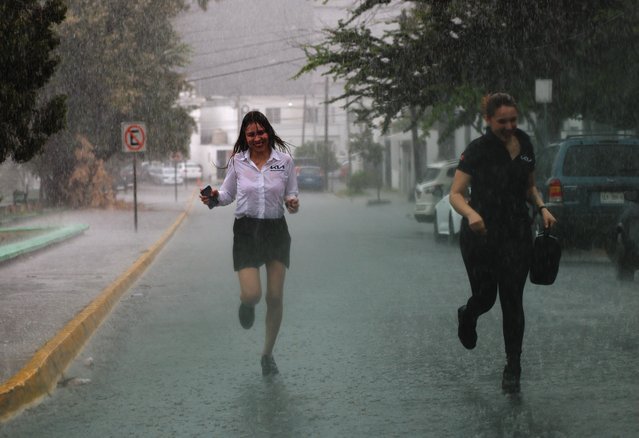
People run along a street as rain caused by tropical storm Alberto, the first named storm of 2024 Atlantic hurricane season, falls, in Monterrey, Mexico. on June 19, 2024. (Photo by Daniel Becerril/Reuters)
The drag artist Wet Mess performs Testo – a show about testosterone – at the Here & Now Showcase, Edinburgh international festival fringe in 2024. (Photo by Murdo MacLeod/The Guardian)
A woman helps another to wade through a waterlogged road during heavy rain following tropical storm Dana, in Kolkata, India, Friday, October 25, 2024. (Photo by Bikas Das/AP Photo)
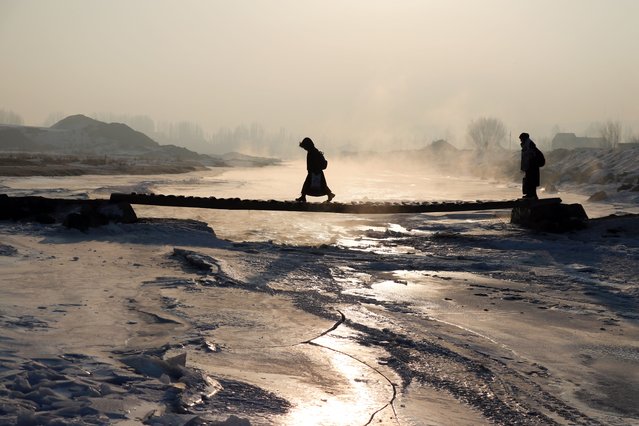
A view of the silhouettes of people, passing across a bridge over the frozen Lake Murat, trying to go on their daily lives despite the cold during winter season in Agri, Turkiye on February 10, 2025. (Photo by Abdullah Soylemez/Anadolu via Getty Images)
England goalkeeper Mary Earps saves a penalty from Jennifer Hermoso of Spain during the FIFA Women's World Cup Australia & New Zealand 2023 Final match between Spain and England at Stadium Australia on August 20, 2023 in Sydney, Australia. (Photo by Charlotte Wilson/Offside/Offside via Getty Images)
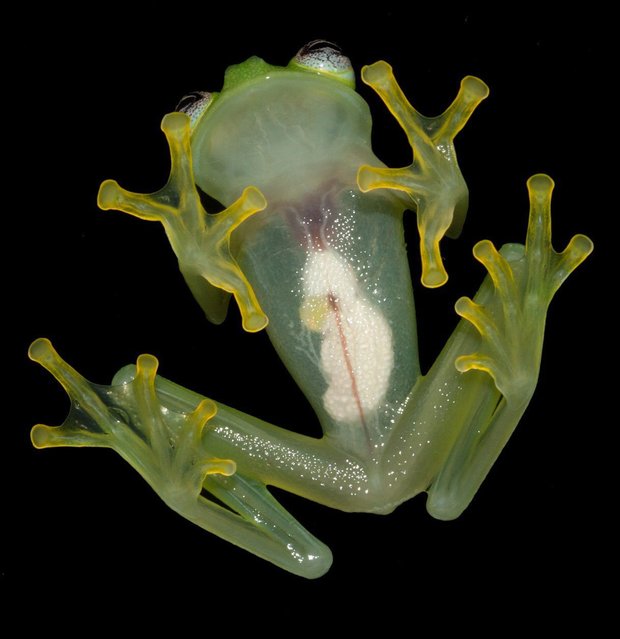
A handout photograph provided by Brian Kubicki of Costa Rican Amphibian Research Center on 26 April 2016 shows a “Crystal frog”, Hyalinobatrachium dianae (H. diane). This frog was discovered by US biologist Brian Kubicki and Costa Ricans Stanley Salazar and Robert Puschendorf in a rainy forest of Costa Rican caribbean after 40 years without notice of any new example of this kind. (Photo by Brian Kubicki/EPA/Costa Rican Amphibian Research Center)
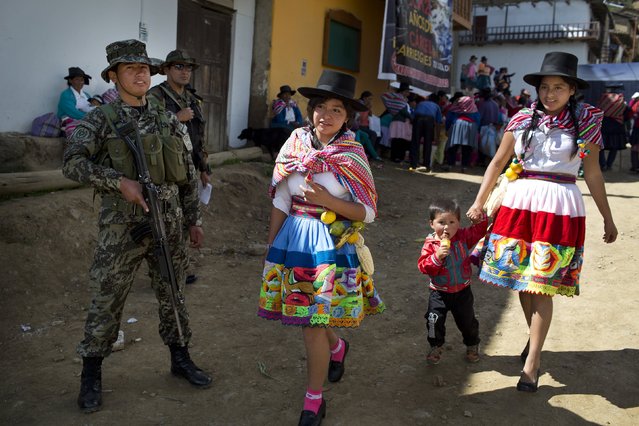
Women walk next to soldiers in Surcubamba, Peru, Thursday, May 21, 2015. The Joint Command of the Peruvian Armed Forces organized a humanitarian mission to Surcubamba, where health care was provided to families from nearby villages in this region called VRAEM, the acronym for Valley of the Apurimac, Ene and Mantaro rivers, where sixty percent of Peru's cocaine originates. (Photo by Rodrigo Abd/AP Photo)