Loading...
Done


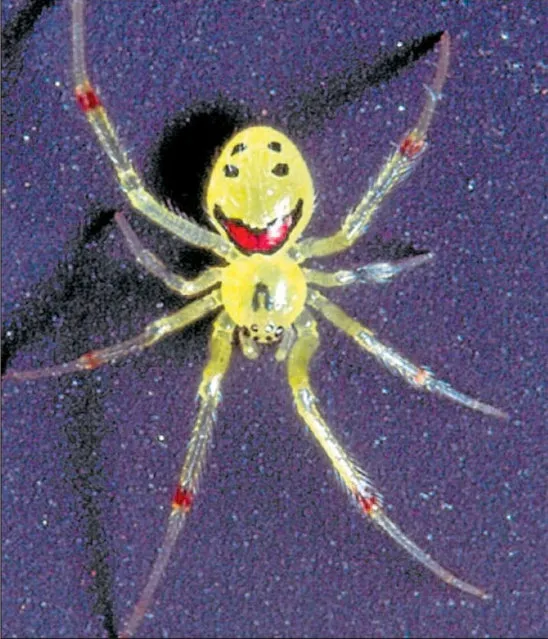
Theridion grallator, also known as the "happy face spider", is a spider in the family Theridiidae. Its Hawaiian name is nananana makakiʻi (face-patterned spider). The specific epithet grallator is Latin for "stilt walker", a reference to the species' long, spindly legs.
Details
16 Mar 2013 16:08:00
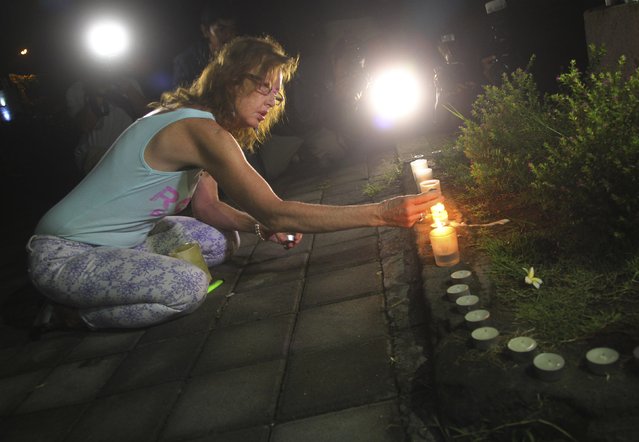
A woman lights a candle before praying in front of Kerobokan prison, before the transfer of the two Australian death row prisoners, Myuran Sukumaran and Andrew Chan, to the airport in Denpasar, on the Indonesian island of Bali March 4, 2015. REUTERS/Zul Edoardo

A woman lights a candle before praying in front of Kerobokan prison, before the transfer of the two Australian death row prisoners, Myuran Sukumaran and Andrew Chan, to the airport in Denpasar, on the Indonesian island of Bali March 4, 2015. The two convicted Australian drug smugglers were being transferred on Wednesday from a Bali prison to an island for execution along with other foreigners, underlining Indonesia's determination to use the death penalty despite international criticism. The planned executions of Myuran Sukumaran, 33, and Andrew Chan, 31, have ratcheted up diplomatic tensions between Australia and Indonesia following repeated pleas of mercy for the pair, who are among 11 death row convicts scheduled to go before a firing squad. REUTERS/Zul Edoardo

Details
05 Mar 2015 13:00:00
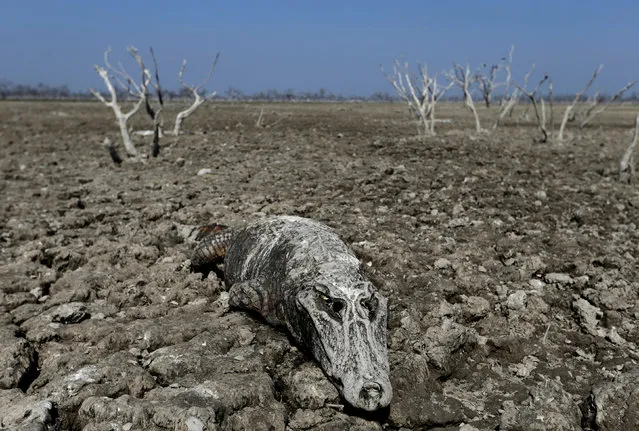
The carcass of a yacare caiman lies in the dried-up river bed of the Pilcomayo river in Boqueron, Paraguay, August 14, 2016. In Paraguay, alongside the Pilcomayo River, black vultures flew over a shrinking pond where a group of crocodilian reptiles known as yacare caimans sought refuge. Water from the river, which divides Paraguay and Argentina in the area of the Gran Chaco, was scarce. This is not an uncommon sight in the region of General Diaz, about 700 kilometres (435 miles) northwest of the country's capital Asuncion, where the Pilcomayo's waters form lakes and streams that give life to capybaras, birds and caimans. “The river's situation is critical. No water is forecast to enter the basin until December, as happens every year”, said Alcides Gonzalez, a resident of the area. (Photo by Jorge Adorno/Reuters)

The carcass of a yacare caiman lies in the dried-up river bed of the Pilcomayo river in Boqueron, Paraguay, August 14, 2016. In Paraguay, alongside the Pilcomayo River, black vultures flew over a shrinking pond where a group of crocodilian reptiles known as yacare caimans sought refuge. Water from the river, which divides Paraguay and Argentina in the area of the Gran Chaco, was scarce. This is not an uncommon sight in the region of General Diaz, about 700 kilometres (435 miles) northwest of the country's capital Asuncion, where the Pilcomayo's waters form lakes and streams that give life to capybaras, birds and caimans. (Photo by Jorge Adorno/Reuters)
Details
03 Nov 2016 12:40:00
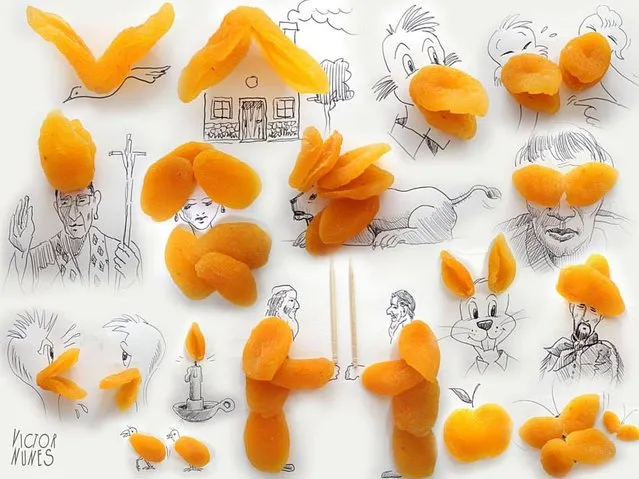
Food In Faces By Victor Nunes

Artist Victor Nunes combines every-day objects with simple illustrations to turn them into pictures of faces, animals and other playful scenes. His images invite us to look at the world differently and find creative images in our surroundings. Nunes’ art is a great example of pareidolia, which is our propensity to give meaning to random objects (like in this post about seeing faces in random objects). It’s the reason why we associate a smiley face with a human face and why some of Nunes’ pieces of popcorn or bread resemble faces to us.
Details
02 Feb 2014 11:58:00
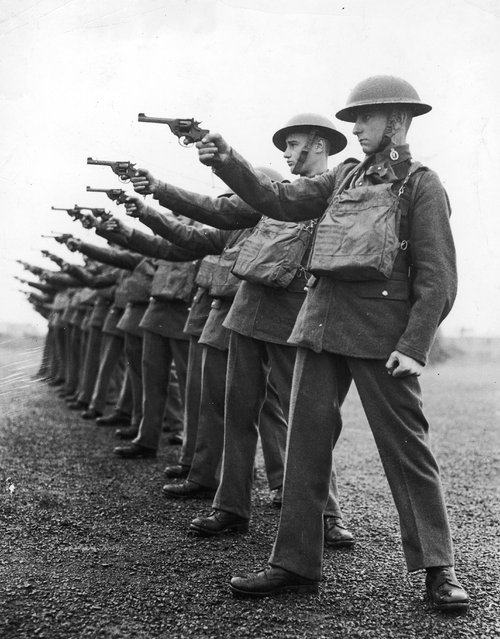
A line of soldiers firing handguns during a training session, circa 1920.  (Photo by Keystone)

A line of soldiers firing handguns during a training session, circa 1920. (Photo by Keystone). P.S. All pictures are presented in high resolution.
Details
03 Sep 2012 10:22:00
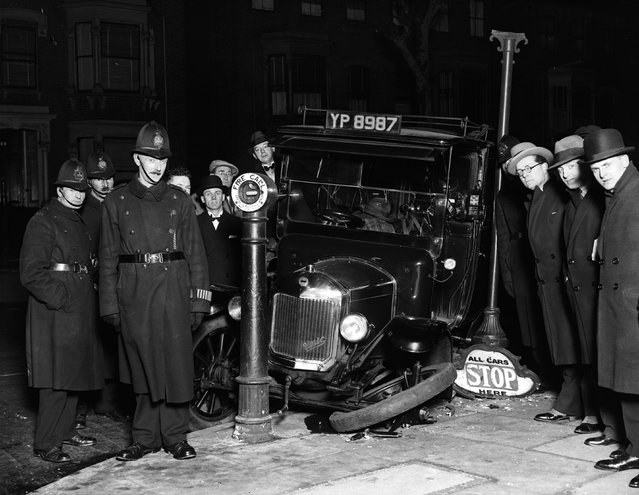
A group of policemen and passers-by survey the wreckage of a taxi in Stoke Newington, London. Its front wheel lies on the pavement next to a sign bearing the ironic instruction “All Cars Stop Here”. 14th February 1930. (Photo by Fox Photos)

A group of policemen and passers-by survey the wreckage of a taxi in Stoke Newington, London. Its front wheel lies on the pavement next to a sign bearing the ironic instruction “All Cars Stop Here”. 14th February 1930. (Photo by Fox Photos). P.S. All pictures are presented in high resolution.
Details
09 Sep 2012 09:31:00
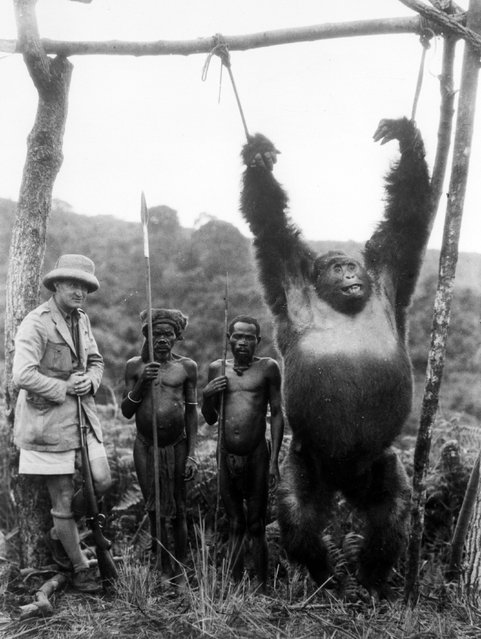
British Captain A. Gatti and two pygmies with a 500lb gorilla strung from a pole, which the captain shot in the Tchibinda forest in the Lake Kivu region, Democratic Republic of the Congo, circa 1930. (Photo by General Photographic Agency)

British captain A. Gatti and two pygmies with a 500lb gorilla strung from a pole, which the captain shot in the Tchibinda forest in the Lake Kivu region, Democratic Republic of the Congo, circa 1930. (Photo by General Photographic Agency). P.S. All pictures are presented in high resolution.
Details
18 Sep 2012 09:35:00
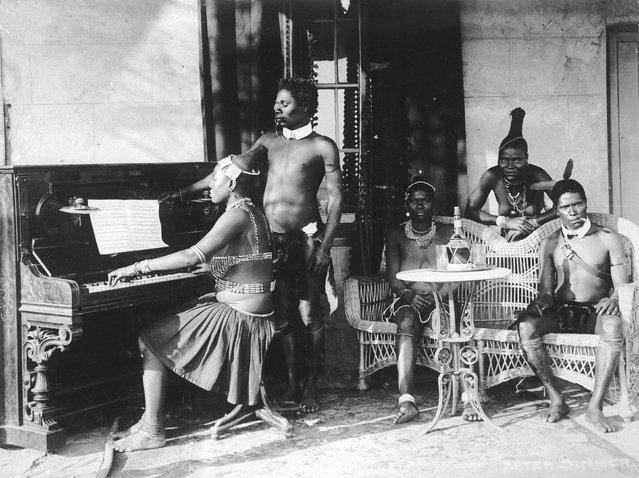
circa 1925:  A Zulu woman playing the piano while a group of others sit and listen.  (Photo by General Photographic Agency/Getty Images)

“The Zulu are the largest South African ethnic group, with an estimated 10–11 million people living mainly in the province of KwaZulu-Natal. Small numbers also live in Zimbabwe, Zambia, and Mozambique. Their language, Zulu, is a Bantu language; more specifically, part of the Nguni subgroup. The Zulu Kingdom played a major role in South African history during the 19th and 20th centuries. Under apartheid, Zulu people were classed as third-class citizens and suffered from state-sanctioned discrimination. They remain today the most numerous ethnic group in South Africa, and now have equal rights along with all other citizens”. – Wikipedia.

Photo: A Zulu woman playing the piano while a group of others sit and listen (to put it briefly, Englishmen scoff over Zulu). South Africa, circa 1925. (Photo by General Photographic Agency)

Details
03 Feb 2014 09:40:00