Loading...
Done
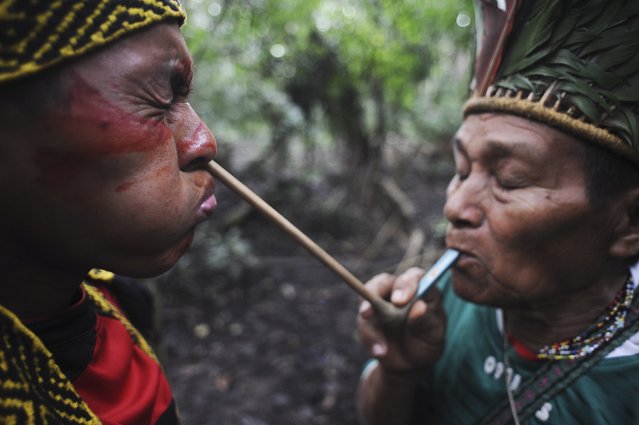
A spiritual leader (R) of the Huni Kui Indian tribe blows an herbal powder into the nose of a tribal member during a ceremony outside the village of Novo Segredo along the Envira river of Brazil's northwestern Acre state, March 9, 2014. (Photo by Lunae Parracho/Reuters)

A spiritual leader (R) of the Huni Kui Indian tribe blows an herbal powder into the nose of a tribal member during a ceremony outside the village of Novo Segredo along the Envira river of Brazil's northwestern Acre state, March 9, 2014. Many indigenous groups, including the Huni Kui, Ashaninka, and Madija, live in villages in the Brazilian rainforest near the border with Peru. (Photo by Lunae Parracho/Reuters)
Details
04 Apr 2014 08:18:00
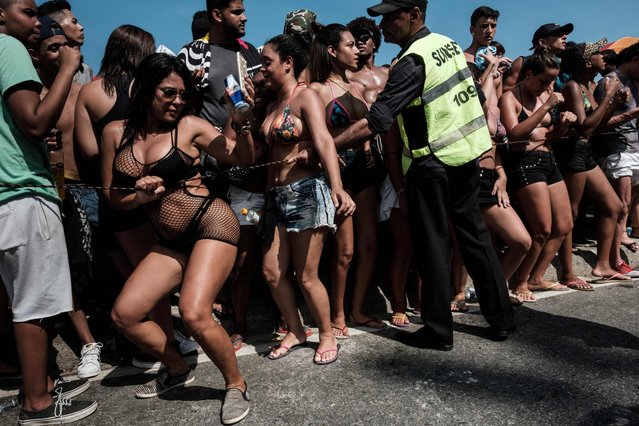
Revellers take part in the 21st Rio LGBT pride parade at Copacabana beach in Rio de Janeiro, Brazil, on December 11, 2016. (Photo by Yasuyoshi Chiba/AFP Photo)

Revellers take part in the 21st Rio LGBT pride parade at Copacabana beach in Rio de Janeiro, Brazil, on December 11, 2016. (Photo by Yasuyoshi Chiba/AFP Photo)
Details
12 Dec 2016 10:36:00
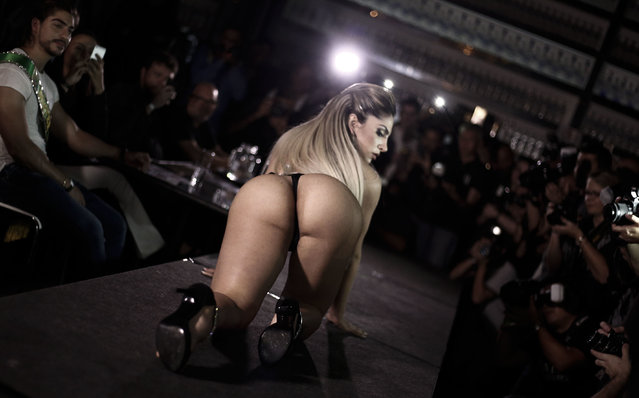
A competitor poses on the catwalk during the Miss Bumbum Brazil 2016 pageant in Sao Paulo, Brazil on November 9, 2016. (Photo by Miguel Schincariol/AFP Photo)

A competitor poses on the catwalk during the Miss Bumbum Brazil 2016 pageant in Sao Paulo, Brazil on November 9, 2016. Fifteen candidates compete in the annual pageant to select Brazil's sexiest female rear end. (Photo by Miguel Schincariol/AFP Photo)
Details
14 Nov 2017 07:51:00
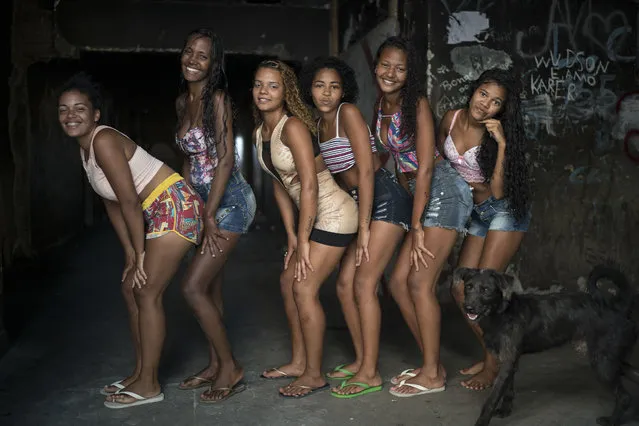
In this September 14, 2017 photo, young women pose for a photo inside their squatter building that used to house the Brazilian Institute of Geography and Statistics (IBGE) in the Mangueira slum of Rio de Janeiro, Brazil. Many lower-middle class Brazilians who gained ground during the boom years have since slid back closer to the poverty line. (Photo by Felipe Dana/AP Photo)

In this September 14, 2017 photo, young women pose for a photo inside their squatter building that used to house the Brazilian Institute of Geography and Statistics (IBGE) in the Mangueira slum of Rio de Janeiro, Brazil. Many lower-middle class Brazilians who gained ground during the boom years have since slid back closer to the poverty line. (Photo by Felipe Dana/AP Photo)
Details
14 Dec 2017 06:54:00
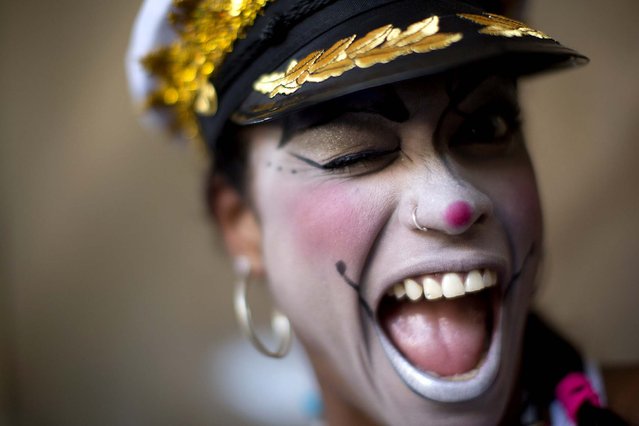
A woman participates in the “Carnaval na Central” block party in Rio. (Photo by Felipe Dana/Associated Press)

A woman participates in the “Carnaval na Central” block party in Rio. (Photo by Felipe Dana/Associated Press)
Details
10 Feb 2013 15:48:00
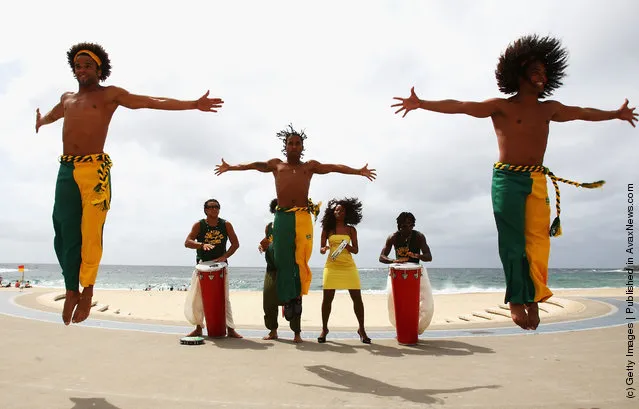
Warriors Of Brazil: Capoeira Spectacular

“Capoeira is a Brazilian art form that combines elements of martial arts, sports, and music. It was created in Brazil mainly by descendants of African slaves with Brazilian native influences, probably beginning in the 16th century. It is known by quick and complex moves, using mainly power kicks and quick leg sweeps, with some ground and aerial acrobatics, knee strikes, take-downs, elbow strikes, punches and headbutts. The word capoeira comes from Tupi, referring to the areas of low vegetation in the Brazilian interior”. – Wikipedia

Photo: The Warriors of Brazil perform on Coogee Beach on November 23, 2009 in Sydney, Australia. The Warriors of Brazil show is a spectacular stage show which combines the extraordinary martial art of Capoeira with the uplifting music and dance of Carnival. (Photo by Ryan Pierse/Getty Images)
Details
19 Sep 2011 14:13:00
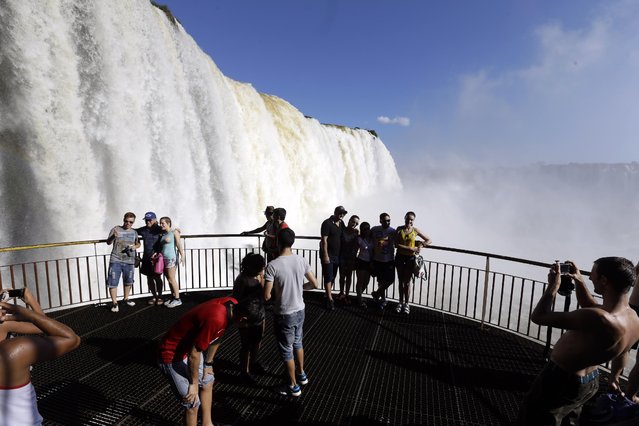
In this March 14, 2015 photo, tourists take pictures from a viewing area at Iguazu Falls in Brazil. From walkways and bridges, viewers can count 270 water falls almost 100 meters (330 feet) high. (Photo by Jorge Saenz/AP Photo)

In this March 14, 2015 photo, tourists take pictures from a viewing area at Iguazu Falls in Brazil. From walkways and bridges, viewers can count 270 water falls almost 100 meters (330 feet) high. (Photo by Jorge Saenz/AP Photo)
Details
25 Mar 2015 11:26:00
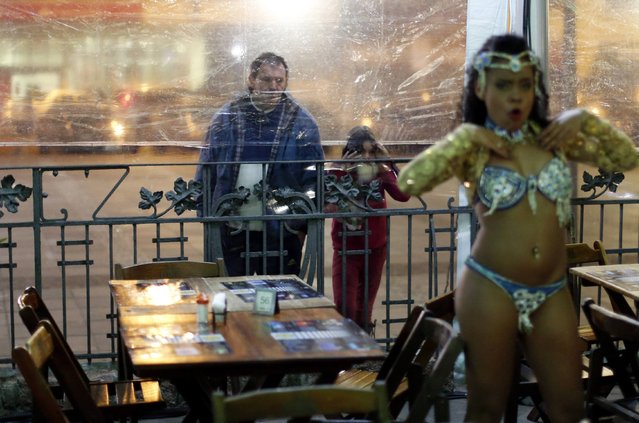
People watch from outside as a dancer performs inside a bar in Porto Alegre June 21, 2014. In a project called “On The Sidelines” Reuters photographers share pictures showing their own quirky and creative view of the 2014 World Cup in Brazil. (Photo by Marko Djurica/Reuters)

As national soccer teams and the photographers who have been covering them start to trickle home from the Brazil World Cup, it’s time to revisit the “On the Sidelines” project. This Reuters Pictures project was billed as a chance for photographers to share “their own quirky and creative view of the World Cup”. Photo: People watch from outside as a dancer performs inside a bar in Porto Alegre June 21, 2014. In a project called “On The Sidelines” Reuters photographers share pictures showing their own quirky and creative view of the 2014 World Cup in Brazil. (Photo by Marko Djurica/Reuters)
Details
09 Jul 2014 13:04:00