Loading...
Done
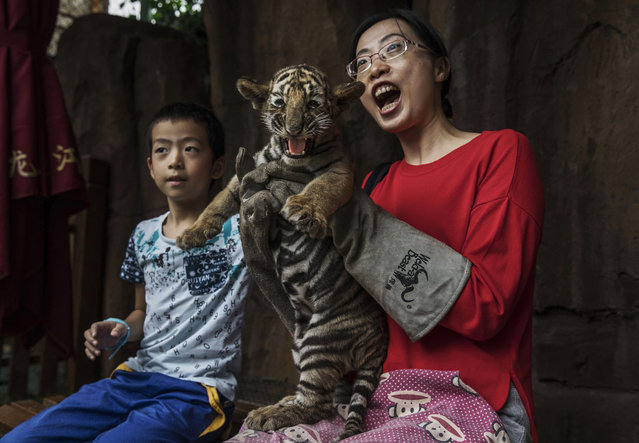
A Chinese tourist wears protective gloves as she holds a baby Siberian tiger as they pose for pictures at the Heilongjiang Siberian Tiger Park on August 16, 2017 in Harbin, northern China. (Photo by Kevin Frayer/Getty Images)

A Chinese tourist wears protective gloves as she holds a baby Siberian tiger as they pose for pictures at the Heilongjiang Siberian Tiger Park on August 16, 2017 in Harbin, northern China. The center is one of two Siberian tiger parks in the Chinese province of Heilongjiang, about 500 kilometers (300 miles) from the border with Russia. It is considered the world's largest for breeding the Siberian, or Amur, tiger which is listed as endangered by the World Wildlife Federation. (Photo by Kevin Frayer/Getty Images)
Details
23 Aug 2017 08:29:00
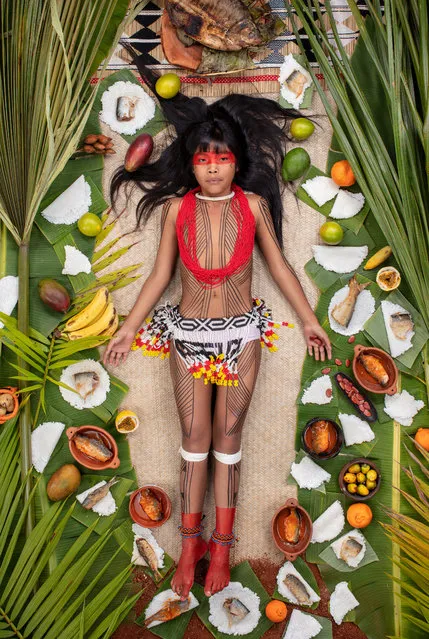
Kawakanih Yawalapiti, 9, Upper Xingu region of Mato Grosso, Brazil, 2018: Kawakanih lives with her tribe, the Yawalapiti, in Xingu national park, a preserve in the Amazon basin of Brazil. The Yawalapiti collect seeds to preserve species unique to their ecosystem, which lies between the rain forest and savannah. Kawakanih’s diet is simple, consisting mainly of fish, cassava, porridge, fruit and nuts. “It takes five minutes to catch dinner”, says Kawakanih. “When you’re hungry, you just go to the river with your net”. (Photo by Gregg Segal/The Guardian)

Photographer Gregg Segal travelled the world to document children and the food they eat in a week. Partly inspired by the increasing problems of childhood obesity, he tracked traditional regional diets as yet unaffected by globalisation, and ironically, found that the healthiest diets were often eaten by the least well off. (Photo by Gregg Segal/The Guardian)
Details
03 Jul 2019 00:03:00
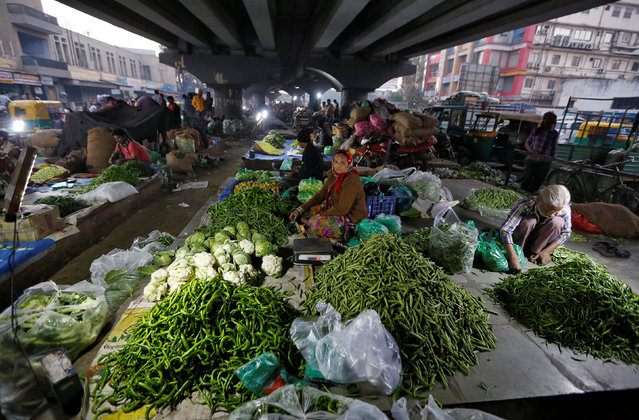
Vendors selling vegetables wait for customers under a flyover in the early morning in Ahmedabad, February 1, 2017. (Photo by Amit Dave/Reuters)

Vendors selling vegetables wait for customers under a flyover in the early morning in Ahmedabad, India on February 1, 2017. (Photo by Amit Dave/Reuters)
Details
25 Mar 2017 08:11:00
Of all the species affected by river regulation in Australia, the ibis is one of the few that has changed its behaviour and moved to coastal cities. (Photo by Rick Stevens/The Guardian)

Tip turkey, dumpster chook, rubbish raptor – the Australian white ibis goes by many unflattering names. But it is a true urban success story, scavenging to survive in cities across Australia as wetlands have been lost. Wildlife photographer Rick Stevens captured them in Sydney. Here: Of all the species affected by river regulation in Australia, the ibis is one of the few that has changed its behaviour and moved to coastal cities. (Photo by Rick Stevens/The Guardian)
Details
11 Apr 2018 00:03:00
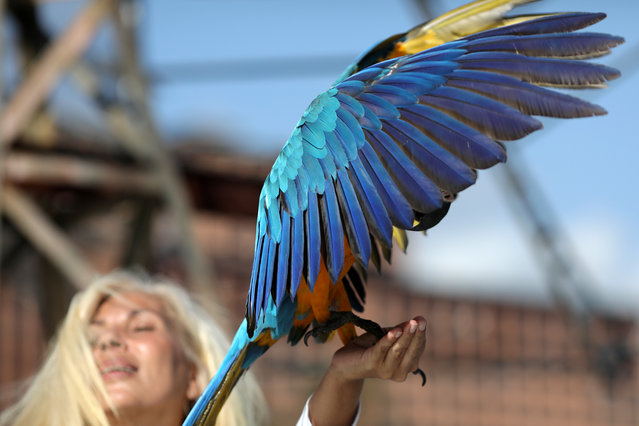
A macaw lands in Carmen Borges' hand while she stays at a rooftop of a building in Caracas, Venezuela, June 12, 2019. (Photo by Manaure Quintero/Reuters)

Looking for an escape from the daily realities of crisis-ridden Venezuela, Carmen Gomez finds solace receiving visitors on the roof of her Caracas apartment building every morning: groups of blue and gold macaws that arrive at daybreak. Here: A macaw lands in Carmen Borges' hand while she stays at a rooftop of a building in Caracas, Venezuela, June 12, 2019. (Photo by Manaure Quintero/Reuters)
Details
24 Jul 2019 00:03:00
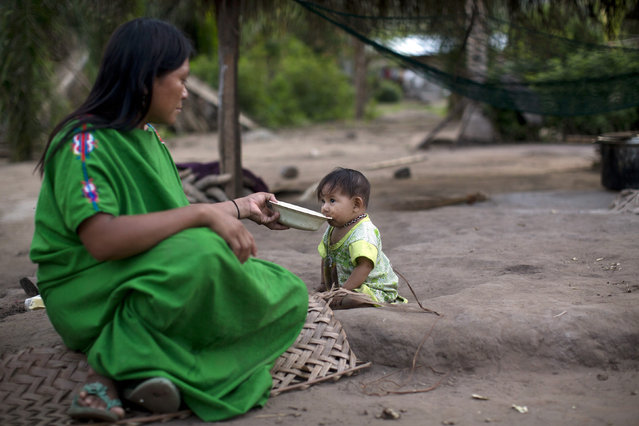
In this November 19, 2015 photo, Ester Melendez feeds banana porridge to her nine-month-old daughter Dina, in Pichiquia, an Ashaninka indigenous community in Peru's Junin region. Incursions and assaults by loggers, miners, colonists and leftist guerrillas have reduced the lands of the Ashaninka people in the Peruvian Amazon, leaving many of the 97,000 members of the group malnourished, despite efforts by the government and independent organizations to help. (Photo by Rodrigo Abd/AP Photo)

In this November 19, 2015 photo, Ester Melendez feeds banana porridge to her nine-month-old daughter Dina, in Pichiquia, an Ashaninka indigenous community in Peru's Junin region. Incursions and assaults by loggers, miners, colonists and leftist guerrillas have reduced the lands of the Ashaninka people in the Peruvian Amazon, leaving many of the 97,000 members of the group malnourished, despite efforts by the government and independent organizations to help. (Photo by Rodrigo Abd/AP Photo)
Details
10 Dec 2015 08:00:00
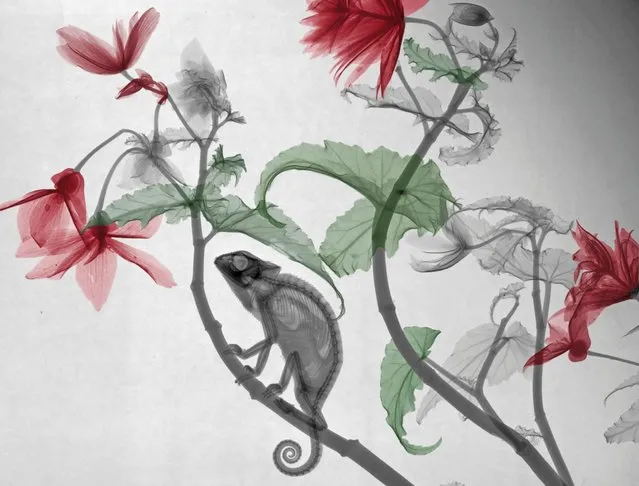
“Chameleon and Begonia”. (Photo by Arie van't Riet)

Physicist Arie van't Riet uses a series of duel X-ray cameras to capture flowers, plants and small animals in living dioramas. The x-rays are then finished and colorized in Photoshop. Giving way to some breathtaking nature scenes. Photo: “Chameleon and Begonia”. (Photo by Arie van't Riet)
Details
13 Mar 2014 05:45:00
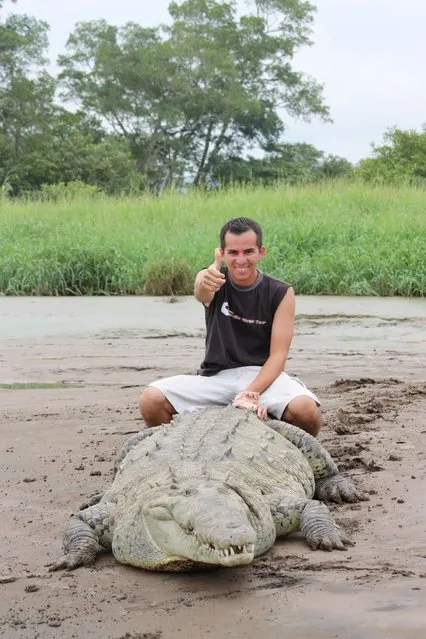
A tour guide shows a thumbs up as he sits on top of a crocodile on the Tarcoles river in Tarcoles, Costa Rica. (Photo and caption by Barcroft Media)

To most of us, hand-feeding crocodiles might sound like a one-way ticket to a watery grave. But for Jose Eduardo Chaves Salas, 32, coming within inches of the fearsome creatures’ razor-sharp teeth is all in a day’s work. He runs Jose's Crocodile River Tour on the Tarcoles River in Costa Rica, where tourists can watch him feed crocs up to 17 feet long. Photo: A tour guide shows a thumbs up as he sits on top of a crocodile on the Tarcoles river in Tarcoles, Costa Rica. (Photo and caption by Barcroft Media)
Details
20 Oct 2013 09:06:00