Loading...
Done
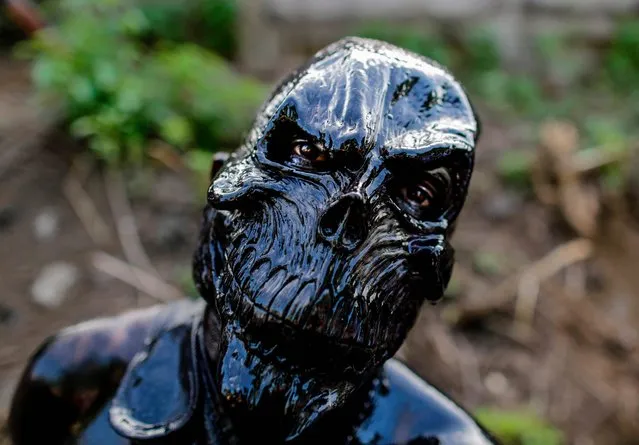
A catholic faithful smeared in burnt oil, takes part in the opening of the ten-day celebration of the Santo Domingo de Guzman festival in Managua, on August 1, 2019. (Photo by Inti Ocon/AFP Photo)

A catholic faithful smeared in burnt oil, takes part in the opening of the ten-day celebration of the Santo Domingo de Guzman festival in Managua, on August 1, 2019. In Central America the black devil, or El Cadejo, is an evil dog-like spirit with glowing red eyes that locals believe eats new born puppies. (Photo by Inti Ocon/AFP Photo)
Details
06 Aug 2019 00:01:00
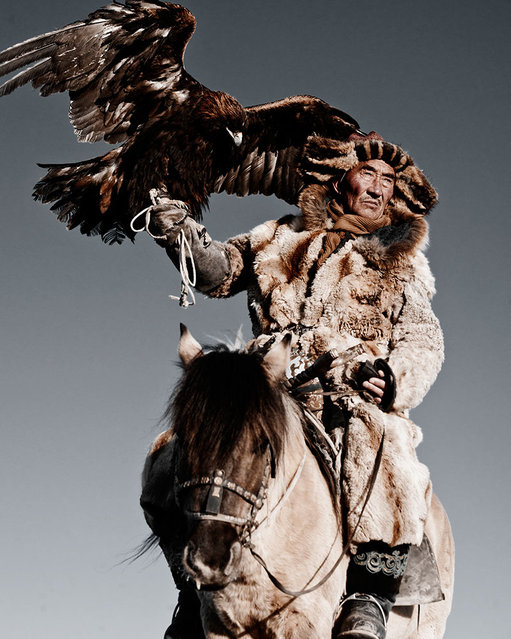
Fine Horses And Fierce Eagles Are The wings Of The Kazakh

The Kazakhs are the descendants of Turkic, Mongolic and Indo-Iranian tribes and Huns that populated the territory between Siberia and the Black Sea. They are a semi-nomadic people and have roamed the mountains and valleys of western Mongolia with their herds since the 19th century. The ancient art of eagle hunting is one of many traditions and skills that the Kazakhs have, in recent decades, been able to hold on to. They rely on their clan and herds, believing in pre-Islamic cults of the sky, the ancestors, fire and the supernatural forces of good and evil spirits.
Details
20 Feb 2014 12:12:00


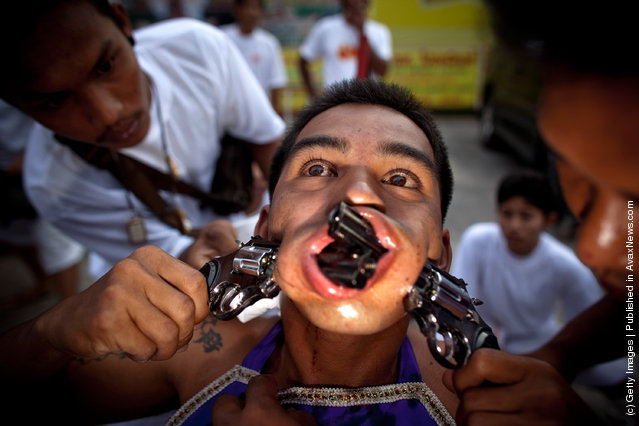
A devotee of the Chinese shrine of Samkong, pierces his cheeks with toy guns during a procession of Vegetarian Festival on October 11, 2010 in Phuket, Thailand. Ritual Vegetarianism in Phuket Island traces it roots back to the early 1800's. The festival begins on the first evening of the ninth lunar month and lasts for nine days. Participants in the festival perform acts of body piercing as a means of shifting evil spirits from individuals onto themselves and bring the community good luck. (Photo by Athit Perawongmetha/Getty Images)
Details
09 Jul 2011 11:55:00
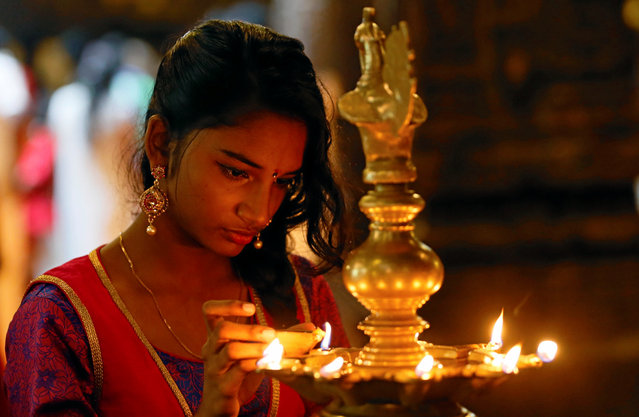
A devotee lights oil lamps at a religious ceremony during the Diwali or Deepavali festival at a Hindu temple in Colombo, Sri Lanka October 18, 2017. (Photo by Dinuka Liyanawatte/Reuters)

A devotee lights oil lamps at a religious ceremony during the Diwali or Deepavali festival at a Hindu temple in Colombo, Sri Lanka October 18, 2017. Diwali, the Hindu festival of lights, marks the triumph of good over evil, and commemorates the return of Hindu deity Rama to his birthplace Ayodhya after victory against the demon king Ravana. (Photo by Dinuka Liyanawatte/Reuters)
Details
20 Oct 2017 06:26:00
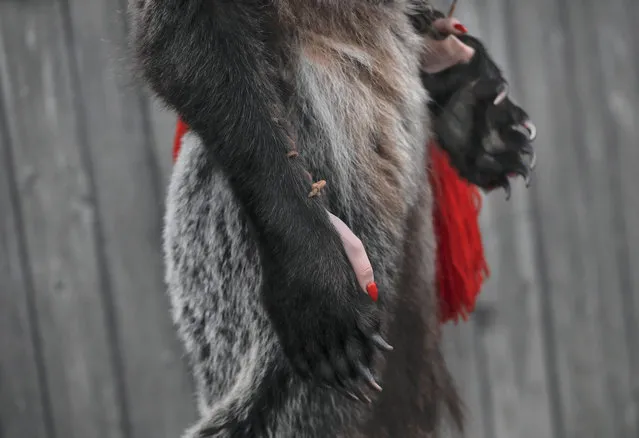
In this Saturday, December 30, 2017, picture a girl wearing a bear fur costume takes part in an annual bear parade in Comanesti, Romania. (Photo by Vadim Ghirda/AP Photo)

In this Saturday, December 30, 2017, picture a girl wearing a bear fur costume takes part in an annual bear parade in Comanesti, Romania. It's a tradition that originated in pre-Christian times, when dancers wearing colored costumes or animal furs went from house to house in villages, singing and dancing to ward off evil. (Photo by Vadim Ghirda/AP Photo)
Details
08 Jan 2018 07:05:00
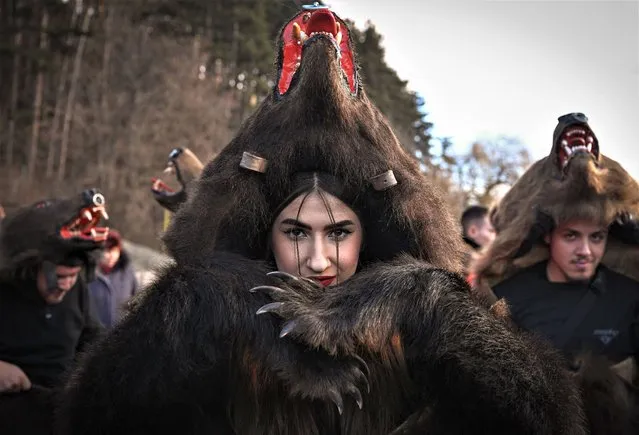
A reveller wearing a bearskin costume poses during the Bearskin Parade in Comanesti, Romania, on December 30, 2022. More than two hundred “bears” and dozens of musicians, surrounded by police and tourists, took part in the end-of-the-year parade. Young men and women dressed in real bearskin and traditional costumes paraded to chase away the evil spirits of the coming year. In all regions of Romania similar events exist but it is in this historical region of Moldova that they are the most developed. Comanesti has become the centre, attracting more and more troupes of dancers every year. (Photo by Daniel Mihailescu/AFP Photo)

A reveller wearing a bearskin costume poses during the Bearskin Parade in Comanesti, Romania, on December 30, 2022. More than two hundred “bears” and dozens of musicians, surrounded by police and tourists, took part in the end-of-the-year parade. Young men and women dressed in real bearskin and traditional costumes paraded to chase away the evil spirits of the coming year. In all regions of Romania similar events exist but it is in this historical region of Moldova that they are the most developed. Comanesti has become the centre, attracting more and more troupes of dancers every year. (Photo by Daniel Mihailescu/AFP Photo)
Details
07 Mar 2024 06:20:00
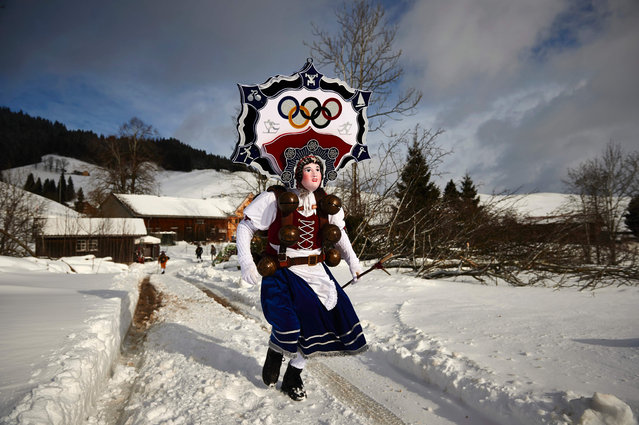
A leader “Rolli” of a yodel group “Schuppel” runs in the snow in front of a farmstead during the “Silvesterchlausen” in the early morning in Urnaesch in the Swiss canton Appenzell Ausserroden on January 13, 2017. The “Silvesterchlausen” is a tradition of the Swiss canton Appenzell, where colorfull characters organized in groups called “Schuppel”, chase out the old year and welcome the new one. They run all day long from farmstead to farmstead, gather together to sing a jodel and great the farmers. A “Schuppel” consists of some “Schelli” and two “Rolli”, sometimes with female dresses and nice scenes over the head, despite the dress all participants are males. The Silversterchlausen run twice a year, first for the new Silvester on December 31, and then again on January 13, for the old Silvester following the Julian calendar. (Photo by Michael Buholzer/AFP Photo)

A leader “Rolli” of a yodel group “Schuppel” runs in the snow in front of a farmstead during the “Silvesterchlausen” in the early morning in Urnaesch in the Swiss canton Appenzell Ausserroden on January 13, 2017. (Photo by Michael Buholzer/AFP Photo)
Details
14 Jan 2017 12:41:00
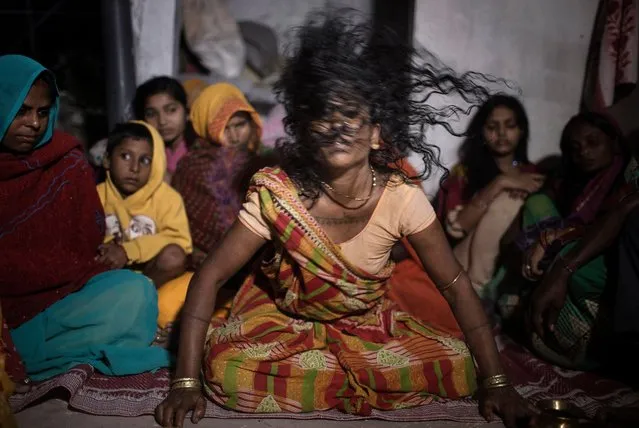
Marani Devi Chaudhary (C), aged 40, performs a ritual in front of shaman Paltan Yadav (unseen) at her home in Rajaur village in Dhanusha district, Nepal, 02 November 2017. The shaman identified Marani Devi to be possessed by their lineage god who was dissatisfied by their worship is thought by the family to have caused them misfortune and is even feared lead to their death. Therefore Marani Devi spent 1,500 USD to perform a healing ritual at the Ghost Festival held at the banks of Kamala River in Dhanusha district two days later. Every family or community has their own sacred god, called 'Kuldevta' in Nepali which means family deity or lineage god. Only family members or people within communities of the same caste can worship to the deity. They have their own rules and regulations of worship which varies from one family and community to another. Being unable to follow the rules and regulations or carry out worship is believed to cause misfortune. (Photo by Narendra Shrestha/EPA/EFE)

Marani Devi Chaudhary (C), aged 40, performs a ritual in front of shaman Paltan Yadav (unseen) at her home in Rajaur village in Dhanusha district, Nepal, 02 November 2017. The shaman identified Marani Devi to be possessed by their lineage god who was dissatisfied by their worship is thought by the family to have caused them misfortune and is even feared lead to their death. (Photo by Narendra Shrestha/EPA/EFE)
Details
17 Nov 2017 06:53:00