Loading...
Done
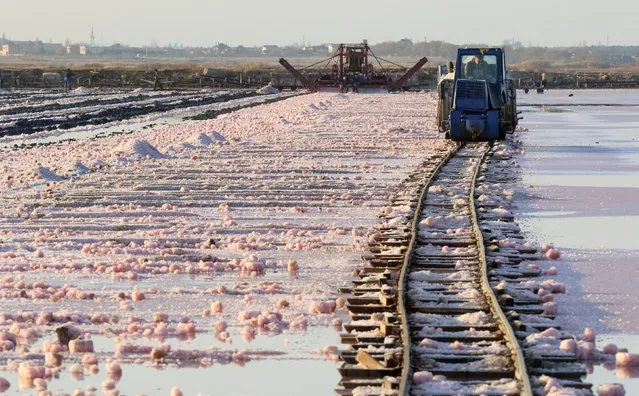
A train drives along a field at a salt production site at the Sasyk-Sivash lake near the city of Yevpatoria, Crimea, November 14, 2017. (Photo by Pavel Rebrov/Reuters)

A train drives along a field at a salt production site at the Sasyk-Sivash lake near the city of Yevpatoria, Crimea, November 14, 2017. A saltwater lagoon known as Lake Sasyk-Sivash on Ukraine's Crimea peninsula is the source of a rare resource: pink salt. The mineral is tinted by tiny algae that produce the pigment beta-carotene. Each autumn, seasonal workers collect thousands of tons of pink salt for processing and export. (Photo by Pavel Rebrov/Reuters)
Details
16 Nov 2017 08:18:00
Workhorse In The past

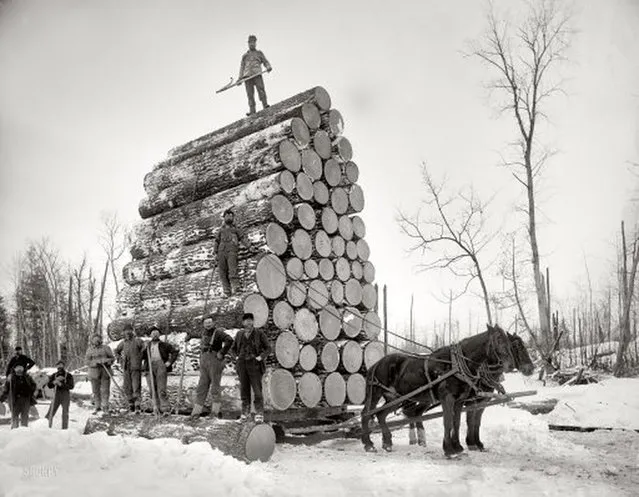
This picture was taken in the 1890's and shows a group of loggers hauling a heavy load. It is hard to even picture how they got the logs stacked that high. It is also hard to imagine how they keep it from tipping over.
Details
26 Nov 2013 11:16:00
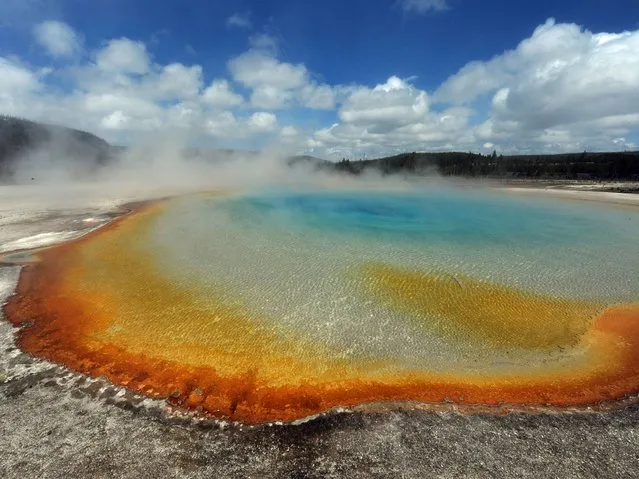
View of the “Sunset Lake” hot spring with it's unique colors caused by brown, orange and yellow algae-like bacteria called Thermophiles, that thrive in the cooling water turning the vivid aqua-blues to a murkier greenish brown, in the Yellowstone National Park, Wyoming on June 1, 2011. (Photo by Mark Ralston/AFP Photo)

View of the “Sunset Lake” hot spring with it's unique colors caused by brown, orange and yellow algae-like bacteria called Thermophiles, that thrive in the cooling water turning the vivid aqua-blues to a murkier greenish brown, in the Yellowstone National Park, Wyoming on June 1, 2011. Yellowstone National Park, was established by the U.S. Congress and signed into law by President Grant on March 1, 1872. The park is located primarily in the U.S. state of Wyoming, though it also extends into Montana and Idaho and was the first national park in the world. It is known for its wildlife and its many geothermal features, especially the Old Faithful Geyser. (Photo by Mark Ralston/AFP Photo)
Details
06 Apr 2014 08:02:00
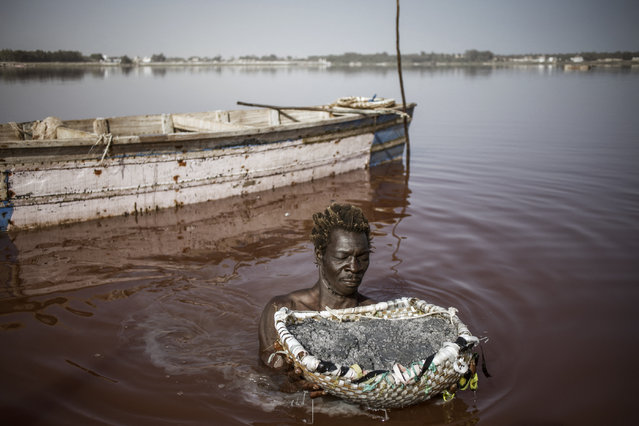
Toure, a Gambian salt harvester, holds a basket filled with  the salt collected from the crust of the bottom of the Lake Retba (Pink Lake) in Senegal on March 16, 2021. Lake Retba, divided from the Atlantic Ocean by a narrow corridor of dunes, owes its name to the pink waters caused by the Dunaliella salina algae and is known for its high salt content, up to 40% in some areas. (Photo by Marco Longari/AFP Photo)

Toure, a Gambian salt harvester, holds a basket filled with the salt collected from the crust of the bottom of the Lake Retba (Pink Lake) in Senegal on March 16, 2021. Lake Retba, divided from the Atlantic Ocean by a narrow corridor of dunes, owes its name to the pink waters caused by the Dunaliella salina algae and is known for its high salt content, up to 40% in some areas. (Photo by Marco Longari/AFP Photo)
Details
24 Mar 2021 10:29:00
Friends and relatives of Palestinian Fulla al-Masalma, 16, mourn during her funeral in the village of Beit Awa, west of Hebron, in the occupied West Bank on November 15, 2022. Israeli forces shot dead the Palestinian teenager in the occupied West Bank the previous day, the Palestinian health ministry said, while the army confirmed raids and a shooting incident in the area. The Israeli Defence Forces reported that its soldiers had fired at a car that was speeding toward them and that “hits were identified”, but without confirming the fatality. (Photo by Hazem Bader/AFP Photo)

Friends and relatives of Palestinian Fulla al-Masalma, 16, mourn during her funeral in the village of Beit Awa, west of Hebron, in the occupied West Bank on November 15, 2022. Israeli forces shot dead the Palestinian teenager in the occupied West Bank the previous day, the Palestinian health ministry said, while the army confirmed raids and a shooting incident in the area. The Israeli Defence Forces reported that its soldiers had fired at a car that was speeding toward them and that “hits were identified”, but without confirming the fatality. (Photo by Hazem Bader/AFP Photo)
Details
02 Dec 2022 03:43:00
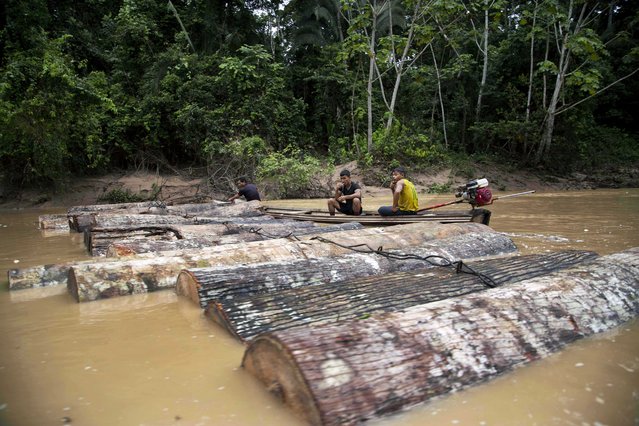
In this March 17, 2015 photo, Ashaninka Indian men, identified by locals as illegal loggers, tie tree trunks together to move them along the Putaya River near the hamlet of Saweto, Peru. Illegal logging persists unabated in this remote Amazon community where four indigenous leaders who resisted it were slain in September. The Putaya River is the waterway that transports felled trees, cut both legally and illegally, to the city of Pucallpa. (Photo by Martin Mejia/AP Photo)

In this March 17, 2015 photo, Ashaninka Indian men, identified by locals as illegal loggers, tie tree trunks together to move them along the Putaya River near the hamlet of Saweto, Peru. Illegal logging persists unabated in this remote Amazon community where four indigenous leaders who resisted it were slain in September. The Putaya River is the waterway that transports felled trees, cut both legally and illegally, to the city of Pucallpa. (Photo by Martin Mejia/AP Photo)
Details
27 Mar 2015 12:40:00
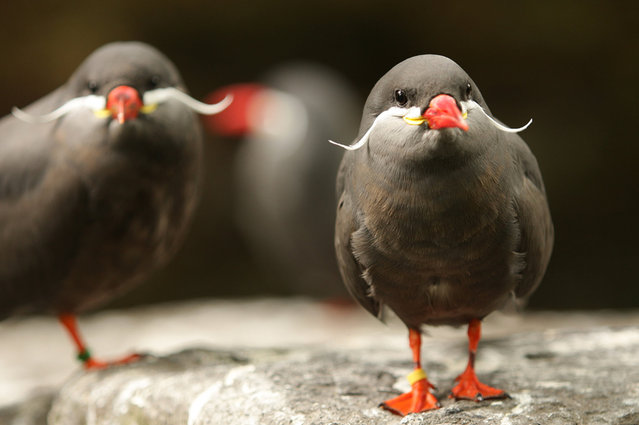
Beard Bird Inca Tern

The Inca Tern is a seabird in the family Sternidae. It is the only member of the genus Larosterna. This uniquely plumaged bird breeds on the coasts of Peru and Chile, and is restricted to the Humboldt current. It can be identified by its dark grey body, white moustache on the both sides of its head, and red-orange beak and feet.
Details
21 Apr 2013 17:02:00
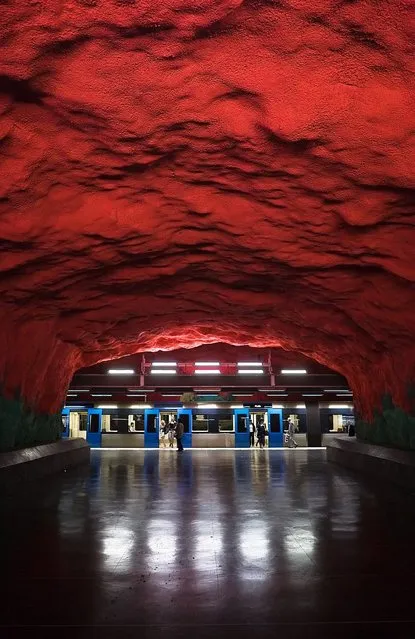
Stockholm metro

The Stockholm metro (Swedish: Stockholms tunnelbana) is a metro system in Stockholm, Sweden. The first line opened in 1950, and today the system has 100 stations in use, of which 47 are underground and 53 above ground. There are seven lines numbered from 10 to 19, in three groups identified by a color: the Green, Red and Blue lines. Each color line has two or three numbered lines on shared sections through the Stockholm City Centre.
Details
12 Sep 2012 05:10:00