Loading...
Done
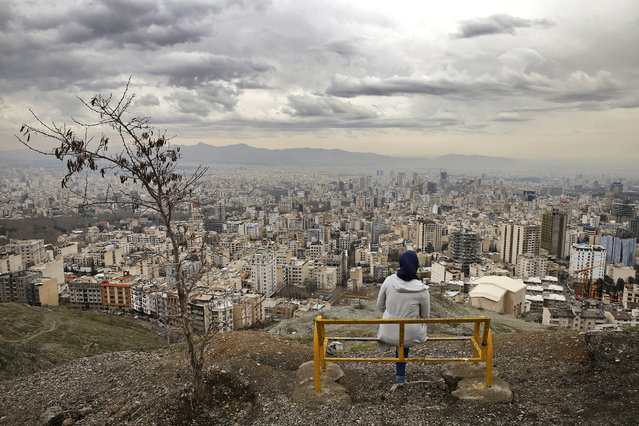
A woman spends her time outdoors to observe the ancient festival of Sizdeh Bedar, an annual public picnic day on the 13th day of the Iranian new year, at the Tochal mountainous area northern Tehran, Iran, Sunday, April, 2, 2017. Sizdeh Bedar, which comes from the Farsi words for “thirteen” and “day out”, is a legacy from Iran's pre-Islamic past that hard-liners in the Islamic Republic never managed to erase from calendars. (Photo by Ebrahim Noroozi/AP Photo)

A woman spends her time outdoors to observe the ancient festival of Sizdeh Bedar, an annual public picnic day on the 13th day of the Iranian new year, at the Tochal mountainous area northern Tehran, Iran, Sunday, April, 2, 2017. Sizdeh Bedar, which comes from the Farsi words for “thirteen” and “day out”, is a legacy from Iran's pre-Islamic past that hard-liners in the Islamic Republic never managed to erase from calendars. (Photo by Ebrahim Noroozi/AP Photo)
Details
21 Apr 2017 07:38:00
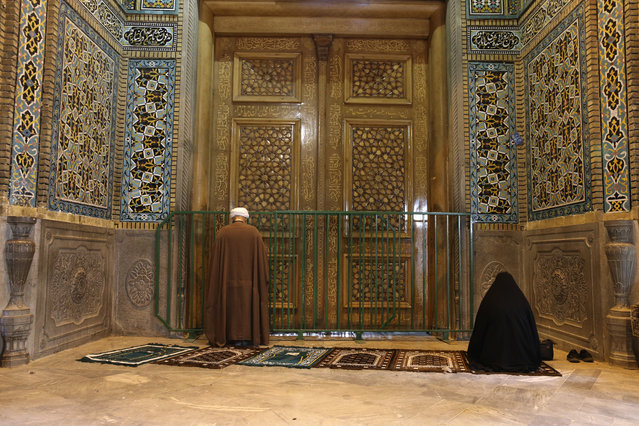
A cleric and a woman pray behind a closed door of Masoume shrine in the city of Qom, some 80 miles (125 kilometers) south of the capital Tehran, Iran, Monday, March 16, 2020. On Monday, Iran closed the Masoume shrine, a major pilgrimage site in the city of Qom, the epicenter of the country's new coronavirus outbreak. Authorities were already restricting access and barring pilgrims from kissing or touching the shrine, but it had remained open. (Photo by AP Photo)

A cleric and a woman pray behind a closed door of Masoume shrine in the city of Qom, some 80 miles (125 kilometers) south of the capital Tehran, Iran, Monday, March 16, 2020. On Monday, Iran closed the Masoume shrine, a major pilgrimage site in the city of Qom, the epicenter of the country's new coronavirus outbreak. Authorities were already restricting access and barring pilgrims from kissing or touching the shrine, but it had remained open. (Photo by AP Photo)
Details
23 Mar 2020 00:01:00
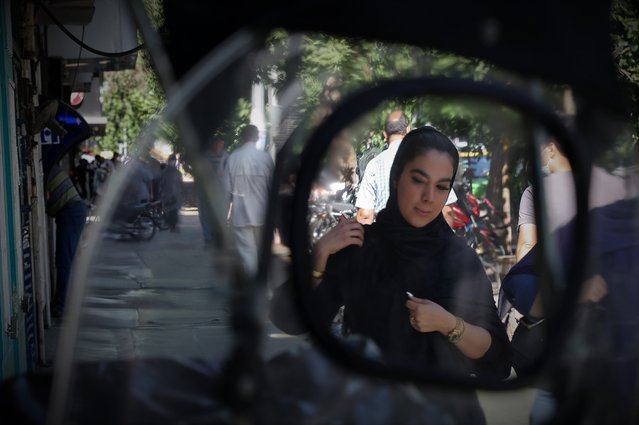
A young Iranian woman walks in Tehran on June 14, 2021, ahead of the June 18 presidential elections. Iran is gearing up for a presidential election on June 18 but many young people are more focussed on the daily struggle to survive and their dreams for the future. Jobs are scarce in a recession-hit economy battered by sanctions, a crisis exacerbated by the region's worst outbreak of the Covid pandemic. (Photo by Atta Kenare/AFP Photo)

A young Iranian woman walks in Tehran on June 14, 2021, ahead of the June 18 presidential elections. Iran is gearing up for a presidential election on June 18 but many young people are more focussed on the daily struggle to survive and their dreams for the future. Jobs are scarce in a recession-hit economy battered by sanctions, a crisis exacerbated by the region's worst outbreak of the Covid pandemic. (Photo by Atta Kenare/AFP Photo)
Details
24 Jun 2021 09:28:00
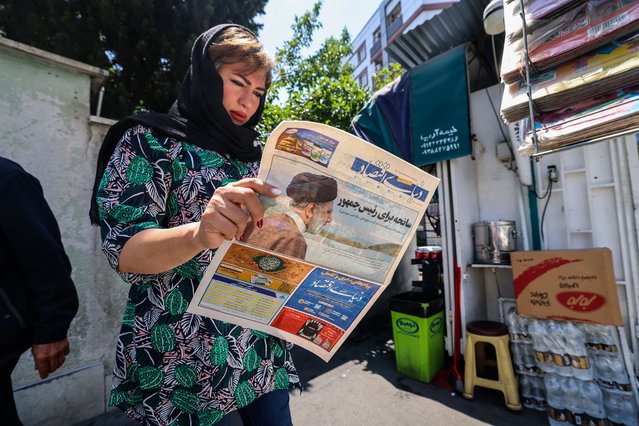
A woman reads a newspaper with a front-page report on the crash of the Iranian president's helicopter outside a kiosk in Tehran on May 20, 2024. Iranian President Ebrahim Raisi was declared dead on May 20 after rescue teams found his crashed helicopter in a fog-shrouded western mountain region, sparking mourning in the Islamic republic. (Photo by Atta Kenare/AFP Photo)

A woman reads a newspaper with a front-page report on the crash of the Iranian president's helicopter outside a kiosk in Tehran on May 20, 2024. Iranian President Ebrahim Raisi was declared dead on May 20 after rescue teams found his crashed helicopter in a fog-shrouded western mountain region, sparking mourning in the Islamic republic. (Photo by Atta Kenare/AFP Photo)
Details
25 May 2024 01:38:00
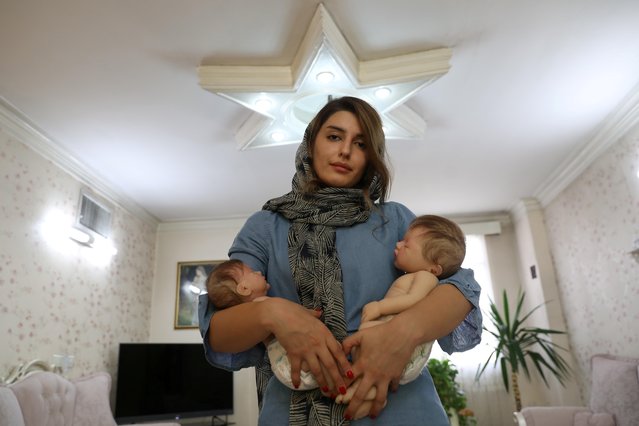
Twenty-four-year-old Maryam Aghayee makes hyper-realistic baby dolls acting as surrogates for some Iranian families who are apprehensive of having more children. “It has been about three or four months since I started this work”, says Maryam in Tehran, Iran on October 7, 2020. “After making my second doll, many orders have been coming in. The second doll was much more realistic than the previous one. After making my second doll, I said that from now on I can take customer orders. I did not intend to start a business from the beginning because it was a hobby, but after the second doll, the demand for these kinds of dolls increased, customers want to have such dolls”. (Photo by Majid Asgaripour/WANA (West Asia News Agency) via Reuters)

Twenty-four-year-old Maryam Aghayee makes hyper-realistic baby dolls acting as surrogates for some Iranian families who are apprehensive of having more children. “It has been about three or four months since I started this work”, says Maryam in Tehran, Iran on October 7, 2020. “After making my second doll, many orders have been coming in. The second doll was much more realistic than the previous one. After making my second doll, I said that from now on I can take customer orders. I did not intend to start a business from the beginning because it was a hobby, but after the second doll, the demand for these kinds of dolls increased, customers want to have such dolls”. (Photo by Majid Asgaripour/WANA (West Asia News Agency) via Reuters)
Details
25 Oct 2020 00:01:00
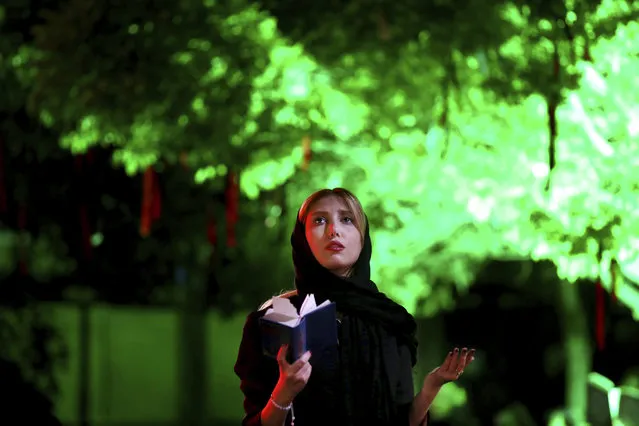
An Iranian Shiite Muslim prays in Laylat al-Qadr, or the night of destiny, during holy fasting month of Ramadan after midnight, in central Tehran, Iran, early Sunday, June 18, 2017. Laylat al-Qadr is the night when Muslims believe the Quran was first revealed to prophet Muhammad. Worshipers gather in religious ceremonies to pray, ask forgiveness and make wishes on one of the most important nights of the Islamic calendar. Shiite Muslims, the vast majority of Iranians, believe the night happens either on 19th, 21st or 23rd of the holy month of Ramadan. (Photo by Ebrahim Noroozi/AP Photo)

An Iranian Shiite Muslim prays in Laylat al-Qadr, or the night of destiny, during holy fasting month of Ramadan after midnight, in central Tehran, Iran, early Sunday, June 18, 2017. Laylat al-Qadr is the night when Muslims believe the Quran was first revealed to prophet Muhammad. Worshipers gather in religious ceremonies to pray, ask forgiveness and make wishes on one of the most important nights of the Islamic calendar. Shiite Muslims, the vast majority of Iranians, believe the night happens either on 19th, 21st or 23rd of the holy month of Ramadan. (Photo by Ebrahim Noroozi/AP Photo)
Details
18 Jun 2017 03:43:00
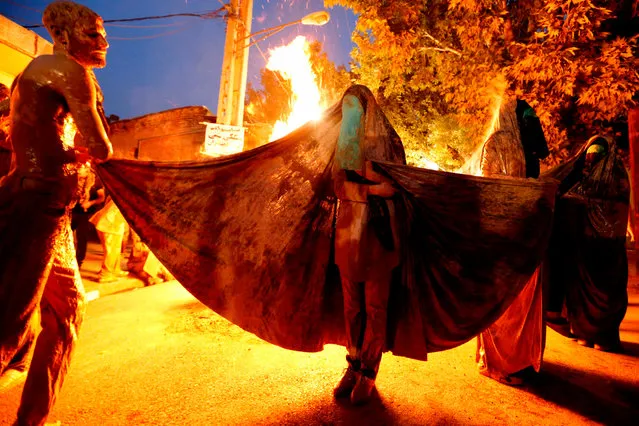
Iranian Shiite Muslim women gather around a bonfire after rubbing mud on their body during the “Kharrah Mali” (Mud Rubbing) ritual to mark the Ashura religious ceremony in the city of Khorramabad, some 470 kms southwest of Tehran, early in the morning on October 1, 2017. “Khrreh Mali” or “Mud Rubbing” is a ritual that is held in the city of Khorramabad every year to commemorate the seventh century slaying of Prophet Mohammed' s grandson Imam Hussein, in which Iranian men roll over in mud and dry themselves by gathering around the bonfires before flagellating themselves. (Photo by Atta Kenare/AFP Photo)

Iranian Shiite Muslim women gather around a bonfire after rubbing mud on their body during the “Kharrah Mali” (Mud Rubbing) ritual to mark the Ashura religious ceremony in the city of Khorramabad, some 470 kms southwest of Tehran, early in the morning on October 1, 2017. “Khrreh Mali” or “Mud Rubbing” is a ritual that is held in the city of Khorramabad every year to commemorate the seventh century slaying of Prophet Mohammed' s grandson Imam Hussein, in which Iranian men roll over in mud and dry themselves by gathering around the bonfires before flagellating themselves. (Photo by Atta Kenare/AFP Photo)
Details
02 Oct 2017 08:38:00
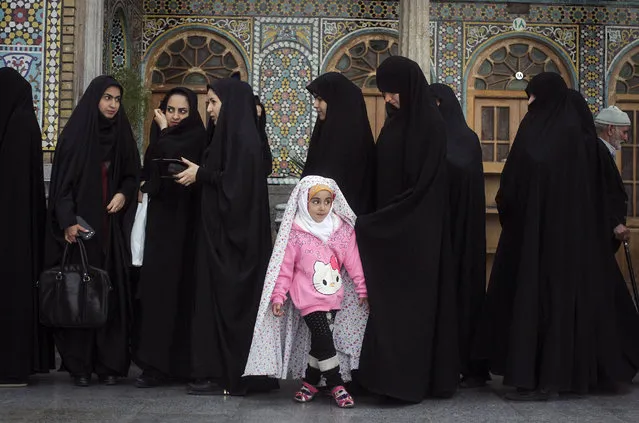
Voters line up to cast their ballots at a polling station in the city of Qom, Iran. Elections for Iran's parliament (Majlis) and Assembly of Experts kicked off on Friday, February 26, 2016. (Photo by Ahmad Halabisaz/Xinhua via ZUMA Wire)

Voters line up to cast their ballots at a polling station in the city of Qom, Iran. Elections for Iran's parliament (Majlis) and Assembly of Experts kicked off on Friday, February 26, 2016. (Photo by Ahmad Halabisaz/Xinhua via ZUMA Wire)
Details
27 Feb 2016 10:19:00