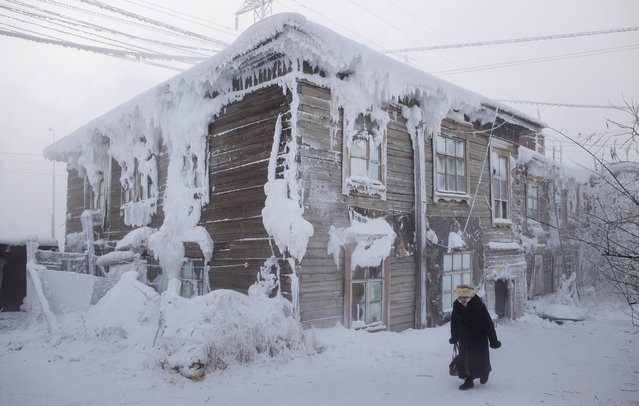
Yakutsk, with a population of around 270,000, holds its own title: that of the coldest city on Earth. Here: Frost-encrusted house in the city centre. (Photo by Amos Chapple/Courtesy Images/RFE/RL)
Independent miners transport llamas to sacrifice them for good fortune during the year as part of Andean carnival celebrations, outside the Mina Itos on the outskirts of Oruro, Bolivia February 24, 2017. (Photo by David Mercado/Reuters)
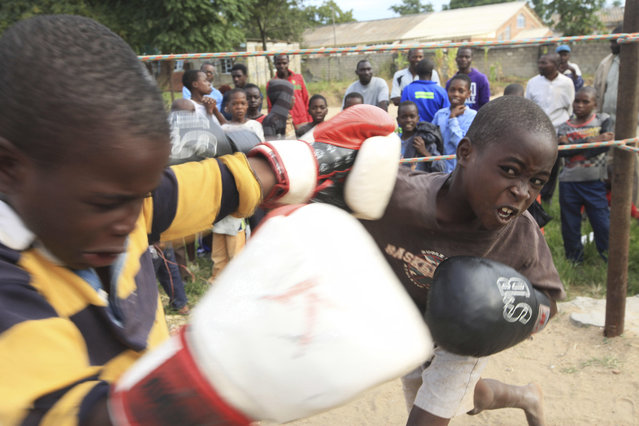
In this Sunday, March 11, 2017 photo, children fight in a boxing ring in Chitungwiza, Zimbabwe. Zimbabwean boys as young as 10 hurry every weekend to a boxing ring whose nickname, Wafa Wafa, in the local Shona language suggests that whoever enters will be lucky to come out alive. (Photo by Tsvangirayi Mukwazhi/AP Photo)
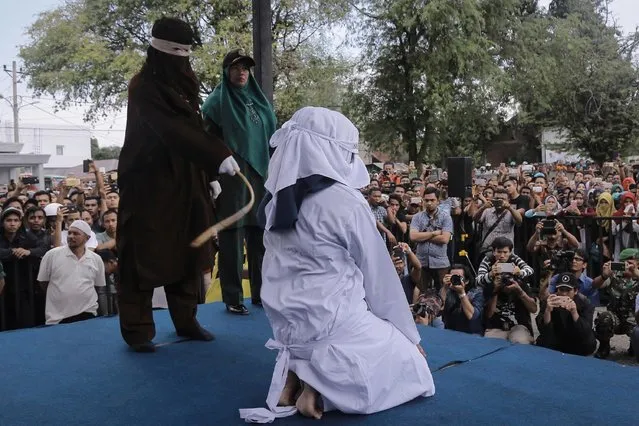
A Shariah law official whips a woman who is convicted of prostitution during a public caning outside a mosque in Banda Aceh, Indonesia, Friday, April 20, 2018. Indonesia's deeply conservative Aceh province on Friday caned several unmarried couples for showing affection in public and two women for prostitution before an enthusiastic audience of hundreds. The canings were possibly the last to be carried out before large crowds in Aceh after the province's governor announced earlier this month that the punishments would be moved indoors. (Photo by Heri Juanda/AP Photo)
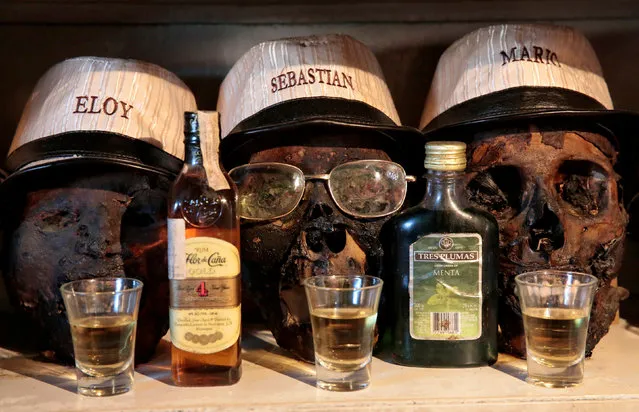
Skulls are seen at the witch doctor kiosk during the day of offerings to the “Pachamama” (Mother Earth) in El Alto, Bolivia, August 1, 2016. Pachamama is a goddess revered by the indigenous people of the Andes. She is also known as the earth/time mother. In Inca mythology, Pachamama is a fertility goddess who presides over planting and harvesting, embodies the mountains, and causes earthquakes. (Photo by David Mercado/Reuters)
A woman poses for a photo on a street decorated for the fore coming Lunar New Year in Bangkok's Chinatown on February 9, 2021. (Photo by Mladen Antonov/AFP Photo)
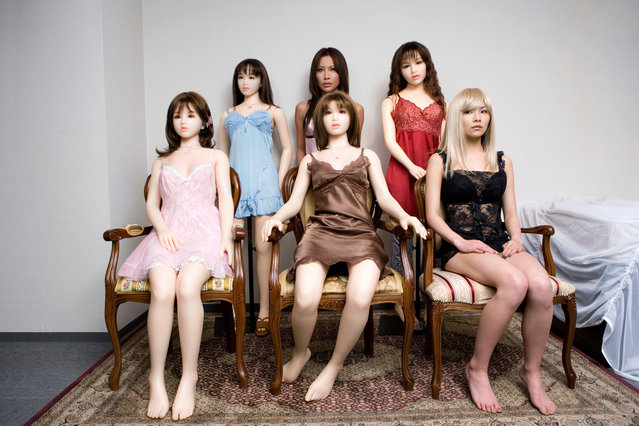
For her series “Japanese Whispers”, Belgian photographer Zaza Bertrand headed inside the intimate world of rabuhos – Japanese love hotels. Love hotels became popular in Japan from the 1960s onwards, due to a lack of privacy in many family homes. There are now around 37,000 of these hotels in Japan, allowing short daytime “rests” or overnight stays. (Photo by Zaza Bertrand/The Guardian)