Loading...
Done
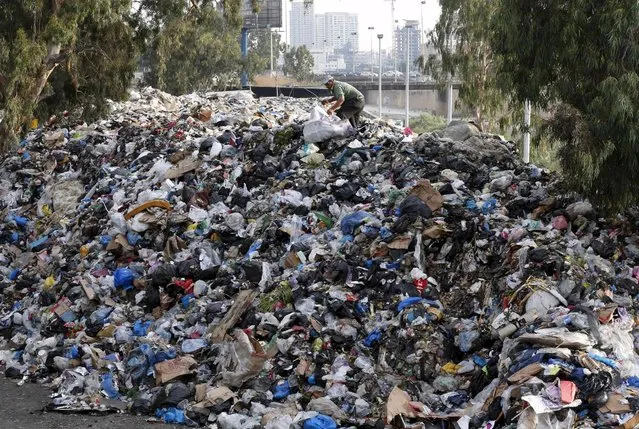
A scavenger sifts through garbage piled on the bank of Beirut river, Lebanon August 24, 2015. Lebanese protest organisers called for a fresh demonstration against the government on Saturday after two days of rallies that turned violent in central Beirut and wounded scores of people. (Photo by Mohamed Azakir/Reuters)

A scavenger sifts through garbage piled on the bank of Beirut river, Lebanon August 24, 2015. Lebanese protest organisers called for a fresh demonstration against the government on Saturday after two days of rallies that turned violent in central Beirut and wounded scores of people. The “You Stink” campaign has mobilised against the government's failure to solve a garbage disposal crisis, bringing thousands of people onto the streets in protests that have threatened the survival of the cabinet. (Photo by Mohamed Azakir/Reuters)
Details
25 Aug 2015 11:01:00
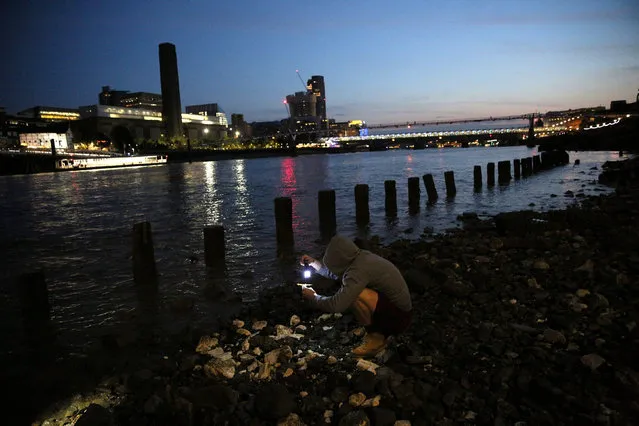
A mudlark uses a torch to look for items on the bank of the River Thames in London, Britain June 06, 2016. Mudlarking is believed to trace its origins to the 18th and 19th century, when scavengers searched the Thames' shores for items to sell. These days, history and archaeology fans are the ones hoping to find old relics such as coins, ceramics, artifacts or everyday items from across centuries. They wait for the low tide and then scour specific areas of exposed shores. "If you're in a field you could be out all day long, with the river you're restricted to about two or three hours," mudlark Nick Stevens said. While many just use the naked eye for their searches, others rely on metal detectors for which a permit from the Port of London Authority is needed. Digging also requires consent. (Photo by Neil Hall/Reuters)

A mudlark uses a torch to look for items on the bank of the River Thames in London, Britain June 06, 2016. Mudlarking is believed to trace its origins to the 18th and 19th century, when scavengers searched the Thames' shores for items to sell. These days, history and archaeology fans are the ones hoping to find old relics such as coins, ceramics, artifacts or everyday items from across centuries. their finds with the Portable Antiquities Scheme. Any item over 300 years old must be recorded. (Photo by Neil Hall/Reuters)
Details
27 Aug 2016 10:43:00
Horse Racing – Crabbie's Grand National Festival – Aintree Racecourse April 10, 2015: Racegoers react during the 17.15 Weatherbys Wealth Management Champion Standard Open National Hunt Flat Race. (Photo by Andrew Boyers/Reuters)

Horse Racing – Crabbie's Grand National Festival – Aintree Racecourse April 10, 2015: Racegoers react during the 17.15 Weatherbys Wealth Management Champion Standard Open National Hunt Flat Race. (Photo by Andrew Boyers/Reuters)
Details
12 Apr 2015 08:41:00
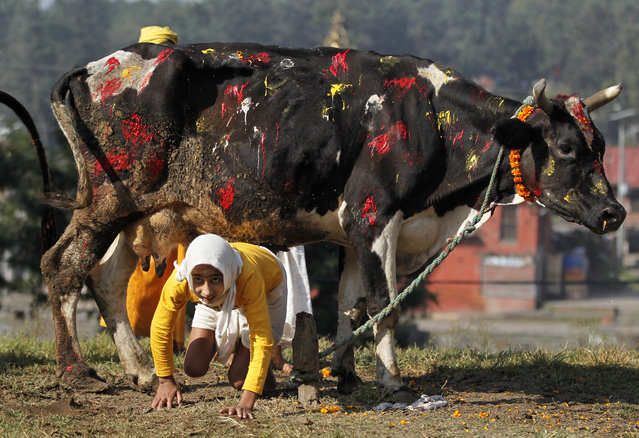
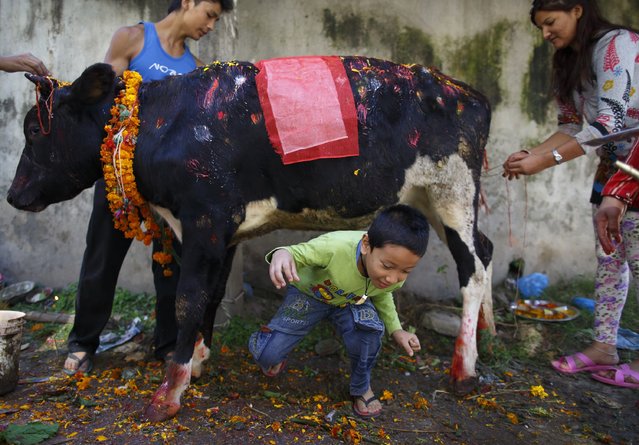
A young Hindu priest crawls under a cow as part of worship rituals during Tihar festival in Kathmandu, Nepal, Sunday, October 30, 2016. Cows are considered sacred to Hindus and are worshipped during Tihar festival, one of the most important Hindu festivals dedicated to the Goddess of wealth Laxmi. (Photo by Niranjan Shrestha/AP Photo)

A young Hindu priest crawls under a cow as part of worship rituals during Tihar festival in Kathmandu, Nepal, Sunday, October 30, 2016. Cows are considered sacred to Hindus and are worshipped during Tihar festival, one of the most important Hindu festivals dedicated to the Goddess of wealth Laxmi. (Photo by Niranjan Shrestha/AP Photo)
Details
31 Oct 2016 11:25:00
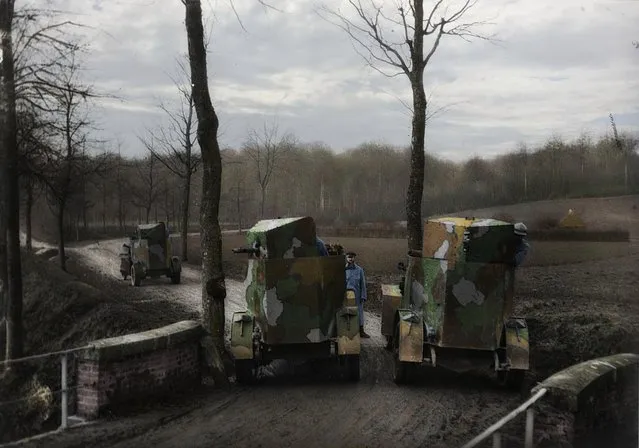
The expertly colourised shots were brought to life by French bank technician, Frédéric Duriez (51). The images were provided by the Valois collection which belongs to the BDIC. “By colourising these photos, I reduce the time that separates us today from this conflict”, said Frédéric. “A black and white photo does not attract the attention of young people, if you colour it, then people will look at it with curiosity. After this, we see the greater the misery and distress of these French fighters”. The total number of casualties in WW1 was more that 38 million. By the end of the war, over eight-million men had been called up to fight in the French army. France suffered 4.2 million casualties during the war with 1.3 million people dead. Here: Car cannon sections in firing position, Auxi-le-Château. (Photo by Frédéric Duriez/BDIC/Mediadrumworld.com)

The expertly colourised shots were brought to life by French bank technician, Frédéric Duriez (51). The images were provided by the Valois collection which belongs to the BDIC. “By colourising these photos, I reduce the time that separates us today from this conflict”, said Frédéric. Here: Car cannon sections in firing position, Auxi-le-Château. (Photo by Frédéric Duriez/BDIC/Mediadrumworld.com)
Details
03 May 2017 08:41:00
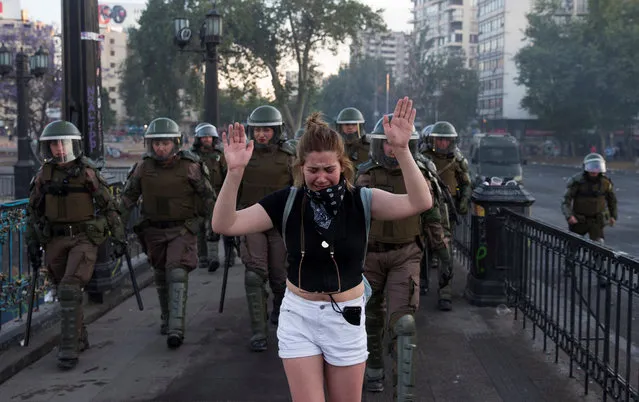
A woman cries while being escorted by police officers during an anti-government protest in Santiago, Chile, 07 November 2019. A proposed increase in the price of metro fares sparked a series of anti-government protests that have left at least 20 people dead. The protestors are demanding improvements in the quality of healthcare, education and general distribution of wealth in Chile. (Photo by Orlando Barría/EPA/EFE)

A woman cries while being escorted by police officers during an anti-government protest in Santiago, Chile, 07 November 2019. A proposed increase in the price of metro fares sparked a series of anti-government protests that have left at least 20 people dead. The protestors are demanding improvements in the quality of healthcare, education and general distribution of wealth in Chile. (Photo by Orlando Barría/EPA/EFE)
Details
10 Nov 2019 00:07:00
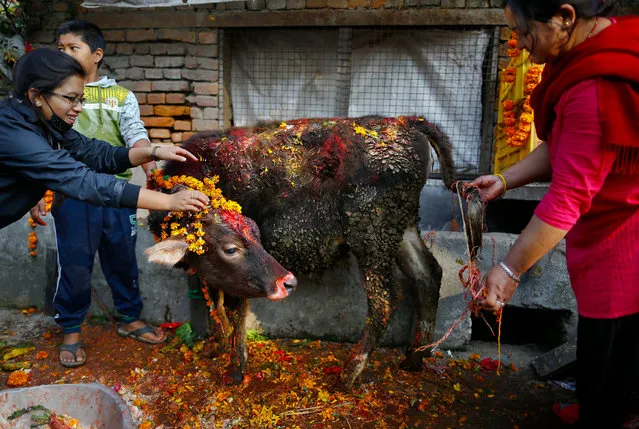
A Nepalese devotee bows in front of a cow during the 'Gai Puja', also known as the Cow Worship Day, as part of the Tihar festival in Kathmandu, Nepal, 11 November 2015. The Tihar festival is the second most important event for Nepalese Hindus. During the celebrations people worship cows, considered the incarnation of Lord Laxmi, the god of wealth. (Photo by Narendra Shrestha/EPA)

A Nepalese devotee bows in front of a cow during the 'Gai Puja', also known as the Cow Worship Day, as part of the Tihar festival in Kathmandu, Nepal, 11 November 2015. The Tihar festival is the second most important event for Nepalese Hindus. During the celebrations people worship cows, considered the incarnation of Lord Laxmi, the god of wealth. (Photo by Narendra Shrestha/EPA)
Details
14 Nov 2015 08:05:00
A boy crawls under a cow during a religious ceremony celebrating the Tihar festival, also called Diwali, in Kathmandu, October 23, 2014. Hindus all over Nepal are celebrating the festival during which they worship cows, which are considered a maternal figure, and other animals. Also known as the festival of lights, devotees worship the goddess of wealth Laxmi by illuminating and decorating their homes using garlands, oil lamps, candles and colourful light bulbs. (Photo by Navesh Chitrakar/Reuters)

A boy crawls under a cow during a religious ceremony celebrating the Tihar festival, also called Diwali, in Kathmandu, October 23, 2014. Hindus all over Nepal are celebrating the festival during which they worship cows, which are considered a maternal figure, and other animals. Also known as the festival of lights, devotees worship the goddess of wealth Laxmi by illuminating and decorating their homes using garlands, oil lamps, candles and colourful light bulbs. (Photo by Navesh Chitrakar/Reuters)
Details
25 Oct 2014 13:23:00