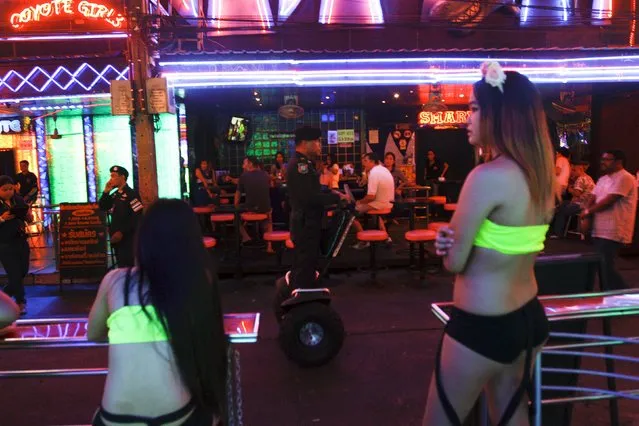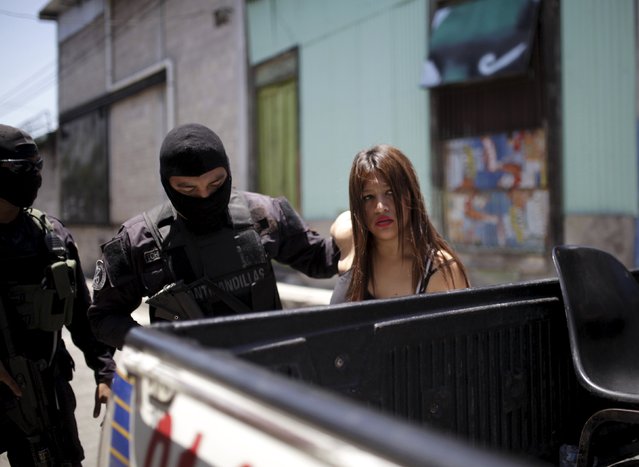
A police officer detains a woman on suspicion of collaborating with the 18th street gang during a "Safe House" operation at the Concepcion neighbourhood in San Salvador, July 2, 2015. Salvadoran police make “Safe House” operations at dangerous neighbourhoods of the capital to prevent murders, according to local media. (Photo by Jose Cabezas/Reuters)
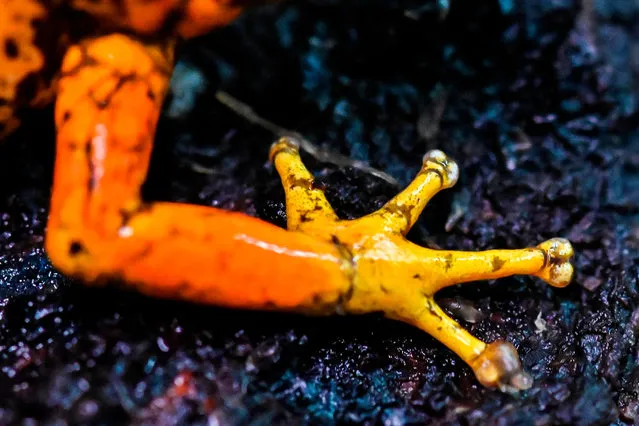
A leg of a “diablito” frog (Oophaga sylvatica) is photographed in a laboratory at a laboratory in the zoo of Cali, Colombia, on July 19, 2019. Colombia is the second country with the largest number of amphibians in the world after Brazil. More than 40% of amphibian species worldwide are in danger of extinction. (Photo by Luis Robayo/AFP Photo)
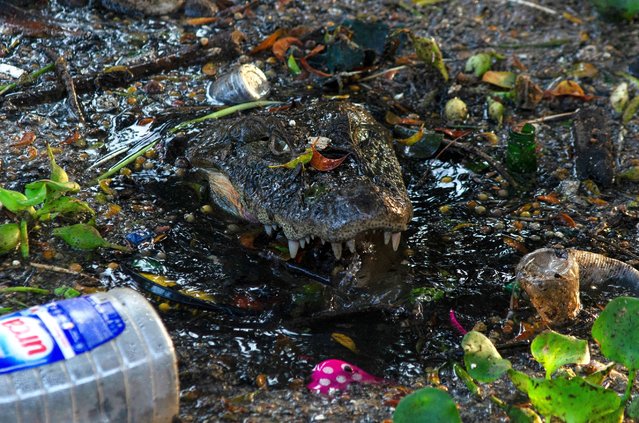
A caiman swims amidst trash in Canal das Taxas at the Recreio dos Bandeirantes neighborhood in west Rio de Janeiro, Brazil, on November 22, 2023. The urban expansion of the area and the resulting pollution have put the yacare caiman (Caiman latirostris) “in danger of extinction”. (Photo by Tercio Teixeira/AFP Photo)
Abortion rights activists demonstrate in front of the National Assembly building in Quito, on February 17, 2022. Currently, abortion is legal in Ecuador if the mother's life is in danger or in cases involving the rape of a woman with a mental disability. (Photo by Rodrigo Buendia/AFP Photo)
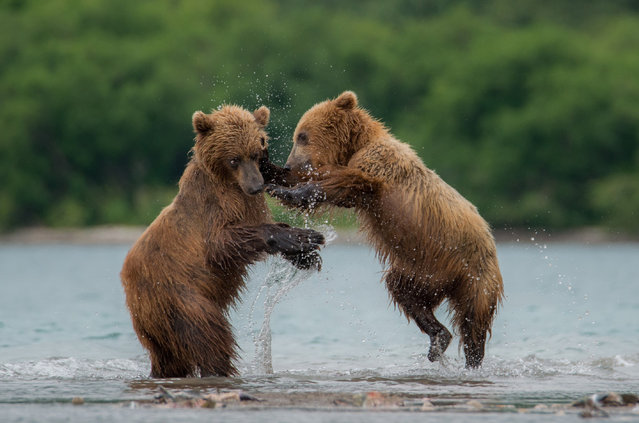
Kamchatka brown bears at Kurile Lake in Kamchatka peninsula’s volcanic terrain, Russia on August, 2017. Kamchatka brown bears are generally not dangerous to humans, and only 1% of encounters result in attack. (Photo by Igor Ivanko/Anadolu Agency/Getty Images)
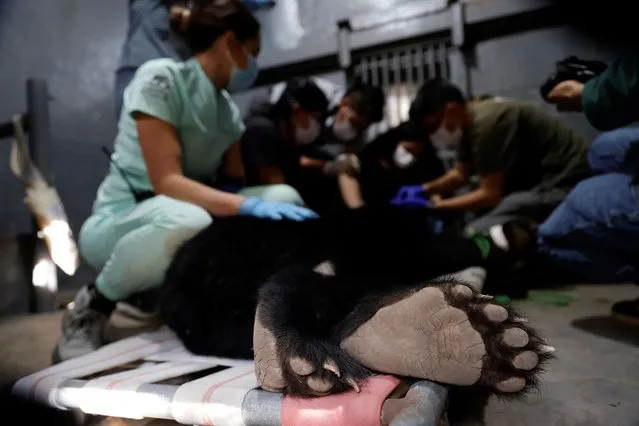
Veterinarians and biologists from the Quito Zoo and the Andean Condor Foundation fit a tracking collar that juvenile Andean bear Tupak will wear for the next four years, prior to his reintroduction into the wild, after the bear's life was deemed in danger due to proximity to humans, in Quito, Ecuador on March 31, 2024. (Photo by Karen Toro/Reuters)