Loading...
Done
Dive The Deadly Jacob’s Well In Texas

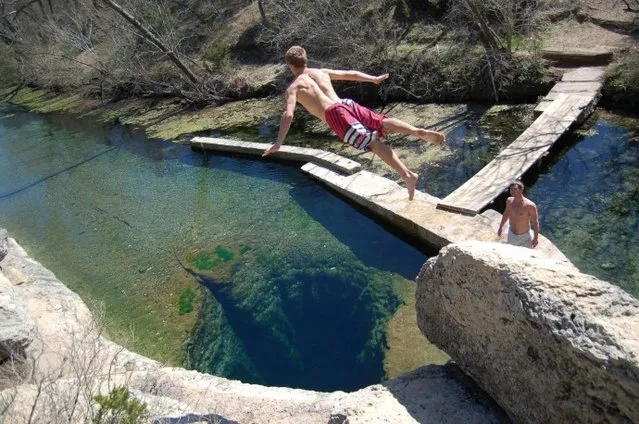
Jacob's Well is a perennial karstic spring in the Texas Hill Country flowing from the bed of Cypress Creek, located northwest of Wimberley, Texas. The twelve foot (four meter) diameter mouth of the spring serves as a popular swimming spot for the local land owners whose properties adjoin Cypress Creek. From the opening in the creek bed, Jacob's Well cave descends vertically for about thirty feet (ten meters), then continues downward at an angle through a series of silted chambers separated by narrow restrictions, finally reaching a depth of one hundred and twenty feet (forty meters). Until the modern era, the Trinity Aquifer-fed natural artesian spring gushed water from the mouth of the cave, with a measured flow in 1924 of one hundred and seventy gallons per second (six hundred and forty liters per second) discharging six feet (two meters) into the air. The spring is the greatest source of water recharging the Edwards Aquifer.
Details
03 Jan 2014 08:20:00
This diver almost got sucked into the mouth of a massive whale shark as it feeds on plankton. But far from staring into the jaws of death – the shark, which are the  sea's largest fish, is actually vegetarian. The relieved diver escaped from the encounter unscathed and continued to  enjoy the presence of the incredibly docile animals. The stunning photograph, by Mauricio Handler, was taken during a feeding session where more than 600 of the huge creatures  gathered to feed on tuna spawn. (Photo by Mauricio Handler/Daily Mail/Solent)

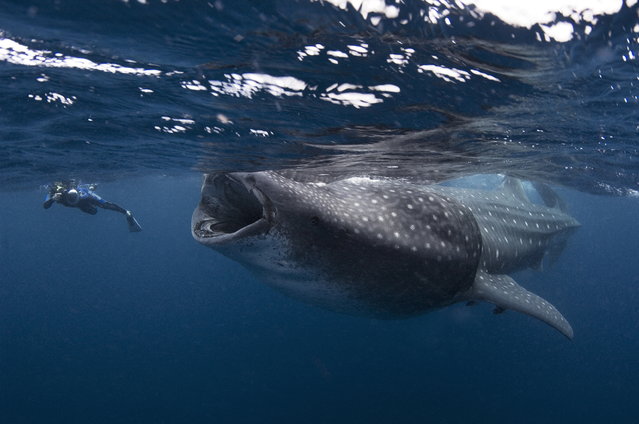
This diver almost got sucked into the mouth of a massive whale shark as it feeds on plankton. But far from staring into the jaws of death – the shark, which are the sea's largest fish, is actually vegetarian. The relieved diver escaped from the encounter unscathed and continued to enjoy the presence of the incredibly docile animals. The stunning photograph, by Mauricio Handler, was taken during a feeding session where more than 600 of the huge creatures gathered to feed on tuna spawn. (Photo by Mauricio Handler/Daily Mail/Solent)
Details
16 Feb 2014 12:23:00
“Secrets of the Whales”. Skerry’s photographs celebrate the lives and culture of whales, illuminating recent research and their diverse behaviours. His latest work focuses on four key species: sperm whales, humpbacks, orca and beluga whales. Humpback whales bubble-net feeding off the coast of Alaska. They work cooperatively to feed on herring by blowing a perfect ring of bubbles underwater to form a net encircling the fish. The whales then swim up through the centre of the bubble net with their mouths open. (Photo by Brian Skerry/National Geographic Photo/Visa pour l'Image)

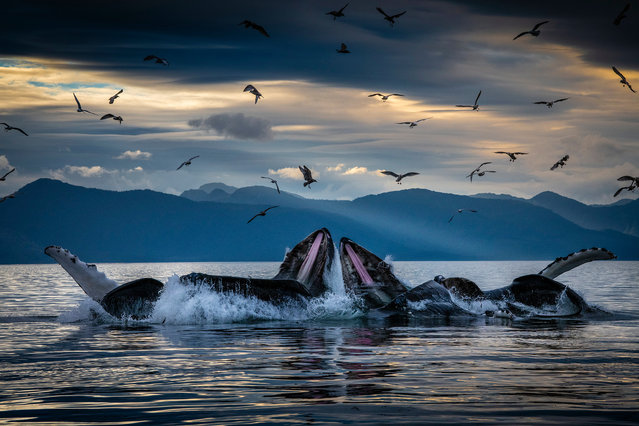
“Secrets of the Whales”. Skerry’s photographs celebrate the lives and culture of whales, illuminating recent research and their diverse behaviours. His latest work focuses on four key species: sperm whales, humpbacks, orca and beluga whales. Humpback whales bubble-net feeding off the coast of Alaska. They work cooperatively to feed on herring by blowing a perfect ring of bubbles underwater to form a net encircling the fish. The whales then swim up through the centre of the bubble net with their mouths open. (Photo by Brian Skerry/National Geographic Photo/Visa pour l'Image)
Details
04 Sep 2021 09:02:00
A prong extending from a remote-controlled robot prototype approaches the mouth of a volunteer to extract a throat swab sample, as part of a self-funded project to assist physicians in running tests on suspected COVID-19 coronavirus patients in a bid to limit human exposure to disease-carriers, at a private hospital in Egypt's Nile delta city of Tanta, on March 20, 2021. (Photo by Khaled Desouki/AFP Photo)

A prong extending from a remote-controlled robot prototype approaches the mouth of a volunteer to extract a throat swab sample, as part of a self-funded project to assist physicians in running tests on suspected COVID-19 coronavirus patients in a bid to limit human exposure to disease-carriers, at a private hospital in Egypt's Nile delta city of Tanta, on March 20, 2021. (Photo by Khaled Desouki/AFP Photo)
Details
24 Apr 2021 08:47:00
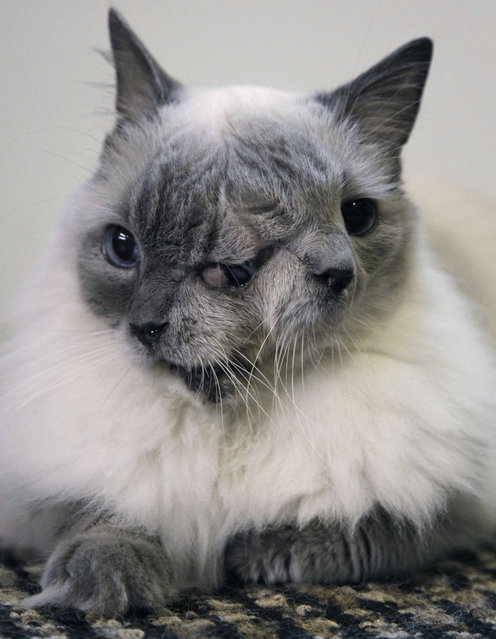
Two Faces Cat Named Frank And Louie

A Massachusetts cat with two faces has become the world’s longest surviving so called “janus” feline at 12 years of age. The cat, who is named Frank and Louie, has two mouths, two noses and three eyes. Frank and Louie have one brain, so the faces react in unison.
Details
14 Mar 2013 11:47:00
Art Toast Project By Ida Skivenes

Many parents know the stubborn reluctance of children to start breakfast, and adults themselves sometimes miss the morning meal. But the situation would look very different if they had the opportunity every day to enjoy the mouth-watering pictures on the plates, which are of conventional products creates by Ida Skivenes.


See Also: Food Artist Hong Yi
Details
29 Apr 2013 10:02:00
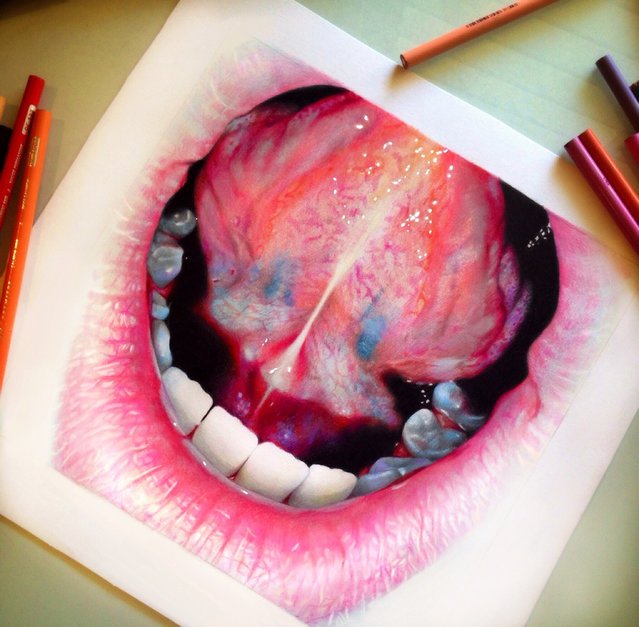
Colored Pencil Illustrations By Morgan Davidson" alt="Colored Pencil Illustrations By Morgan Davidson

Morgan Davidson is a twenty one year old artist who specializes in highly saturated, realistic color pencil illustrations. Her work includes detailed studies of body parts like the mouth, eye and heart. It also includes still life portraits like the one of herself in this series where the artist's hair is adorned with various found objects. Morgan's work is not simply realism, instead she stylizes the images to fit her own creative vision.
Details
01 May 2014 12:59:00
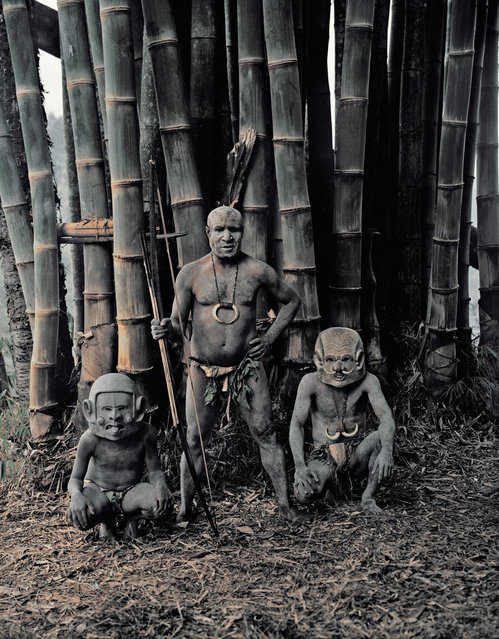
“Asaro from the Eastern Highlands”. The mudmen could not cover their faces with mud because the people of Papua New Guinea thought that the mud from the Asaro river was poisonous. So instead of covering their faces with this alleged poison, they made masks from pebbles that they heated and water from the waterfall, with unusual designs such as long or very short ears either going down to the chin or sticking up at the top, long joined eyebrows attached to the top of the ears, horns and sideways mouths. (Jimmy Nelson)

“Asaro from the Eastern Highlands”. The mudmen could not cover their faces with mud because the people of Papua New Guinea thought that the mud from the Asaro river was poisonous. So instead of covering their faces with this alleged poison, they made masks from pebbles that they heated and water from the waterfall, with unusual designs such as long or very short ears either going down to the chin or sticking up at the top, long joined eyebrows attached to the top of the ears, horns and sideways mouths. (Photo and caption by Jimmy Nelson)
Details
20 Oct 2013 08:54:00